The AI Robbery: Is AI Stealing Genuine Learning From Students?
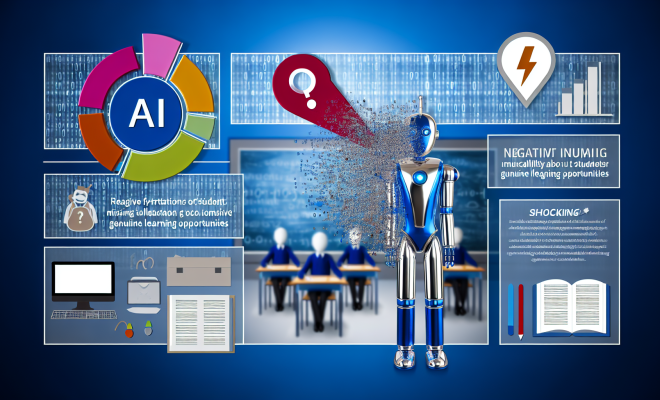
In a world increasingly dominated by artificial intelligence, a profound shift is occurring within the educational landscape. Many educators, like Professor Jane Sloan Peters, are grappling with a heartbreaking reality: the essence of learning is deteriorating as AI technologies become more prevalent. During a recent class discussion, Peters found herself overcome with emotion, reflecting on how AI has irrevocably altered the student experience.
The Emotional Moment in the Classroom
Professor Peters shared a poignant moment in her classroom that encapsulated the struggle many educators are facing. As she interacted with her students, she witnessed a disheartening trend: students were no longer wrestling with complex problems or engaging deeply with challenging material. Instead, they were relying on AI-generated answers, robbing them of the satisfaction and joy that comes with hard-earned understanding.
During her lecture, Peters recalled the days when students’ faces would light up with genuine insight following their efforts. That joyous spark, however, seems to have been extinguished in the age of instant results. “I was choked up in front of my students as I realized what we are losing. These tools are replacing struggle and personal insight with convenience,” she expressed, her voice laced with concern.
The Shift from Authenticity to Convenience
As AI continues to evolve, its integration into educational environments has sparked a contentious debate about the authenticity of learning. The rise of AI-generated content means that students can now access answers with a few clicks, leading to a disconnection from the learning process itself. Peters lamented this shift, questioning the long-term implications for critical thinking, creativity, and intellectual curiosity among students.
The emotional weight of Peters’ reflection resonates deeply with many educators who are witnessing firsthand the detrimental effects of AI on learning. The convenience provided by AI tools comes at a significant cost: the erosion of original thought and the diminishing value of personal struggle in the educational journey.
Why This Matters: The Core of Education at Stake
At the heart of education lies the struggle for understanding, the journey of exploration, and the joy of discovery. As AI takes over traditional learning methods, the authentic experience of grappling with ideas and developing insights may be lost forever. The implications are profound, not just for students but for the future of education itself.
- Critical Thinking Skills: The reliance on AI-generated answers may hinder students’ abilities to think critically. Without the need to engage deeply with material, students risk becoming passive consumers of information.
- Creativity and Innovation: Original ideas often stem from the struggle to understand complex concepts. By outsourcing this process to AI, students may miss opportunities for creative thinking and innovation.
- Intellectual Curiosity: The convenience of AI can stifle curiosity. If students can find answers effortlessly, they may not feel compelled to explore topics further or ask probing questions.
The Educator’s Perspective: Mournful Reflections
Peters is not alone in her concerns; her reflections echo the thoughts of numerous educators who feel a collective sense of mourning for what has been lost. The era of AI is not merely a technological shift; it represents a fundamental change in the way knowledge is acquired and understood.
Many teachers express frustration at the diminishing engagement levels among students. The thrill of witnessing a student struggle with a problem, only to experience the joy of resolution, is increasingly rare. Educators worry that the rising convenience of AI tools is undermining the very fabric of the academic experience.
The Call for Change: Safeguarding Human Learning
The emotional plea from educators like Peters raises urgent questions about the future of learning in an AI-dominated landscape. How can we safeguard the critical aspects of human learning while embracing the benefits of technological advancements? This question is at the forefront of ongoing discussions among educators, policymakers, and technology developers.
Several strategies could be employed to mitigate the negative impacts of AI on learning:
- Revising Educational Curricula: Educators are calling for curricula that emphasize critical thinking, problem-solving, and creativity, ensuring that students engage deeply with the material.
- Establishing AI Guidelines: Institutions should develop clear guidelines on the appropriate use of AI tools in the classroom, encouraging students to use technology as an aid rather than a crutch.
- Fostering a Growth Mindset: Teachers can promote a growth mindset, celebrating the learning journey and the importance of struggle in the process of acquiring knowledge.
Conclusion: A Collective Responsibility
The conversation ignited by Professor Jane Sloan Peters is just the beginning. As AI continues to permeate educational spaces, it is crucial for educators, students, parents, and technology developers to engage in an ongoing dialogue about the future of learning. The potential for AI to enhance education is immense, but it must be balanced with a commitment to preserving the authenticity and richness of the learning experience.
As we reflect on the emotional toll of these changes, it becomes clear that we share a collective responsibility to advocate for a learning environment that values struggle, insight, and personal growth. The challenge lies in harnessing the power of AI while honoring the human experience at the core of education. The stakes are high, and the future of learning depends on our ability to navigate this delicate balance.