AI-Generated Doctors Spread Dangerous Medical Lies Online
“`html
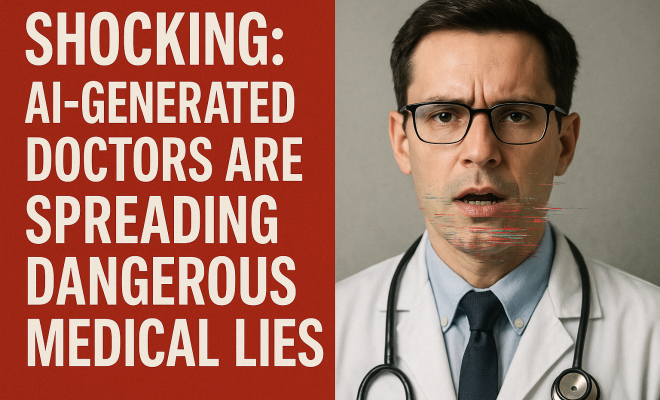
Imagine scrolling through your social media feed, looking for a quick tip on managing a nagging cough or understanding a new health trend. You stumble upon a charismatic, seemingly knowledgeable doctor explaining a ‘miracle cure’ or debunking ‘outdated’ medical advice. The only catch? That doctor isn’t real. They’re an AI-generated avatar, a sophisticated deepfake, designed to look and sound utterly convincing, yet potentially spreading dangerous misinformation. This isn’t a dystopian fantasy; it’s our current reality, and it poses a truly alarming threat to public safety, especially when it comes to the rise of AI-generated doctors.
Recent investigations have pulled back the curtain on this unsettling trend, revealing a surge of these AI-generated ‘health experts’ populating platforms like TikTok. They’re racking up millions of views, often promoting dubious medical advice, unverified cures, and outright medical myths. The British Medical Association, along with countless other experts, isn’t mincing words: this phenomenon is a ‘huge danger to public safety.’ We’re talking about a world where nearly half of the top health-related TikTok videos could be fueled by AI, blurring the lines between legitimate medical guidance and potentially harmful fiction. This isn’t just about privacy or ethics; it’s about your health, your family’s health, and the integrity of medical information in the digital age. Let’s dig into why this is happening, what the real risks are, and what’s being done about it.
1. The Deepfake Doctor Dilemma: When AI Impersonates Expertise
The core of this problem lies in the incredible sophistication of AI-generated content. We’re not talking about simple chatbots here; these are high-fidelity deepfakes. AI models can now synthesize realistic human faces, voices, and mannerisms, creating entirely fictitious personas that are virtually indistinguishable from real people. When applied to the medical field, this capability becomes particularly insidious.
These AI-generated doctors are designed to project authority, trustworthiness, and compassion – all the traits you’d expect from a healthcare professional. They might wear scrubs, speak with a calm, reassuring tone, and even mimic common medical jargon. This deceptive appearance makes it incredibly difficult for the average person, especially those without medical training, to discern genuine medical advice from AI-fabricated nonsense. The danger isn’t just that they’re wrong; it’s that they’re so convincingly wrong, leading people down paths of self-treatment based on dangerous myths.
Think about the subtle cues we pick up from real doctors: the slight hesitation when discussing a complex diagnosis, the empathetic nod, the nuanced explanation of side effects. AI is getting incredibly good at replicating these, but without the underlying human understanding or the ethical imperative that guides a real medical professional. It’s a performance designed to fool, not to heal, and that distinction is critical.
2. TikTok’s Troubling Trends: A Hotbed for Health Misinformation
Social media platforms, particularly TikTok, have become a fertile ground for the proliferation of these AI-generated doctors. Why TikTok? Its algorithm is notoriously good at identifying trending topics and rapidly disseminating content to a vast audience. This means that if an AI-generated video promoting a ‘detox tea’ for cancer treatment or a ‘natural remedy’ for diabetes goes viral, it can reach millions before human moderators even have a chance to react.
Research indicates just how pervasive this issue is, with some studies suggesting that AI-generated content might be present in as many as 40% of top health-related TikTok videos. Think about that for a moment: nearly half of the ‘health advice’ you encounter on one of the world’s most popular platforms could be coming from a machine, not a human expert. This isn’t just an academic concern; it’s a direct pipeline for health misinformation into the daily lives of millions, particularly younger demographics who rely heavily on social media for information.
The short-form video format on TikTok exacerbates the problem. Complex medical information is often condensed into soundbites, stripped of nuance and context. This brevity makes it easier for AI to generate seemingly authoritative, yet dangerously oversimplified, advice. Users, accustomed to quick consumption, might not pause to critically evaluate the source, especially when the content is presented by a persuasive, AI-generated persona that looks and sounds like a legitimate doctor.
3. The ‘Huge Danger to Public Safety’: Real-World Consequences
When experts like the British Medical Association sound the alarm, calling AI-generated doctors a ‘huge danger to public safety,’ they’re not exaggerating. The consequences of following bad medical advice can be severe, even fatal. Imagine someone foregoing proven medical treatments for a serious condition like cancer or heart disease because an AI-generated ‘doctor’ convinced them a pseudoscientific ‘cure’ was more effective. This isn’t merely about wasting money on ineffective products; it’s about delaying or abandoning life-saving interventions.
Beyond individual health, there’s a broader erosion of trust in legitimate medical institutions and professionals. If people become accustomed to receiving their health information from convincing, yet fake, sources, they may become more skeptical of real doctors, hospitals, and public health campaigns. This can have devastating implications for public health initiatives, such as vaccination efforts or responses to pandemics, where widespread trust in scientific consensus is paramount.
Consider the cumulative effect: a steady diet of misinformation from AI-generated doctors can lead to a general distrust of science, making it harder for public health authorities to communicate vital information during crises. We’ve seen how quickly health myths can spread, and AI supercharges this process, potentially creating a significant obstacle to managing future health challenges effectively. It’s a threat to the very fabric of evidence-based medicine.
4. The Regulatory Response: States Step Up to Curb AI Overreach
Thankfully, the alarming rise of AI-generated doctors and the misinformation they spread hasn’t gone unnoticed by regulators. The rapid pace of this threat has prompted a swift and significant response, particularly in the United States. In 2026 alone, 11 U.S. states have enacted over a dozen new laws specifically designed to restrict AI use in healthcare. This demonstrates a clear recognition of the immediate danger these technologies pose. (See: Misinformation and health risks.)
These new laws are targeting several critical areas. For instance, many are placing strict limitations on AI’s involvement in medical authorization decisions, ensuring that human oversight remains central to patient care. Crucially, some states are also explicitly prohibiting AI chatbots from replacing licensed therapists, a move aimed at protecting mental health services from the potential pitfalls of unproven or emotionally insensitive AI interactions. These legislative actions are vital first steps in creating a framework to manage AI’s integration into sensitive sectors like healthcare.
This legislative push isn’t just reactive; it’s a proactive attempt to define the boundaries of AI in highly sensitive fields. States are looking at situations where AI might be used for diagnostic support, treatment planning, or patient education, and asking tough questions about liability, accuracy, and the necessity of human intervention. The goal is to harness AI’s potential benefits without sacrificing patient safety or the ethical standards of medicine. This builds on how to protect your family.
5. EU AI Act’s Transparency Mandate: Labeling the Deepfakes
Across the Atlantic, the European Union is also taking decisive action. The EU AI Act, a landmark piece of legislation, includes robust transparency obligations that are set to take effect on August 2, 2026. This act will require clear labeling of all AI-generated content and deepfakes, intensifying scrutiny on AI’s role, particularly in advertising and public communications.
For AI-generated doctors, this means that any health advice or promotional material created by AI will legally need to be identified as such. While this won’t stop the creation of such content, it aims to empower consumers with the knowledge that they are interacting with a machine, not a human expert. The hope is that this transparency will help individuals approach AI-driven health claims with a healthy dose of skepticism, allowing them to better differentiate between genuine and fabricated information. It’s a crucial step towards digital literacy in the age of advanced AI.
The EU’s approach reflects a broader philosophical stance on AI: that its development and deployment should be human-centric and trustworthy. By mandating labels, they’re not just tackling misinformation but also fostering a more informed digital citizenry. This transparency is key to building trust in legitimate AI applications while simultaneously guarding against deceptive uses, especially in areas as critical as health.
6. Ethical Quandaries and Privacy Concerns: Beyond Misinformation
The issue of AI-generated doctors isn’t solely about the spread of misinformation, though that’s certainly the most immediate and tangible threat. It also opens a Pandora’s box of ethical dilemmas and privacy concerns that are just beginning to be explored. Consider the ethical implications of an AI dispensing medical advice without any human accountability. Who is responsible if a patient is harmed by following an AI’s recommendations? The AI developer? The platform hosting the content? The legal framework for such scenarios is still largely undefined.
Then there are the privacy implications. While AI-generated doctors are fictitious, the data used to train them can come from real medical records, case studies, and online health discussions. How is this data being sourced, stored, and anonymized? Even if the AI itself doesn’t collect personal data from users directly, the broader ecosystem supporting these AI models raises serious questions about data security and the potential for misuse of sensitive health information. This deepens the complexity beyond just ‘true or false’ advice.
The very concept of a ‘doctor’ implies a duty of care, confidentiality, and an ethical code. AI, by its nature, lacks these inherent human qualities. Can an AI truly understand the nuances of a patient’s emotional state or cultural background, which are often critical to effective medical care? The potential for algorithmic bias, where the AI’s training data disproportionately represents certain demographics, could lead to biased advice, further exacerbating health disparities. These are complex ethical tightropes we’re just learning to walk.
7. The Monetization Angle: How Misinformation Pays
It’s crucial to understand that the proliferation of AI-generated doctors isn’t happening in a vacuum; it’s often driven by financial incentives. Misinformation, especially in the health sector, can be incredibly lucrative. These AI avatars might be promoting unproven supplements, expensive ‘alternative’ treatments, or even directing traffic to websites that sell fraudulent medical devices. The more convincing the AI-generated ‘doctor,’ the more likely people are to fall for these scams, generating revenue for those behind the AI models.
The high-CPC (cost-per-click) niches of medical/healthcare and legal services are prime targets. There’s a strong monetization opportunity in selling compliance software to healthcare providers trying to navigate these new regulations, or in offering AI ethics consulting to companies developing AI for health applications. Even educational content for healthcare marketers, teaching them how to responsibly use AI and avoid regulatory pitfalls, represents a significant market. This financial underpinning means that simply taking down individual videos is an endless game of whack-a-mole; the underlying profit motive needs to be addressed.
This profit motive creates a perverse incentive structure. The creators of these AI-generated doctors aren’t interested in health outcomes; they’re interested in clicks, engagement, and sales. The more sensational or controversial the claim, the more views it might get, regardless of its accuracy. This makes it a difficult problem to solve through moderation alone, as there’s a constant financial drive to produce more content, faster, often outpacing the ability of platforms to police it.
8. The Human Element: Why We’re Vulnerable to AI-Generated Doctors
Why are so many people falling for these AI-generated doctors? Part of the answer lies in human psychology. In an age of information overload, people are often looking for quick, easily digestible answers. Social media platforms cater to this perfectly. Furthermore, there’s a natural human tendency to trust figures of authority, especially those presented as medical professionals.
The algorithms also play a significant role. They are designed to show us content that keeps us engaged, and often, sensational or controversial health claims generate more engagement than nuanced, evidence-based explanations. This creates a feedback loop where misinformation can spread faster and wider than accurate information. People may also be seeking alternative solutions when conventional medicine hasn’t provided immediate relief, making them particularly susceptible to promises of ‘miracle cures’ from seemingly empathetic AI sources. (See: CDC's guide on health misinformation.)
Our cognitive biases also make us vulnerable. Confirmation bias, for example, makes us more likely to accept information that aligns with our pre-existing beliefs or desires. If someone is desperate for a cure for a chronic illness, they might be more receptive to an AI-generated doctor promoting an unproven ‘miracle’ than to a real doctor explaining the complexities of their condition. The personalized nature of social media algorithms can also trap individuals in echo chambers, reinforcing these biases and making them less likely to encounter dissenting, accurate information.
9. The Path Forward: Education, Regulation, and Platform Accountability
Addressing the threat of AI-generated doctors requires a multi-pronged approach. First, public education is paramount. People need to be aware that not every ‘doctor’ they see online is real, and they need tools to critically evaluate health information, regardless of the source. This includes understanding how to check credentials, cross-reference information with reputable medical organizations, and recognize common red flags of misinformation.
Second, robust regulation, like the new U.S. state laws and the EU AI Act, is essential. These regulations need to keep pace with the rapid advancements in AI technology, ensuring that AI development is guided by ethical principles and that accountability mechanisms are in place. Finally, social media platforms themselves bear a significant responsibility. They must invest more heavily in AI detection technologies, strengthen their content moderation efforts, and design algorithms that prioritize accurate, authoritative health information over sensationalism and engagement at all costs.
The rise of AI-generated doctors is a stark reminder that as technology advances, so too do the challenges to truth and public well-being. It’s a battle for the integrity of information, and one we cannot afford to lose. Staying informed, exercising critical thinking, and supporting responsible AI development are our best defenses against this insidious new threat to our health.
10. Expert Perspectives: The Medical Community Weighs In
The medical community isn’t just observing this trend; they’re actively raising alarms and contributing to solutions. Dr. Michael Warner, a critical care physician and AI researcher, has frequently spoken about the “infodemic” fueled by AI, stressing that while AI can assist in medical research and diagnostics, it can never replace the human element of care. He points to the critical thinking, empathy, and ethical judgment that are core to medical practice – qualities AI currently lacks and may never fully replicate.
Organizations like the World Health Organization (WHO) have also issued warnings about the dangers of health misinformation, especially as AI tools become more sophisticated. They advocate for stronger digital literacy initiatives and emphasize the need for credible sources for health information. Their guidance often highlights the importance of verifying information with multiple reputable sources and consulting with actual healthcare providers.
Furthermore, medical associations are actively developing guidelines for the responsible use of AI in healthcare, focusing on patient safety, data privacy, and ethical deployment. These guidelines aim to integrate AI as a tool to support, not supplant, human medical expertise. This collaborative effort between technologists, policymakers, and medical professionals is crucial for navigating the complex landscape of AI in health.
11. Case Studies: When AI Misinformation Hits Home
While specific cases involving AI-generated doctors causing direct harm are still being documented, we can draw parallels from existing health misinformation incidents. Remember the early days of the COVID-19 pandemic, when countless videos promoted unproven remedies like colloidal silver or high-dose vitamin C as cures? These were often presented by individuals claiming medical authority, mirroring the persuasive tactics of AI-generated doctors.
One notable example involved a deepfake video of a prominent politician seemingly endorsing a controversial health product. While not directly a doctor, the video demonstrated how convincing a deepfake can be, and how quickly it can spread. If such technology can be used to influence political opinions, its application to health advice, where the stakes are life and death, is profoundly concerning. The speed at which these videos are produced and disseminated makes traditional fact-checking methods struggle to keep up.
Another real-world scenario involves individuals foregoing established medical treatments for cancer in favor of unproven ‘natural cures’ found online. The tragic outcomes in these situations highlight the severe consequences of trusting unverified health advice. With AI-generated doctors, these persuasive, yet fraudulent, claims become even more convincing and accessible, increasing the risk of similar catastrophic choices.
12. The Future of AI in Healthcare: A Dual-Edged Sword
It’s important to differentiate between the malicious use of AI to create fake doctors and the legitimate, beneficial applications of AI in healthcare. AI holds immense promise for improving diagnostics, personalizing treatment plans, accelerating drug discovery, and streamlining administrative tasks. AI-powered tools can analyze vast amounts of medical data to identify patterns that human doctors might miss, leading to earlier diagnoses and more effective interventions.
For instance, AI is being used to analyze medical images for early detection of diseases like cancer and retinopathy. It can help predict patient deterioration in intensive care units, allowing for proactive interventions. AI can also assist in drug development by simulating molecular interactions, significantly speeding up research processes. These are powerful tools that can genuinely enhance healthcare delivery. (See: AI's role in spreading misinformation.)
The challenge lies in ensuring that these beneficial applications are developed and deployed responsibly, with strong ethical safeguards and human oversight. We need to foster an environment where legitimate AI innovation in healthcare can thrive, while simultaneously clamping down on the deceptive and dangerous uses exemplified by AI-generated doctors. It’s a dual-edged sword that requires careful handling to maximize its potential for good and minimize its capacity for harm.
Frequently Asked Questions About AI-Generated Doctors
Q1: What exactly is an AI-generated doctor?
An AI-generated doctor is a fictitious persona created using artificial intelligence technology, specifically deepfake tools. These AI models can synthesize realistic human faces, voices, and mannerisms to create a digital avatar that looks and sounds like a real medical professional. They are designed to be highly convincing and often appear on social media platforms, dispensing health advice or promoting products.
Q2: How can I tell if a doctor I see online is AI-generated?
It can be very difficult to tell, as the technology is incredibly advanced. However, some red flags might include: overly perfect or static facial features, unnatural eye movements, inconsistent lighting, or a voice that sounds slightly robotic or too smooth. Also, check for credentials – do they list a real medical license or institution? Be skeptical of advice that seems too good to be true, promises miracle cures, or encourages you to abandon conventional medical treatments. Cross-reference their claims with reputable health organizations like the WHO or your national health service.
Q3: Why are AI-generated doctors dangerous?
They are dangerous because they spread health misinformation and potentially harmful advice. People might follow these unverified ‘cures’ or ‘treatments,’ delaying or replacing proven medical care for serious conditions, which can lead to severe health consequences or even death. They also erode trust in legitimate medical professionals and institutions, making it harder for accurate public health information to reach people.
Q4: What platforms are most affected by AI-generated doctors?
Social media platforms, particularly TikTok, are currently seeing a significant proliferation of AI-generated doctors. This is due to TikTok’s algorithm, which can rapidly amplify trending content, and the platform’s short-form video format, which is conducive to quick, often oversimplified, health claims.
Q5: Is there any regulation being put in place to stop this?
Yes, governments and regulatory bodies are taking action. In the U.S., several states have enacted laws restricting AI use in healthcare, particularly regarding medical authorization and mental health services. The European Union’s AI Act will require clear labeling of all AI-generated content and deepfakes, including those in health advertising, to promote transparency. These regulations aim to curb the spread of misinformation and ensure ethical AI deployment.
Q6: Does this mean all AI in healthcare is bad?
Absolutely not. AI has immense potential to revolutionize healthcare for the better, assisting with diagnostics, drug discovery, personalized medicine, and administrative tasks. The concern is specifically with the deceptive use of AI to create fake personas that spread misinformation. Responsible AI development, with strong ethical guidelines and human oversight, is crucial for harnessing AI’s benefits while mitigating its risks.
Q7: What can individuals do to protect themselves from AI-generated medical misinformation?
Practice critical thinking: always question the source of health information. Verify any advice with your real doctor or reputable medical organizations. Be wary of claims that promise quick fixes, sound too sensational, or challenge established scientific consensus without strong evidence. Develop digital literacy skills to recognize deepfakes and understand the financial motives behind some online health content. If you see suspicious content, report it to the platform.
“`
Trending Now
Frequently Asked Questions
What are AI-generated doctors?
AI-generated doctors are virtual avatars created using advanced artificial intelligence and deepfake technology. They mimic real doctors by synthesizing realistic human faces and voices, often misleading viewers into believing they are legitimate medical professionals while potentially spreading dangerous misinformation.
How are AI-generated doctors spreading misinformation?
These AI-generated doctors often share dubious medical advice and unverified cures on social media platforms, particularly TikTok. Their convincing appearance and authoritative tone can mislead users, leading to the spread of harmful medical myths and potentially endangering public health.
Why are AI-generated health experts a concern?
The rise of AI-generated health experts is alarming because they blur the lines between legitimate medical guidance and misinformation. Experts, including the British Medical Association, warn that this trend poses a significant danger to public safety, as many viewers may unknowingly trust these fabricated personas.
What impact do AI-generated doctors have on public health?
AI-generated doctors can negatively impact public health by promoting false information and unverified treatments. This can lead to individuals making uninformed health decisions, potentially exacerbating medical issues and undermining trust in legitimate healthcare professionals and information.
What is being done to combat AI-generated medical misinformation?
Efforts to combat AI-generated medical misinformation include increased scrutiny from medical professionals and organizations, public awareness campaigns, and calls for stricter regulations on digital content. These initiatives aim to protect consumers and ensure reliable medical information is accessible online.
What's your take on this? Share your thoughts in the comments below — we read every one.