FreezOpt™: Revolutionizing Cell Cryopreservation with Controlled Ice Formation
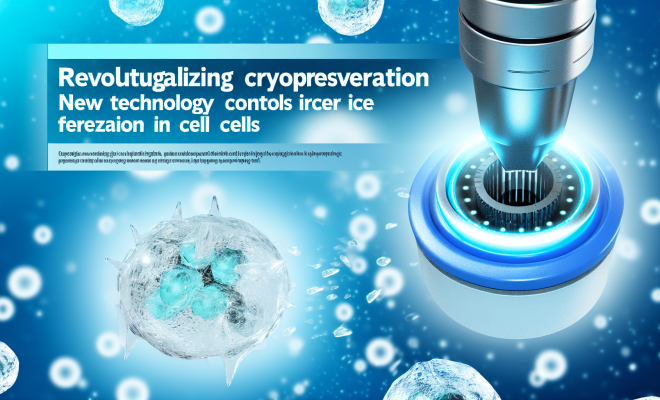
The field of cryopreservation has long faced challenges related to ice formation during the freezing process, a critical step in preserving biological materials such as immune cells and stem cells. Recently, a significant advancement in this area has been introduced by HOHCells, LLC through their new product, FreezOpt™. This innovative cryovial insert aims to provide researchers with enhanced control over ice nucleation during cryopreservation, thereby improving the consistency and reliability of biological research workflows.
Understanding Cryopreservation and Its Challenges
Cryopreservation is a vital technique in various fields, particularly in immune, stem cell, and regenerative medicine applications. The process involves cooling biological samples to sub-zero temperatures to halt all biological activities, including the damaging processes of metabolism and decay. However, one of the main hurdles in this technique is the formation of ice crystals, which can cause cellular damage and reduce the viability of the preserved cells.
Traditionally, ice formation is a natural phenomenon that occurs during freezing, but controlling this process has proven difficult. Ice nucleation—the initial formation of ice crystals—can be unpredictable, leading to inconsistencies in cell viability and functionality post-thaw. This inconsistency has posed significant challenges for researchers aiming to conduct reproducible and reliable experiments.
Introduction of FreezOpt™
To address these challenges, HOHCells, LLC has launched FreezOpt™, a patented cryovial insert that directly targets the ice nucleation process. Developed from extensive research led by Dr. He and colleagues, the technology has received support from the Maryland Stem Cell Research Fund, highlighting its promising potential in cryopreservation.
According to Greg Merril, CEO of HOHCells, FreezOpt™ is designed to integrate seamlessly with existing cryovials and controlled-rate freezing protocols. This means that researchers can utilize this innovative device without the need for additional equipment, making it a practical solution for laboratories already engaged in cryopreservation.
Key Features and Benefits
- Controlled Ice Nucleation: FreezOpt™ regulates the formation of ice, minimizing cellular damage and enhancing post-thaw cell viability.
- Compatibility: The insert is compatible with standard cryovials, allowing researchers to adopt this technology without altering their established protocols.
- Research-Use-Only Product: Available in packages of 96 units, FreezOpt™ is specifically designated for research purposes, ensuring that scientists can engage in innovative studies without compromising their methodologies.
- Backed by Research: The product is supported by peer-reviewed publications and patents, lending credibility to its effectiveness.
Implications for Researchers
The introduction of FreezOpt™ is set to have significant implications across various research domains. For instance, in regenerative medicine, the ability to preserve stem cells with high viability is crucial for advancing therapies and treatments. Researchers who depend on cryopreservation for immune cells will also benefit from the increased reliability that comes with controlled ice nucleation.
Moreover, the technology can help streamline biological research workflows. By reducing the variability associated with ice formation, scientists can focus more on the biological questions at hand, rather than dealing with the unpredictable outcomes of cryopreservation.
A Look Ahead
As the demand for regenerative medicine and advanced cell therapies continues to grow, the need for effective cryopreservation techniques becomes ever more critical. The successful implementation of FreezOpt™ could signal a new era in cryopreservation, where researchers have the tools necessary to ensure the integrity and viability of biological samples.
In conclusion, the development of FreezOpt™ by HOHCells, LLC represents a noteworthy advancement in the field of cryopreservation. With its ability to control ice formation during the freezing process, this innovative technology promises to enhance the consistency and reliability of cell preservation practices. As researchers embrace this new tool, the potential for breakthroughs in regenerative medicine and other biological sciences could be significantly amplified.
For more information on FreezOpt™ and its applications, researchers can explore the offerings from HOHCells, LLC and consider integrating this technology into their cryopreservation protocols.