Revealed: Your Retirement Fund Is Quietly Gambling on AI — And You Don’t Even Know It
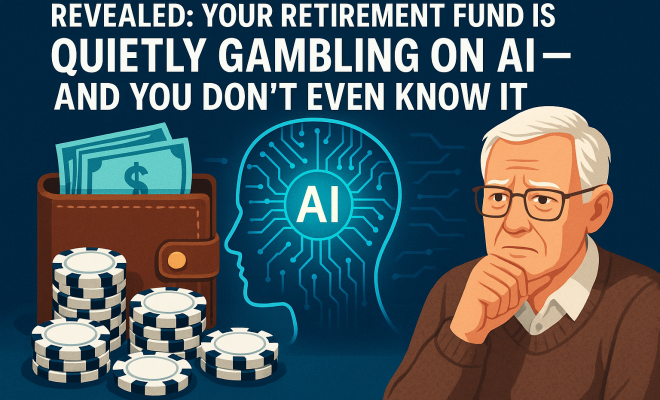
Remember the dot-com bubble? Or the housing market crash of ’08? The investment world has a knack for getting swept up in the next big thing, often leaving a trail of overexposed, under-informed investors in its wake. Well, it seems we might be on the cusp of another such moment, but this time, the culprit isn’t a flashy new IPO or an obvious speculative craze. Instead, it’s something far more insidious, lurking beneath the surface of seemingly ‘diversified’ portfolios: a quiet, almost unavoidable overexposure to Artificial Intelligence.
A recent warning from a Queensland-based marketplace platform has put this issue squarely in the spotlight, and it’s a revelation that should give every investor pause. The core message? You might be far more concentrated in AI than you realize, even if you think your portfolio is a paragon of diversification. This isn’t just about a few tech stocks; it’s about how the sheer dominance of AI-centric companies has permeated the very fabric of global equity indices. And that, my friends, introduces significant, often hidden, AI investment risks.
The Unseen Web: How AI Dominates Your ‘Diversified’ Portfolio
Think about your typical investment strategy. Most financial advisors, and indeed, common sense, preach the gospel of diversification. Spread your money across different sectors, geographies, and asset classes, right? It’s supposed to protect you from the inevitable ups and downs of any single company or industry. But what if the very instruments designed for diversification—your broad-market ETFs, your managed funds, even your superannuation or 401k—are secretly funneling a disproportionate amount of your capital into a handful of AI giants?
That’s precisely the scenario unfolding right now. The financial world is grappling with a new reality where a select group of tech titans, deeply embedded in the AI revolution, hold an outsized influence on global equity markets. We’re talking about names like Nvidia, Microsoft, Amazon, Alphabet (Google’s parent company), and Meta Platforms (Facebook’s parent). These aren’t just big companies; they are colossal entities whose market capitalizations dwarf many entire national economies. And critically, they are all at the forefront of AI development and deployment.
Their sheer size means they command enormous weight in major global equity indices—think the S&P 500, the NASDAQ 100, or even broader global indexes. When you invest in an ETF that tracks one of these indices, or a managed fund that aims to replicate their performance, you are, by default, investing heavily in these AI powerhouses. The problem is, many investors might be doing this not once, but multiple times over, through various ‘diversified’ products, leading to a concentration they never intended.
The Illusion of Diversification: A Deeper Dive into Index Concentration
Let’s unpack this ‘illusion of diversification’ a bit further. Imagine you hold three different ETFs: one tracking the S&P 500, another focused on global technology, and a third representing a broad international equity fund. You might feel pretty good about that spread, right? Different mandates, different exposures. But dig into the top holdings of each, and you’ll likely find the same familiar names popping up again and again: Microsoft, Apple, Nvidia, Amazon, Alphabet, Meta. These aren’t just minor positions; they often represent the largest allocations within these funds.
The concentration isn’t just in tech-specific funds either. Because these companies are so massive and their influence so pervasive, they bleed into general market indexes. If you own a ‘total market’ fund, you’re still getting a significant dose of these AI leaders. This phenomenon creates a kind of echo chamber within your portfolio, where what appears to be a broad, risk-mitigating strategy is, in reality, a highly correlated bet on a relatively small number of companies and, by extension, on the future of AI. The inherent AI investment risks become magnified when you realize how much of your capital is unknowingly tied to their fortunes.
This isn’t a new problem entirely; market concentration has been a recurring theme throughout financial history. But the speed and scale at which AI has become an economic force, coupled with the incredible growth rates of these specific companies, have accelerated this trend to an unprecedented degree. It means that while the AI revolution offers incredible potential for growth, it also centralizes a significant amount of market risk into a few very large, very interconnected baskets.
Nvidia and the AI Gold Rush: A Case Study in Dominance
If there’s one company that epitomizes the current AI gold rush, it’s Nvidia. Originally known for its graphics processing units (GPUs) primarily used in gaming, Nvidia pivoted brilliantly to become the indispensable hardware provider for AI development. Its GPUs are the workhorses behind large language models, autonomous vehicles, and countless other AI applications. This strategic positioning has catapulted Nvidia’s market capitalization to staggering heights, making it one of the most valuable companies on the planet.
But here’s the rub: Nvidia’s success, while phenomenal, has also contributed significantly to the concentrated nature of AI exposure. Every fund, every index, every portfolio looking to capitalize on AI growth almost invariably holds a chunky position in Nvidia. This makes perfect sense on an individual stock basis, given its performance. However, when aggregated across millions of portfolios and thousands of funds, it means that a substantial portion of global investment capital is effectively betting on Nvidia’s continued dominance in a highly competitive and rapidly evolving field. Any significant stumble for Nvidia, whether due to new competitors, technological shifts, or regulatory pressures, could send ripples through a vast swathe of investment portfolios, highlighting one of the most prominent AI investment risks. (See: AI investment trends and risks.)
This isn’t to say Nvidia is a bad investment; far from it. It’s an incredible company. But the widespread, often duplicated, exposure to it across diversified portfolios means that many investors have a much larger, often unwitting, single-company risk than they would typically tolerate. It’s a classic example of how a rising tide lifts all boats, but also how a sudden low tide can expose vulnerabilities across the board.
The Compounding Effect: Multiple Layers of AI Exposure
The Queensland platform’s warning really zeroes in on this compounding effect. It’s not just that you own an S&P 500 ETF with Microsoft and Apple. It’s that you might also own a global tech fund that also holds Microsoft and Apple, and then a growth-oriented managed fund that also allocates heavily to these same companies. Before you know it, what felt like three distinct bets has effectively become three layers of the same bet, all heavily skewed towards the same cluster of AI-driven mega-caps.
Consider the average investor who might have their retirement savings in a default superannuation option, a small brokerage account with a few ETFs, and perhaps a robo-advisor portfolio. Each of these might independently appear diversified. Yet, when you pull back the curtain, the underlying holdings are often remarkably similar in their top positions. This creates a kind of ‘hidden leverage’ to the performance of these AI giants. If they do well, your portfolio soars. But if they face headwinds—whether market corrections, regulatory crackdowns, or technological disruption—the impact on your overall wealth could be far more significant than you’d expect from a ‘diversified’ approach.
This duplication isn’t malicious; it’s a natural consequence of how market capitalization-weighted indices work, combined with fund managers’ natural inclination to hold the largest, most successful companies. But for the individual investor, it means a critical need to understand what’s actually under the hood of their various investment vehicles. Ignoring this compounding effect is one of the most dangerous AI investment risks.
Understanding and Mitigating Your AI Investment Risks
So, what’s an investor to do? The first step, as always, is awareness. You can’t manage what you don’t measure. Take the time to genuinely scrutinize the holdings of your ETFs, mutual funds, and any other pooled investment products. Most fund providers offer detailed breakdowns of their top holdings, often readily available on their websites or in fact sheets.
Here’s a practical approach: For more on this, see Oracle's risky AI choices.
- Review Top Holdings: For every fund or ETF you own, list its top 10-20 holdings.
- Identify Overlap: Look for common names across your different funds. How many times does Microsoft appear? Nvidia? Amazon?
- Calculate Aggregate Exposure:
Estimate your total percentage exposure to these key AI players across your entire portfolio. You might be surprised. - Consider Active Management (Carefully): While passive indexing has many benefits, it inherently leads to market-cap weighted concentration. If you’re concerned about this, actively managed funds *might* offer a way to gain exposure to different companies or sectors, but they come with higher fees and the risk of underperforming the market.
- Explore Equal-Weighting or Thematic ETFs: Some ETFs use equal-weighting strategies, giving smaller companies the same representation as larger ones, thus reducing concentration. Thematic AI ETFs might also be an option, but be aware they are *designed* for AI exposure, so they won’t solve the overall concentration problem, but might offer a more targeted, transparent way to get it.
Ultimately, it’s about making informed decisions. If you’re comfortable with your aggregated AI exposure, knowing the risks, then carry on. But if you find yourself unknowingly heavily concentrated, it’s time to re-evaluate your strategy to better align with your true risk tolerance and diversification goals.
The Regulatory Landscape and Future Headwinds for Tech Giants
Beyond market dynamics, another significant factor contributing to AI investment risks for these mega-cap tech companies is the evolving regulatory landscape. Governments around the world are increasingly scrutinizing the power and influence of big tech. Antitrust concerns, data privacy regulations (like GDPR), and even discussions around the ethical implications of AI itself could lead to significant challenges for these dominant players.
Consider the ongoing antitrust probes against companies like Google and Amazon in various jurisdictions. Fines, forced divestitures, or restrictions on business practices could impact their profitability and growth trajectories. The European Union, in particular, has been proactive in reining in tech giants, and other nations are following suit. As AI becomes even more central to society, expect even greater regulatory oversight, especially regarding data usage, algorithmic bias, and market dominance.
These regulatory headwinds are not hypothetical; they are real, active threats that could disrupt the growth narratives that have propelled these companies to their current valuations. While their immense resources provide a buffer, sustained regulatory pressure could erode market confidence and introduce volatility, directly impacting portfolios heavily invested in them. This external pressure adds another layer of complexity to assessing the true risks of an AI-concentrated portfolio.
Beyond the Hype: The Long-Term Viability of Current AI Leaders
It’s easy to get swept up in the narrative of unstoppable growth for today’s AI leaders. But history teaches us that technological dominance is rarely permanent. The tech landscape is littered with former giants who failed to adapt: MySpace, BlackBerry, Nokia, Yahoo. While today’s AI leaders are incredibly innovative and adaptable, the pace of change in AI is breathtaking, and competition is fierce. (See: Impact of AI on global markets.)
New startups are constantly emerging, pushing the boundaries of what’s possible. Open-source AI models are democratizing access to powerful tools, potentially eroding the competitive moats of proprietary systems. Furthermore, the very definition of ‘AI leadership’ could shift. Today, it might be about foundational models and computing power. Tomorrow, it could be about specialized applications, ethical frameworks, or entirely new paradigms we haven’t even conceived of yet. This inherent uncertainty is a critical component of AI investment risks.
Relying too heavily on the current cohort of leaders, without considering the potential for disruption from unforeseen quarters, is a significant gamble. While their current positions seem unassailable, innovation is a relentless force that respects no incumbents. Savvy investors need to consider this long-term viability and the potential for new entrants to carve out significant market share, even from the most established players. Related reading: best AI financial advisors revealed.
The Role of Robo-Advisors and Investment Platforms in This Landscape
Robo-advisors and online investment platforms have democratized investing, making it accessible to millions. They typically offer pre-built portfolios, often consisting of low-cost ETFs, tailored to an investor’s risk profile. This is fantastic for convenience and cost-efficiency. However, they are not immune to the AI overexposure issue.
Many robo-advisor portfolios, particularly those designed for growth or moderate-to-aggressive risk profiles, will naturally allocate heavily to market-cap weighted global equity ETFs. As we’ve discussed, these ETFs are inherently concentrated in the same AI mega-caps. So, while a robo-advisor might offer a diverse mix of asset classes (equities, bonds, real estate), the equity component itself could still carry significant, hidden AI concentration risk.
If you’re using a robo-advisor, it’s crucial to understand the underlying holdings of the ETFs they select for your portfolio. Don’t just assume ‘diversified’ means truly spread out across hundreds of truly distinct companies. Ask for a detailed breakdown, or look it up yourself. Platforms like Vanguard Personal Advisor Services, Betterment, or Schwab Intelligent Portfolios all construct portfolios using ETFs, and while they do an excellent job of broad asset allocation, the equity slice of that pie will almost certainly feature the familiar AI names prominently. Understanding this is key to managing your personal AI investment risks within these convenient platforms.
Navigating the Future: A Call for Active Due Diligence
The rise of AI is undeniably transformative, presenting immense opportunities for investors. But with great opportunity comes great responsibility—the responsibility of due diligence. The warning from the Queensland platform isn’t about shying away from AI altogether; it’s about being eyes-wide-open regarding your actual exposure. It’s about recognizing that the traditional definitions of ‘diversification’ may need an update in an era where a handful of tech behemoths can dominate global indices.
As investors, we need to move beyond simply looking at the fund name or its stated objective. We need to dig into the underlying components, understand the true drivers of performance, and assess the aggregate risk across our entire portfolio. This isn’t just about financial prudence; it’s about financial literacy in an increasingly complex and interconnected market. The future of investing isn’t just about picking winners; it’s about intelligently managing concentration, especially when it comes to the powerful, yet potentially volatile, forces of AI.
So, take a moment. Go review your statements. Log into your brokerage account. Uncover what’s truly driving your portfolio’s performance. You might just find that your retirement fund is making a bigger, more concentrated bet on AI than you ever imagined, and it’s far better to understand those AI investment risks now than to be surprised later.
The Macroeconomic Ripple Effect of AI Concentration
It’s not just individual portfolios that face challenges; the broader macroeconomic landscape also experiences ripple effects from this AI concentration. When a few companies hold such sway over market indices, their performance can disproportionately influence overall market sentiment. A strong earnings report from one of these giants can lift the entire market, while a stumble can trigger a broader downturn, even if other sectors are performing well. This creates a kind of systemic risk where the health of the entire market becomes closely tied to the fortunes of a select few AI leaders.
Think about how the S&P 500’s performance is often heavily weighted by the “Magnificent Seven” tech stocks. If these companies experience a significant correction, the impact on retirement accounts, pension funds, and institutional investments globally would be substantial. This interconnectedness means that even investors who believe they are diversified across different geographic markets might still be highly exposed to the same core set of AI-driven companies, as these companies often have a global footprint and are included in various international indices. This makes the hidden AI investment risks a global concern, not just a localized one. (See: AI and workplace safety considerations.)
Furthermore, the immense capital flowing into these AI leaders can sometimes starve smaller, innovative companies of investment, particularly those in nascent stages or less “sexy” sectors. While capital markets are efficient, the sheer gravitational pull of these mega-caps can create an uneven playing field, potentially stifling broader innovation and economic diversity in the long run. This isn’t a direct risk to your existing portfolio, but it speaks to the broader health and balance of the investment ecosystem.
Historical Parallels: Lessons from Past Market Bubbles
To truly grasp the potential AI investment risks, it’s helpful to look at historical parallels. The dot-com bubble of the late 1990s offers a stark reminder of what happens when market enthusiasm for a transformative technology leads to extreme concentration and irrational valuations. Companies with little to no revenue or profit were trading at astronomical multiples simply because they had “.com” in their name. When the bubble burst, countless investors saw their portfolios decimated.
While today’s AI leaders are profitable, well-established companies with robust business models, the rapid run-up in their valuations, particularly for companies like Nvidia, shares some characteristics with past periods of market exuberance. In the dot-com era, a few dominant tech companies like Cisco and Microsoft held significant weight, but their concentration wasn’t as pervasive across diversified funds as it is today with AI. The difference now is the sheer scale and interwoven nature of these companies within virtually every major index.
Another parallel might be the “Nifty Fifty” stocks of the 1960s and early 70s—a group of large-cap growth stocks that were considered “one-decision” investments, meaning you bought them and held them forever, regardless of price. Companies like IBM, Coca-Cola, and McDonald’s dominated portfolios. While they were (and many still are) great companies, their valuations became stretched, and many underperformed for years after the market corrected. The lesson here is that even great companies can become overvalued, leading to prolonged periods of poor returns for investors who bought at the peak. This historical context provides valuable perspective on the potential for AI investment risks, even with seemingly bulletproof companies.
Emerging AI Investment Risks: Geopolitical and Supply Chain Factors
Beyond market concentration and regulatory pressures, emerging geopolitical tensions and supply chain vulnerabilities introduce additional layers of AI investment risks. The global competition for AI dominance is intensifying, particularly between the U.S. and China. This rivalry can manifest in trade restrictions, export controls on critical technology (like advanced semiconductors), and intellectual property disputes.
Many of the leading AI companies rely on complex global supply chains for their hardware, software components, and talent. A significant disruption, whether from a natural disaster, a pandemic, or geopolitical conflict, could severely impact their ability to operate and innovate. For example, the ongoing reliance on Taiwan Semiconductor Manufacturing Company (TSMC) for advanced chips means that geopolitical instability in the Taiwan Strait could have catastrophic consequences for the entire AI industry, directly affecting companies like Nvidia, Apple, and AMD.
These external factors are often difficult for individual investors to assess or mitigate, yet they pose substantial, non-diversifiable risks to AI-heavy portfolios. Understanding that your AI exposure isn’t just about company fundamentals, but also about the stability of global trade and political relations, is crucial. It adds a macro-level dimension to the AI investment risks you need to consider.
Trending Now
Frequently Asked Questions
How is AI affecting my retirement fund?
Many retirement funds are increasingly invested in AI-centric companies, often without investors realizing it. This overexposure to AI can lead to significant risks, as these companies dominate global equity markets and may not align with traditional diversification strategies.
What are the risks of investing in AI?
Investing in AI carries risks such as market volatility and concentration in a few dominant tech companies. If your portfolio is heavily weighted in AI, you may face greater exposure to downturns in this sector, despite a seemingly diversified strategy.
Are ETFs safe for retirement savings?
While ETFs are designed to provide diversification, many may inadvertently concentrate investments in AI companies. This hidden exposure can pose risks to retirement savings, as shifts in the AI market could significantly impact overall portfolio performance.
What should I do if my portfolio is overexposed to AI?
If you suspect your portfolio is overexposed to AI, consider reviewing your investment strategy. Consult with a financial advisor to assess your risk tolerance and explore options for diversifying into other sectors or asset classes to mitigate potential losses.
How can I diversify my investments away from AI?
To diversify away from AI, look for investment options outside of tech, such as bonds, real estate, or international markets. Actively managed funds may also help, as they can adjust allocations based on market conditions and reduce concentration in AI-heavy sectors.
Agree or disagree? Drop a comment and tell us what you think.