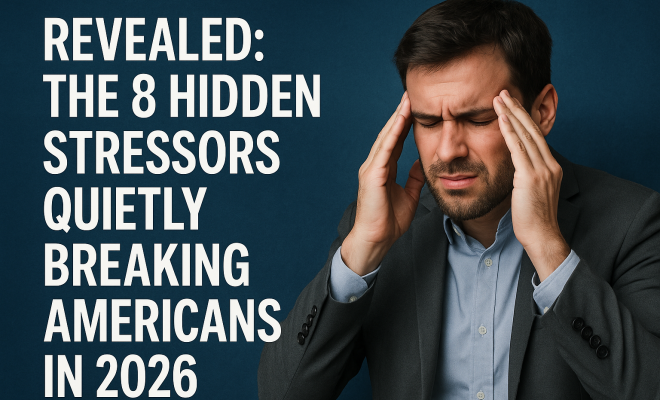
8 Hidden Stressors Quietly Breaking Americans in 2026
“`html
It feels like we’re constantly juggling more than ever before, doesn’t it? From the moment we wake up, often after a restless night, to the endless scroll through headlines that seem to deliver one blow after another, stress has become an unwelcome, yet constant, companion for far too many Americans. We’re not just talking about the everyday annoyances; we’re discussing deep-seated anxieties that are genuinely impacting our mental and physical well-being. And if you’ve felt this creeping sense of unease, you’re definitely not alone. A recent survey paints a rather stark picture of what’s truly driving our collective stress levels in 2026, pointing to a confluence of factors that are creating a perfect storm for our mental health. Understanding these key drivers is the first step toward effective stress management.
What’s really going on beneath the surface? It turns out that while many of us might point to our busy schedules or demanding jobs, the deeper roots of our current anxieties lie in a few critical areas. These aren’t just minor irritations; they’re systemic pressures that are making it incredibly difficult for people to find peace, stability, and even basic well-being. We’re going to dive into the eight most significant stressors identified in this eye-opening report, exploring not just what they are, but why they’re having such a profound impact on millions of lives across the country. And trust me, some of these might surprise you.
1. The Crushing Weight of the Cost of Living: It’s Not Just Inflation, It’s Everything
Let’s start with the big one, the elephant in every American’s financial room: the escalating cost of living. If you’ve found yourself staring at grocery bills with wide eyes, or watching your rent climb higher and higher, you’re experiencing a major national phenomenon. The survey found that a staggering 82.2% of Americans cite the cost of living as a significant stressor. Think about that for a moment – over four-fifths of the population is feeling the pinch, and it’s not just a mild discomfort; it’s a deep, gnawing worry that permeates daily life.
This isn’t just about paying more for gas or milk; it’s about the erosion of purchasing power across the board. Housing, transportation, food, utilities – every essential aspect of life has seen substantial price hikes, often outpacing wage growth. This creates a constant sense of precarity, where even those with stable jobs feel like they’re falling behind. The psychological toll of this relentless financial pressure is immense, making effective stress management incredibly challenging when your fundamental needs feel threatened.
2. Financial Anxiety & Depression: The Mental Health Ripple Effect of Debt
The cost of living crisis doesn’t just empty bank accounts; it also drains our mental reserves. The survey highlights a direct correlation between financial strain and worsening mental health, with 45% of Americans reporting anxiety specifically due to financial worries. This isn’t theoretical; it’s a tangible, debilitating experience for nearly half the country. When your mind is constantly consumed with how to make ends meet, how to pay the next bill, or how to save for a seemingly impossible future, it leaves little room for joy, peace, or even basic cognitive function.
Perhaps even more stark is the impact of debt. For individuals carrying over $30,000 in debt, the report indicates a chilling 53% increase in mental health symptoms. Imagine the weight of that – over half of people with significant debt are experiencing more pronounced anxiety, depression, and other mental health challenges. This isn’t just about owing money; it’s about the feeling of being trapped, the constant fear of insolvency, and the shame that often accompanies financial struggles in a society that values economic success. This cycle of debt and despair is a significant barrier to effective stress management and overall well-being. (Mental health strategies guide)
3. The Unaffordable Price Tag of Mental Healthcare: A Barrier to Healing
Here’s a cruel irony: the very services designed to help us cope with stress and mental health challenges are often financially out of reach for those who need them most. The cost of mental healthcare itself is a significant barrier, leaving many Americans in a difficult bind. While online therapy options offer a more affordable alternative, typically ranging from $65-95 weekly compared to $100-350 for in-person sessions, a disheartening 31% of Americans still find treatment financially inaccessible. This means nearly one-third of our population is staring down mental health issues with no viable path to professional help simply because they can’t afford it.
This affordability crisis isn’t just a minor inconvenience; it’s a systemic failure that perpetuates suffering. Imagine feeling overwhelmed, anxious, or depressed, knowing there’s help available, but being unable to access it due to cost. It adds another layer of stress and hopelessness, exacerbating the very conditions one seeks to alleviate. This highlights a critical need for broader access and more affordable options if we’re serious about improving the nation’s mental well-being and promoting effective stress management strategies.
4. The Medicare Gap: Older Adults Left in the Lurch
While the overall cost of mental healthcare is a national problem, it hits certain demographics particularly hard. Older adults, often living on fixed incomes or with increasing medical expenses, frequently find themselves in a precarious position when it comes to mental health support. Medicare, a cornerstone of healthcare for seniors, has historically had significant gaps in its coverage for mental health services, leaving many seniors with limited options and substantial out-of-pocket costs. (See: Understanding stress and its effects.)
Recognizing this critical vulnerability, a bipartisan effort in the Senate saw a bill introduced in July 2026 aimed at easing mental health care access for older adults under Medicare. This legislative push acknowledges the systemic problem and the profound impact it has on a demographic that often faces unique stressors like isolation, loss, and health decline. While a positive step, it also underscores just how long this issue has persisted and the ongoing struggle many seniors face in accessing the mental health support they desperately need for effective stress management.
5. The Sleep Deprivation Epidemic: A Silent Saboteur of Well-being
When was the last time you woke up feeling truly refreshed, ready to tackle the day? For many, that feeling is a distant memory. Sleep loss, often a direct consequence of the other stressors we’ve discussed, is a massive problem in its own right, and it’s a silent saboteur of our mental and physical health. The survey implicitly points to sleep disruption as a key factor in our overall stress levels, and it’s easy to see why. When you’re worried about money, your job, or your health, quality sleep is often the first thing to go.
Chronic sleep deprivation doesn’t just make you tired; it impacts your cognitive function, emotional regulation, and physical health in profound ways. It can exacerbate anxiety, deepen depression, impair decision-making, and even weaken your immune system. It creates a vicious cycle: stress leads to poor sleep, and poor sleep makes you less resilient to stress. Breaking this cycle is a fundamental component of effective stress management, yet it remains elusive for millions. There’s a fuller look at Impact of violence on youth.
6. The Pervasive Ache of Loneliness: Disconnected in a Connected World
In an era where we’re constantly connected through screens and social media, it’s a strange paradox that loneliness is reaching epidemic proportions. Yet, the survey highlights loneliness as a significant driver of stress in 2026. This isn’t just about being alone; it’s about the feeling of being disconnected, misunderstood, or lacking meaningful social bonds. Humans are inherently social creatures, and when that fundamental need for connection isn’t met, it creates a deep sense of unease and psychological pain.
Loneliness can be just as detrimental to health as physical ailments, increasing the risk of depression, anxiety, and even cardiovascular disease. It’s often intertwined with other stressors; for example, financial strain can limit social activities, and mental health struggles can make it harder to reach out. Addressing loneliness requires intentional effort to build and nurture genuine connections, something that’s increasingly difficult in our fast-paced, often isolated, modern lives. Effective stress management often involves fostering a strong support system.
7. The Digital Overload & Information Fatigue: Too Much, Too Fast
While not explicitly called out as a standalone item in the summary, the context of modern life strongly suggests that digital overload and information fatigue play a huge, albeit often subtle, role in our overall stress. Think about it: our phones are never far from reach, constantly buzzing with notifications, news alerts, and social media updates. We’re bombarded with information, much of it negative or anxiety-inducing, from the moment we open our eyes. This constant influx of data, coupled with the pressure to be ‘always on,’ is exhausting.
This relentless digital bombardment makes it incredibly difficult to truly disconnect and find moments of peace. Our brains are not designed to process this volume of information without breaks, and the inability to switch off leads to mental fatigue, difficulty concentrating, and heightened anxiety. It blurs the lines between work and personal life, making it harder to establish boundaries and truly recharge. Recognizing and managing our digital consumption is an increasingly vital part of modern stress management.
8. Systemic Failures & Lack of Collective Action: The Bigger Picture
Ultimately, many of these individual stressors are symptoms of larger, systemic issues. The cost of living isn’t just a series of bad luck; it’s a reflection of economic policies, inflation, and market forces. The unaffordability of mental healthcare points to deficiencies in our healthcare system and insurance models. Even loneliness can be exacerbated by societal changes, urban planning, and the erosion of community structures. When individuals feel like they are struggling against insurmountable forces, it adds a layer of helplessness and frustration that compounds their stress.
The bipartisan recognition of the mental health affordability crisis, as evidenced by the Senate bill for older adults, is a glimmer of hope, but it also underscores how much more needs to be done on a policy level. Personal stress management techniques are invaluable, but they can only go so far when the fundamental structures around us are creating overwhelming pressure. Addressing these deeper, systemic failures is crucial for creating a society where well-being is genuinely prioritized, and effective stress management isn’t an uphill battle for the majority.
The Interconnected Web of Stress: Why No Single Solution Works
It’s crucial to understand that these stressors don’t exist in isolation. They’re part of a complex, interconnected web. For example, the crushing weight of the cost of living (stressor #1) directly fuels financial anxiety (#2). This financial anxiety can then disrupt sleep (#5) and make it impossible to afford mental healthcare (#3), even if you’re an older adult facing the Medicare gap (#4). The constant worry might also lead to social withdrawal, contributing to loneliness (#6), which can then be exacerbated by endless scrolling through curated, often unrealistic, social media feeds, feeding into digital overload (#7). All of this unfolds against a backdrop of systemic failures (#8) that seem too vast for any one individual to tackle.
This interconnectedness is why a piecemeal approach to stress management often falls short. You can’t just fix your sleep if your financial worries are keeping you awake. You can’t simply “think positive” if you’re staring down insurmountable debt and can’t afford therapy. A truly effective stress management strategy needs to acknowledge this complexity and integrate solutions that address multiple facets of the problem, both personally and on a societal level. (See: Statistics on mental health issues.)
The Physiological Impact of Chronic Stress: Beyond Just Feeling Bad
While we’ve touched on the mental health consequences, it’s vital to highlight the profound physiological impact of chronic stress. This isn’t just about feeling “stressed out”; it’s about your body being in a constant state of “fight or flight,” which takes a massive toll over time. When you’re constantly stressed, your body pumps out hormones like cortisol and adrenaline. While useful in short bursts for actual danger, prolonged exposure to these hormones can lead to a cascade of health issues. We covered STEM gender gap insights in more detail.
Think about it: chronic stress can contribute to high blood pressure, increasing your risk of heart disease and stroke. It can suppress your immune system, making you more susceptible to infections and slower to heal. Your digestive system can go haywire, leading to issues like irritable bowel syndrome (IBS) or ulcers. It can even affect your metabolism, potentially leading to weight gain and an increased risk of type 2 diabetes. Headaches, muscle tension, and chronic pain are also common companions of prolonged stress. Understanding these physical repercussions underscores why stress management isn’t just about feeling happier, but about preserving your long-term physical health.
Expert Perspectives: What Clinicians Are Seeing
From the front lines, mental health professionals are witnessing the real-world impact of these stressors daily. Dr. Elena Rodriguez, a clinical psychologist specializing in anxiety disorders, notes, “We’re seeing an unprecedented level of generalized anxiety, often without a clear trigger. Patients report a pervasive sense of unease, a feeling that things are constantly on the brink. A significant portion of this is tied directly to financial insecurity and the feeling of being unable to get ahead, no matter how hard they work.”
Similarly, Dr. Marcus Chen, a psychiatrist focusing on geriatric mental health, points out the unique challenges faced by older adults. “The Medicare gap for mental health services is a tragic oversight. Many of my older patients are experiencing significant depression or anxiety due to isolation or health concerns, but they face immense hurdles in accessing consistent, affordable care. The proposed legislation is a good start, but there’s a long way to go to truly support this vulnerable population.” These expert insights reinforce the depth and breadth of the stress epidemic and the urgent need for comprehensive solutions.
Finding Your Footing: Practical Approaches to Stress Management
Given the landscape of stress in 2026, simply telling people to ‘relax’ or ‘think positive’ feels incredibly dismissive. The challenges are real, deep, and often systemic. However, understanding these root causes empowers us to take more targeted action, both individually and collectively. For personal stress management, it’s about building resilience and finding effective coping mechanisms amidst the storm.
One critical area is financial literacy and planning. While it won’t magically solve the cost of living crisis, gaining control over your personal finances can alleviate a significant portion of financial anxiety. This might involve creating a realistic budget, exploring debt consolidation options, or seeking advice from non-profit credit counseling services. Even small steps, like tracking expenses, can provide a sense of agency that reduces stress.
Prioritizing Sleep and Connection
Addressing sleep loss requires intentional effort. Establishing a consistent sleep schedule, creating a relaxing bedtime routine (and yes, that probably means putting the phone away an hour before bed), and optimizing your sleep environment can make a huge difference. If you suspect an underlying sleep disorder, talking to a doctor is a smart move. Similarly, combating loneliness means actively seeking out meaningful connections. This could be joining a club, volunteering, reconnecting with old friends, or even engaging in community events. It’s about quality over quantity when it comes to social interaction.
Advocacy and Affordable Care
On the healthcare front, it’s about advocacy and exploring all available options. If you’re struggling with the cost of mental healthcare, research online therapy platforms – many offer sliding scales or lower rates. Look into community mental health centers, university clinics, or non-profit organizations that often provide services at reduced costs. Additionally, becoming an advocate for better mental health coverage, whether through contacting your representatives or supporting relevant organizations, contributes to the larger solution.
Digital Detox and Mindful Living
Finally, a ‘digital detox’ isn’t just a trendy phrase; it’s a necessity for modern stress management. Schedule technology-free times each day or week. Turn off non-essential notifications. Be mindful of the content you consume, especially news, and limit exposure if it’s consistently causing distress. Practices like mindfulness meditation, even for just a few minutes a day, can help you anchor yourself in the present moment and develop greater emotional regulation, serving as a powerful counter to the constant overwhelm of modern life.
The reality of stress in 2026 is complex and multifaceted. It’s a reflection of economic pressures, societal shifts, and systemic challenges. But by understanding these drivers, we can move beyond simply feeling overwhelmed and instead focus on practical, actionable strategies – both individually and collectively – to navigate this landscape with greater resilience and hope. It’s not about eliminating stress entirely, which is probably impossible, but about building robust stress management skills that allow us to thrive despite the challenges.
Frequently Asked Questions About Stress Management
Q1: What’s the single most effective stress management technique?
There isn’t a single “most effective” technique because stress is so personal and multifaceted. The best approach involves a combination of strategies tailored to your specific stressors and needs. For some, mindfulness meditation is transformative; for others, rigorous exercise or financial planning might be more impactful. The key is to find what genuinely works for you and to be consistent with it. Often, addressing the root cause of the stress, if possible, is more effective than just treating the symptoms. This builds on Long-term effects of student debt.
Q2: Can stress really impact my physical health, or is it just in my head?
Absolutely, stress has a very real and significant impact on your physical health. It’s not “just in your head.” Chronic stress can lead to physical symptoms like headaches, digestive issues, muscle tension, and can exacerbate conditions like high blood pressure, heart disease, and weakened immune function. Your mind and body are intricately connected, and prolonged mental stress manifests physically. Prioritizing stress management is a crucial component of overall physical well-being.
Q3: How do I know if my stress is severe enough to seek professional help?
If your stress is consistently interfering with your daily life, relationships, work, or sleep, or if you’re experiencing persistent feelings of hopelessness, anxiety, or depression, it’s a strong indicator that professional help could be beneficial. Don’t wait until you’re at a breaking point. A therapist or counselor can provide tools, strategies, and a safe space to process your feelings. Even if you feel like you “should” be able to handle it, there’s no shame in seeking support.
Q4: What’s the difference between stress and anxiety?
Stress is typically a response to an external cause, like a demanding job or financial difficulties. Once the stressor is removed, the stress response usually diminishes. Anxiety, on the other hand, is a persistent, excessive worry that may not have a clear external trigger, or it might be disproportionate to the actual stressor. While stress can lead to anxiety, and they often overlap, anxiety can exist even in the absence of an immediate external threat. Both can significantly impact well-being and benefit from stress management techniques.
Q5: Is it possible to completely eliminate stress from my life?
No, completely eliminating stress isn’t realistic, nor would it necessarily be healthy. Some level of stress (eustress) can actually be motivating and help us perform better. The goal of stress management isn’t eradication, but rather developing the skills to effectively cope with stressors, reduce their negative impact, and build resilience. It’s about learning to navigate life’s challenges without becoming overwhelmed, maintaining a sense of balance and well-being even when things get tough.
“`
Trending Now
Frequently Asked Questions
What are the main causes of stress for Americans in 2026?
The primary causes of stress for Americans in 2026 include the escalating cost of living, systemic pressures, and deep-seated anxieties. Many individuals are struggling with financial burdens, demanding jobs, and a constant influx of distressing news, which collectively contribute to a heightened state of stress and anxiety.
How does the cost of living affect mental health?
The rising cost of living significantly impacts mental health by creating financial strain and instability. With over 82% of Americans reporting it as a major stressor, the constant worry about expenses can lead to anxiety, depression, and a feeling of helplessness, making it difficult to achieve peace and well-being.
What are hidden stressors affecting Americans today?
Hidden stressors affecting Americans today include not only financial pressures but also societal expectations, job demands, and the pervasive influence of negative news. These factors create a cumulative effect that exacerbates stress levels, leading to mental and physical health issues.
Why is stress management crucial in today's society?
Stress management is crucial in today's society because the combination of various stressors can lead to severe mental and physical health problems. Understanding the root causes of stress allows individuals to develop effective coping strategies and improve their overall quality of life amidst challenging circumstances.
What steps can be taken to manage stress effectively?
To manage stress effectively, individuals can adopt practices such as mindfulness, regular exercise, and maintaining a balanced diet. Additionally, seeking support from friends, family, or mental health professionals can provide valuable coping mechanisms to navigate the pressures of modern life.
What's your take on this? Share your thoughts in the comments below — we read every one.