Yeast Cells Survive Martian Conditions in 2026 Study
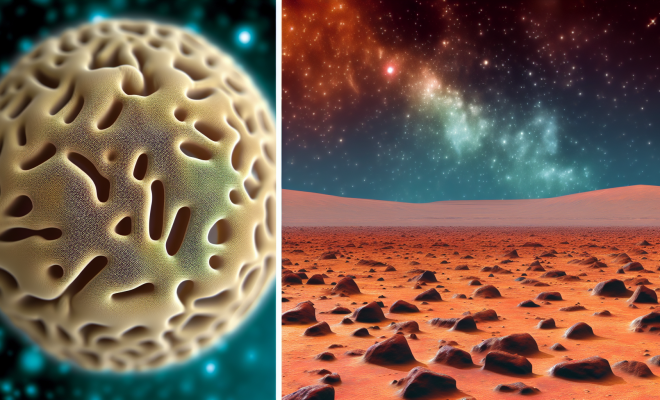
In a groundbreaking study, researchers have demonstrated that life, even in its simplest forms, may possess a surprising resilience to the harsh conditions found on Mars. Led by Purusharth I. Rajyaguru, a team of scientists examined the endurance of Saccharomyces cerevisiae, commonly known as baker’s yeast, under simulated Martian environments. The findings, published in early April 2026, provide new insights into the potential for microbial life on the Red Planet.
Understanding the Martian Environment
Mars, often referred to as the Red Planet, presents a myriad of challenges for any form of life. With its thin atmosphere, extreme temperatures, and high levels of radiation, the conditions are far from hospitable. One particularly daunting aspect of Mars is its soil composition, which contains high concentrations of sodium perchlorate (NaClO4). This chemical can disrupt cellular functions by interfering with proteins through hydrogen bonds and hydrophobic interactions.
To better understand how life might survive these conditions, Rajyaguru and his team designed an experiment to expose yeast cells to both shock waves and the toxic effects of perchlorates. The experiment aimed to simulate the consequences of meteorite impacts, which could potentially introduce shock waves capable of disrupting cellular integrity.
The Experiment: Methods and Findings
The researchers subjected Saccharomyces cerevisiae to two primary stressors: shock waves that mimic those produced by meteorite impacts and a solution containing 100 mM sodium perchlorate, similar to concentrations found on Martian soil. The yeast was chosen for this study due to its status as a model organism, its previous exposure to space conditions, and its biological similarities to humans.
After the yeast cells were exposed to these extreme conditions, the researchers carefully analyzed their survival rates and cellular responses. Remarkably, a significant number of the yeast cells survived both the shock waves and the toxic perchlorates. This resilience raises intriguing questions about the potential for life, even in its most basic forms, to endure and adapt to extreme environments.
Implications for Astrobiology
The implications of these findings extend far beyond the laboratory. The survival of yeast under Martian conditions suggests that there may be a greater possibility for microbial life on Mars than previously thought. If simple organisms like yeast can withstand such harsh environments, it opens the door to the possibility that more complex forms of life could also exist on the planet.
- Microbial Resilience: The study highlights the inherent resilience of microbes, which may have evolved mechanisms to withstand extreme conditions.
- Astrobiological Potential: The findings prompt further investigation into the possibility of life on Mars and other celestial bodies with similar environments.
- Precedent for Future Missions: Understanding microbial survival under Martian conditions is crucial for future exploratory missions and potential colonization efforts.
Broader Impact on Space Research
The results of this research not only contribute to our understanding of life on Mars but also inform the broader field of astrobiology. With missions planned to Mars in the coming years, including potential human exploration, the findings underscore the importance of studying microbial life that could be transported to and from other planets.
As scientists continue to explore the potential for life beyond Earth, the resilience demonstrated by Saccharomyces cerevisiae serves as a reminder of the adaptability of life. Understanding how these organisms react to extreme conditions may provide invaluable insights into the survival strategies of extraterrestrial life forms.
Conclusion: A New Perspective on Life Beyond Earth
The study led by Purusharth I. Rajyaguru offers a promising glimpse into the potential for life on Mars, challenging the notion that the planet is entirely uninhabitable. As researchers continue to explore the limits of life in extreme environments, the resilience observed in yeast cells presents an optimistic outlook for the search for extraterrestrial life.
Ultimately, this research not only enhances our understanding of life on Mars but also emphasizes the need for continued exploration and study of our neighboring planets. With each new discovery, we inch closer to answering one of humanity’s most profound questions: are we alone in the universe?