Renpho Lynx Smart Ring: A Comprehensive Review
The smart ring market has exploded in recent years, offering consumers a discreet alternative to bulky smartwatches and fitness trackers. Among the growing number of options, the RENPHO Lynx Smart Ring has emerged as a compelling choice, particularly for those seeking comprehensive health tracking without the burden of subscription fees. As someone who has tested various wearable devices, I spent several weeks with the Lynx to evaluate its performance, features, and overall value proposition. This in-depth review explores whether this $179 smart ring deserves a place on your finger.
Design and Build Quality
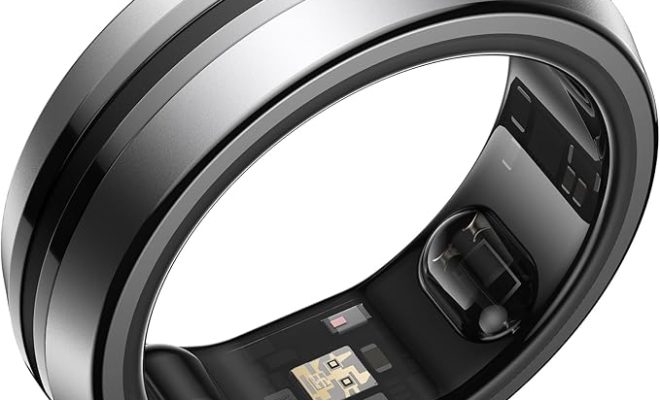
The RENPHO Lynx Smart Ring is available in two finishes: Carbon Black and Titanium Silver. I tested the Carbon Black version, which features a surprisingly sleek and minimal aesthetic that defies the typical “tech gadget” look. The matte finish is complemented by a slim glossy strip that adds just enough character without being ostentatious or drawing unwanted attention.
For someone who doesn’t typically wear jewelry beyond a wedding band, I was pleasantly surprised by how unobtrusive the Lynx feels. The design is gender-neutral and sophisticated enough to wear in professional settings, casual environments, or during workouts. It doesn’t scream “fitness tracker,” which is precisely the point—discretion is one of the primary advantages of choosing a ring over a watch.
The interior of the ring features protruding sensors that make contact with your finger for more accurate health readings. Initially, I found these sensors slightly uncomfortable, but within a few hours, I completely forgot they were there. An unexpected benefit of these sensors is that they make it much easier to orient the ring correctly when placing it in the charging case, as you can feel which way is up without looking.
RENPHO offers a free sizing kit that you can order and keep, which is an excellent touch given that ring sizes can vary significantly between manufacturers. Getting the right fit is crucial for accurate sensor readings, so this service eliminates the guesswork and potential frustration of ordering the wrong size.
The Lynx boasts a 5ATM water resistance rating, meaning it can withstand pressure equivalent to 50 meters of depth. In practical terms, this means you can wear it while washing hands, showering, swimming, or engaging in water sports without worry. I wore mine in the shower daily and during swimming sessions without any issues or degradation in performance.
Health Tracking Features
The RENPHO Lynx tracks a comprehensive suite of health metrics that rival what you’d find on smartwatches costing significantly more. The ring monitors steps, calories burned, distance traveled, sleep patterns, heart rate, SpO₂ (blood oxygen levels), heart rate variability (HRV), and stress levels.
Sleep Tracking
Sleep tracking is where the Lynx truly shines. The ring measures sleep with impressive accuracy, breaking down your night into awake time, deep sleep, REM sleep, and light sleep phases. It also tracks how long it takes you to fall asleep, which can be valuable information for those working on improving sleep hygiene.
After comparing the Lynx’s sleep data with my subjective experience and cross-referencing with other devices, I found the measurements to be remarkably accurate. It correctly identified nights when I woke up multiple times, captured my typical sleep patterns, and even detected afternoon naps I took on weekends. The sleep score provided each morning gives you a quick snapshot of your rest quality, making it easy to identify trends over time.
Heart Rate and Activity Tracking
The Lynx continuously monitors your heart rate throughout the day and night. For dedicated workout sessions, you can open the RENPHO app, select your exercise type, and the ring will track your heart rate and effort level with good accuracy. I tested this during various activities including running, cycling, and strength training, and found the heart rate readings to be reasonably accurate when compared to chest strap monitors.
Step counting is where the Lynx shows some limitations. Like most wrist and finger-worn devices, it tends to overcount steps slightly, particularly during activities involving arm movements that aren’t actually walking. However, the overcounting is consistent, which means you can still track trends and progress over time, even if the absolute numbers aren’t perfectly precise.
HRV and Stress Monitoring
Heart rate variability and stress level measurements are among the more advanced features offered by the Lynx. However, these metrics appear to be less accurate than the sleep and heart rate tracking. One user reported that the stress readings seemed to show only “relaxed” or “tense” states without much nuance, even during sleep when you’d expect to see more variation.
In my experience, the stress measurements should be taken as general indicators rather than precise medical data. They can help you identify patterns—such as consistently elevated stress during work hours—but shouldn’t be relied upon for clinical decision-making.
Overall Health Score
The RENPHO app synthesizes all the collected data into an overall health score out of 100. This gamification element can be motivating, giving you a single number to track your general wellness. The score takes into account your activity levels, sleep quality, heart rate patterns, and other metrics to provide a holistic view of your health status.
The RENPHO App Experience
The Lynx integrates seamlessly with the RENPHO app, which many users may already have if they own RENPHO smart scales—the company is known as the best-selling smart scale brand on Amazon. This ecosystem integration is a significant advantage, as it allows you to view weight, body composition, activity, and sleep data all in one place.
The app interface is clean, intuitive, and easy to navigate. When you open it, the ring begins syncing automatically, though it’s worth noting that syncing doesn’t happen continuously in the background—you need to open the app to pull the latest data, which takes about 5-10 seconds.This isn’t a dealbreaker, but it does mean you can’t glance at real-time data without actively opening the app.
One feature I’d love to see added is a push notification when the ring’s battery is running low. Currently, you can only check battery level when you’re in the app and synced, which means you might not realize the battery is depleted until you open the app and find no new data has been recorded.
The app presents data in easy-to-read graphs and charts, making it simple to spot trends over days, weeks, or months. You can dive deep into specific metrics or get a quick overview of your daily performance. The interface doesn’t overwhelm you with data, but everything you need is accessible within a few taps.
Battery Life: The Standout Feature
If there’s one feature that sets the RENPHO Lynx apart from its competitors, it’s the exceptional battery life. RENPHO claims 12 days of uninterrupted use on a single charge, and while real-world performance varies, users consistently report getting 9-10 days of use before needing to recharge.
This is a game-changer in the smart ring category, where many competitors struggle to achieve even 3-4 days of battery life. The extended battery life means you can wear the Lynx continuously for over a week without interruption, ensuring comprehensive sleep and activity tracking without gaps in your data.
But the battery story gets even better. The Lynx comes with an AirPods-style charging case that provides an additional 7 days of charge. This means you can potentially go 16-17 days between needing to plug in the charging case itself. For travelers, busy professionals, or anyone who simply doesn’t want to think about charging their devices constantly, this is an enormous practical advantage.
The charging case is compact and portable, easily fitting in a pocket or bag. The ring magnetically snaps into place for charging, and the protruding sensors on the interior make it easy to orient correctly. One minor inconvenience: if you forget to turn off exercise mode after a workout, the battery will drain much faster than normal. This is something to be mindful of, though it’s easily avoided by remembering to end your workout session in the app.
Practical Advantages Over Smartwatches
Having tested both smartwatches and smart rings, I’ve come to appreciate the unique advantages that rings offer for certain use cases. The RENPHO Lynx exemplifies these benefits perfectly.
First, there’s the “set it and forget it” nature of the device. Unlike a smartwatch that constantly buzzes with notifications, displays the time, or tempts you with apps and games, the Lynx is purely focused on health tracking. It’s not a distraction—it’s simply there, quietly collecting data about your body.
Second, you never need to remove it. Smartwatches often need to come off during certain activities—contact sports, heavy lifting with wrist straps, formal events where a watch might seem out of place, or situations where you simply don’t want something bulky on your wrist. The Lynx stays on through all of these scenarios, ensuring continuous data collection without any conscious effort on your part.
Third, the ring doesn’t require you to carry your phone or have internet connectivity during activities. It stores data locally and syncs when you next open the app. This makes it perfect for runs, gym sessions, or any activity where you want to travel light.
Finally, there’s the aesthetic consideration. A sleek ring is far more subtle than even the most elegant smartwatch. It doesn’t clash with formal attire, doesn’t make a statement about your tech preferences, and doesn’t invite questions or comments from others. It’s health tracking that truly blends into your life.
Limitations and Considerations
No device is perfect, and the RENPHO Lynx has some limitations worth considering before purchase.
The most significant concern is accuracy. While sleep tracking and heart rate monitoring are quite good, the Lynx is built on what some in the smart ring community call a “J-Style” platform—specifically the X1A01 model—which is essentially a white-label design that multiple companies rebrand and sell. This means you’re paying a premium for the RENPHO branding and app integration, when the same hardware is available from other sources at lower prices.
However, the RENPHO ecosystem integration, customer support, and app quality do add value beyond just the hardware. The seamless connection with RENPHO scales and the polished app experience justify some of the price premium, particularly for those already invested in the RENPHO ecosystem.
The data granularity is another limitation. Heart rate and other measurements are displayed by hour in the app, with no way to break them into smaller time increments. This is fine for general trends but frustrating if you want to see minute-by-minute data during a specific workout or activity.
Step counting accuracy is mediocre, with a tendency to overcount. If you’re someone who obsesses over hitting exact step goals, this might be frustrating. However, for general activity tracking and trend monitoring, it’s adequate.
The HRV and stress measurements, while interesting, don’t appear to be particularly accurate or nuanced. They can provide general insights but shouldn’t be relied upon for medical purposes or detailed stress management.
Finally, the lack of real-time syncing and low-battery notifications are minor inconveniences that could be addressed with software updates.
Value Proposition and Pricing
The RENPHO Lynx is priced at $179, which positions it in the mid-range of the smart ring market. Premium options like the Oura Ring cost significantly more and require monthly subscription fees, while budget options from AliExpress or Temu can be found for as little as $40-60.
The critical differentiator is that the Lynx has no subscription fees, no in-app purchases, and no upselling. You pay once and get full access to all features forever. When you compare this to the Oura Ring, which costs $299-$549 plus $5.99/month for full feature access, the value proposition becomes clear. Over two years, an Oura Ring costs $443-$693, while the Lynx remains at $179.
For those already using RENPHO products, the integration value is even higher. Having all your health data—weight, body composition, activity, sleep—in one app creates a comprehensive health dashboard that would otherwise require multiple apps and devices.
The question is whether the RENPHO branding and app experience justify the premium over purchasing the same hardware from Chinese marketplaces. For most users, I believe the answer is yes. The ease of ordering from Amazon with simple returns, the quality customer support, the polished app, and the ecosystem integration are worth the extra cost. However, if you’re extremely budget-conscious and comfortable with potentially less reliable customer service, the cheaper alternatives might be worth exploring.
Who Should Buy the RENPHO Lynx?
The RENPHO Lynx is ideal for several specific user profiles:
Existing RENPHO Users: If you already own RENPHO scales or other products, the Lynx is a no-brainer. The seamless integration and unified app experience make it the obvious choice for expanding your health tracking ecosystem.
Smartwatch Skeptics: People who find smartwatches too bulky, distracting, or incompatible with their lifestyle will appreciate the Lynx’s minimalist approach. It delivers health tracking without the notification overload or screen addiction potential.
Sleep Optimization Enthusiasts: If improving sleep quality is your primary goal, the Lynx’s excellent sleep tracking capabilities make it a worthwhile investment. The continuous wear comfort ensures you’ll actually keep it on at night, unlike some smartwatches.
Subscription-Averse Consumers: Those who are tired of monthly fees for basic features will appreciate the Lynx’s one-time purchase model. You own the device and all its capabilities outright.
Athletes Who Use Wrist Straps: Weightlifters, CrossFit enthusiasts, and others who use wrist wraps or straps during training will find a ring far more practical than a watch, which needs to be removed during these activities.
Who Should Look Elsewhere?
The Lynx isn’t for everyone. Consider alternatives if you:
- Need medical-grade accuracy for health conditions requiring precise monitoring
- Want real-time data syncing and notifications
- Prefer the multifunctionality of a smartwatch (notifications, apps, music control)
- Are looking for the absolute cheapest option and don’t mind dealing with overseas sellers
- Need extremely detailed, minute-by-minute health data granularity
Final Verdict
The RENPHO Lynx Smart Ring delivers on its core promise: comprehensive health tracking in a discreet, low-maintenance package. The exceptional battery life—easily the best in the category—makes it genuinely practical for everyday use. The sleep tracking is accurate and insightful, the heart rate monitoring is reliable, and the overall health score provides useful motivation for maintaining healthy habits.
While it’s not perfect—accuracy could be better in some areas, data granularity is limited, and it’s essentially a rebranded white-label product—the RENPHO ecosystem integration, polished app experience, and no-subscription model create genuine value that justifies the $179 price point.
For me, the Lynx has become a constant companion that I genuinely forget I’m wearing, which is the highest compliment I can give a wearable device. It tracks my health without demanding my attention, lasts over a week between charges, and provides insights that have genuinely motivated me to improve my sleep habits and activity levels.
If you’re in the market for a smart ring and don’t want to pay premium prices or commit to monthly subscriptions, the RENPHO Lynx represents an excellent middle ground between budget options and luxury alternatives. It’s not the most accurate device on the market, but it’s accurate enough for the vast majority of users, and its practical advantages—particularly that incredible battery life—make it easy to recommend. Just be sure to order through Amazon rather than directly from RENPHO to take advantage of easier returns and faster shipping.