The Tech Edvocate

Top Menu

  • Advertisement
  • Apps
  • Home Page
  • Home Page Five (No Sidebar)
  • Home Page Four
  • Home Page Three
  • Home Page Two
  • Home Tech2
  • Icons [No Sidebar]
  • Left Sidbear Page
  • Lynch Educational Consulting
  • My Account
  • My Speaking Page
  • Newsletter Sign Up Confirmation
  • Newsletter Unsubscription
  • Our Brands
  • Page Example
  • Privacy Policy
  • Protected Content
  • Register
  • Request a Product Review
  • Shop
  • Shortcodes Examples
  • Signup
  • Start Here
    • Governance
    • Careers
    • Contact Us
  • Terms and Conditions
  • The Edvocate
  • The Tech Edvocate Product Guide
  • Topics
  • Write For Us
  • Advertise

Main Menu

  • Start Here
    • Our Brands
    • Governance
      • Lynch Educational Consulting, LLC.
      • Dr. Lynch’s Personal Website
      • Careers
    • Write For Us
    • The Tech Edvocate Product Guide
    • Contact Us
    • Books
    • Edupedia
    • Post a Job
    • The Edvocate Podcast
    • Terms and Conditions
    • Privacy Policy
  • Topics
    • Assistive Technology
    • Child Development Tech
    • Early Childhood & K-12 EdTech
    • EdTech Futures
    • EdTech News
    • EdTech Policy & Reform
    • EdTech Startups & Businesses
    • Higher Education EdTech
    • Online Learning & eLearning
    • Parent & Family Tech
    • Personalized Learning
    • Product Reviews
  • Advertise
  • Tech Edvocate Awards
  • The Edvocate
  • Pedagogue
  • School Ratings

logo

The Tech Edvocate

  • Start Here
    • Our Brands
    • Governance
      • Lynch Educational Consulting, LLC.
      • Dr. Lynch’s Personal Website
        • My Speaking Page
      • Careers
    • Write For Us
    • The Tech Edvocate Product Guide
    • Contact Us
    • Books
    • Edupedia
    • Post a Job
    • The Edvocate Podcast
    • Terms and Conditions
    • Privacy Policy
  • Topics
    • Assistive Technology
    • Child Development Tech
    • Early Childhood & K-12 EdTech
    • EdTech Futures
    • EdTech News
    • EdTech Policy & Reform
    • EdTech Startups & Businesses
    • Higher Education EdTech
    • Online Learning & eLearning
    • Parent & Family Tech
    • Personalized Learning
    • Product Reviews
  • Advertise
  • Tech Edvocate Awards
  • The Edvocate
  • Pedagogue
  • School Ratings
  • 100 Best Resource Management Apps

  • The Startling Truth About Viral Weight Loss Drugs You Need to Know

  • 57% Failure Rate: The Unsettling Truth About AI Financial Advice You Need to Know

  • AI’s Quiet Takeover: 179,542 Tech Layoffs 2023 Signal a Troubling Future

  • The Billion-Dollar Race: Why U.S. Tech Giants Are Scrambling for Israeli Startups

  • The Secret Way Activision Blizzard May Be Exploiting Kids for Millions

  • This One AI Change Could Cost You Thousands in Medical Bills

  • The Billion-Dollar AI Learning Boom: Why Experts Are Sounding the Alarm

  • Your Student Loans Just Got a Massive Overhaul — Here’s What It Means For Your Future

  • Identity Theft Nightmare: Johnson Investment Counsel Data Breach Exposes SSNs

Digital & Mobile Technology
Home›Digital & Mobile Technology›Raspberry Pi 4 vs. Raspberry Pi Compute Module 4: Key Differences

Raspberry Pi 4 vs. Raspberry Pi Compute Module 4: Key Differences
By Matthew Lynch
June 12, 2023
0
Spread the love

Raspberry Pi is a well-known and favorable computer platform that has taken the world by storm. It is an amazing platform that is used by hobbyists and professionals alike, and its capabilities are limitless. The Raspberry Pi 4 and Raspberry Pi Compute Module 4 are two of the latest Raspberry Pi models that have been released by the Raspberry Pi Foundation. These two models have a number of key differences that set them apart from each other. In this article, we’ll explore the differences between the Raspberry Pi 4 and Raspberry Pi Compute Module 4.

The Raspberry Pi 4

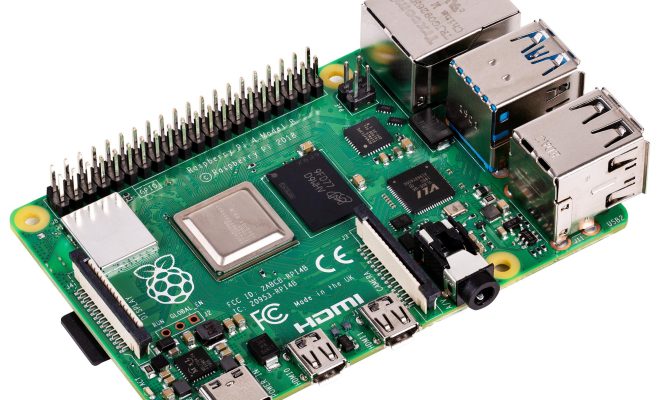
The Raspberry Pi 4 is a compact and powerful single-board computer that is designed for use by developers, hobbyists, and educators. It is the successor to the Raspberry Pi 3, and it provides a significant upgrade over its predecessor. The Raspberry Pi 4 comes with a 1.5 GHz quad-core ARM Cortex-A72 CPU, which offers around 3 times better performance than the previous version. It also comes with up to 8GB RAM, dual-band 802.11ac wireless networking, Bluetooth 5.0, Gigabit Ethernet, two USB 3.0 ports, and two USB 2.0 ports. It supports 4K video output at 60 frames per second through two micro-HDMI ports, and also has a 3.5mm audio jack for headphones or speakers. In addition, the Raspberry Pi 4 runs on a wide range of operating systems such as Raspbian, Ubuntu, and more.

The Raspberry Pi Compute Module 4

The Raspberry Pi Compute Module 4, on the other hand, is a smaller and more flexible board that is designed for use in embedded systems, industrial applications, and large-scale projects. It is based on the same hardware as the Raspberry Pi 4, but is designed to be used in a different way. The Compute Module 4 comes without any connectors or peripherals, and is meant to be integrated into custom-designed products. It features the same processor as the Raspberry Pi 4, but comes with a greater variety of RAM options, ranging from 1GB up to 8GB. It also has an eMMC flash storage option, unlike the Raspberry Pi 4 which uses a removable microSD card. The Compute Module 4 also includes a gigabit Ethernet port, two USB 2.0 ports, and two lanes for PCI Express (PCIe) communication, which enhances its flexibility and supports a wide range of applications.

Key Differences

1. Size and Form Factor

The Raspberry Pi 4 is a larger board that comes in the form of a traditional single-board computer. It measures 88 x 58mm and is designed to be used as a standalone computer or connected to peripherals such as a keyboard, mouse, and display. The Compute Module 4, on the other hand, is a smaller board that measures 55 x 40mm and has a form factor suitable for industrial use.

2. Connectivity

The Raspberry Pi 4 features dual-band 802.11ac wireless networking, Bluetooth 5.0, gigabit Ethernet, two USB 3.0 ports, and two USB 2.0 ports. The Compute Module 4, on the other hand, has a gigabit Ethernet port, two USB 2.0 ports, and two lanes for PCI Express communication. The Raspberry Pi 4 has a wider variety of connectivity options, making it the better choice for standalone computers or projects that require extensive connectivity.

3. Flexibility

The Compute Module 4 is more flexible and customizable compared to the Raspberry Pi 4. This is because it does not come with any connectors or peripherals, and can be integrated into custom-designed products. On the other hand, the Raspberry Pi 4 is designed to be used as a standalone computer, making it less flexible when it comes to customization.

Conclusion

Both the Raspberry Pi 4 and Raspberry Pi Compute Module 4 are capable single-board computers that offer different features and functions. If you are looking for a flexible and customizable board for use in industrial or embedded systems, then the Raspberry Pi Compute Module 4 is the better choice. But if you’re looking for a standalone computer or a board with extensive connectivity options, then the Raspberry Pi 4 is the better option. Ultimately, the choice between the two boards depends on your specific use case and project requirements.

Previous Article

What Are ISO Files & How You ...

Next Article

“Is My Phone Hacked?” Here’s How to ...

Matthew Lynch

Related articles More from author

  • Digital & Mobile Technology

    How to Set Up Your Samsung Galaxy Watch 4

    June 4, 2023
    By Matthew Lynch
  • Digital & Mobile Technology

    The Best Windows 11 Themes You May Have Overlooked

    June 23, 2023
    By Matthew Lynch
  • Digital & Mobile Technology

    Insert Footnotes in a Word Document

    June 3, 2023
    By Matthew Lynch
  • Digital & Mobile Technology

    The Different Shades of the Color Navy Blue

    July 6, 2023
    By Matthew Lynch
  • Digital & Mobile Technology

    How to Add a Website to Your Chromebook Shelf

    June 9, 2023
    By Matthew Lynch
  • Digital & Mobile Technology

    How to Hide Your Listening Activity From Friends on Spotify

    June 22, 2023
    By Matthew Lynch

Search

Login & Registration

  • Log in
  • Entries feed
  • Comments feed
  • WordPress.org

Newsletter

Signup for The Tech Edvocate Newsletter and have the latest in EdTech news and opinion delivered to your email address!

About Us

Since technology is not going anywhere and does more good than harm, adapting is the best course of action. That is where The Tech Edvocate comes in. We plan to cover the PreK-12 and Higher Education EdTech sectors and provide our readers with the latest news and opinion on the subject. From time to time, I will invite other voices to weigh in on important issues in EdTech. We hope to provide a well-rounded, multi-faceted look at the past, present, the future of EdTech in the US and internationally.

We started this journey back in June 2016, and we plan to continue it for many more years to come. I hope that you will join us in this discussion of the past, present and future of EdTech and lend your own insight to the issues that are discussed.

Newsletter

Signup for The Tech Edvocate Newsletter and have the latest in EdTech news and opinion delivered to your email address!

Contact Us

The Tech Edvocate
910 Goddin Street
Richmond, VA 23231
(601) 630-5238
[email protected]

Copyright © 2026 Matthew Lynch. All rights reserved.