The Tech Edvocate

Top Menu

  • Advertisement
  • Apps
  • Home Page
  • Home Page Five (No Sidebar)
  • Home Page Four
  • Home Page Three
  • Home Page Two
  • Home Tech2
  • Icons [No Sidebar]
  • Left Sidbear Page
  • Lynch Educational Consulting
  • My Account
  • My Speaking Page
  • Newsletter Sign Up Confirmation
  • Newsletter Unsubscription
  • Our Brands
  • Page Example
  • Privacy Policy
  • Protected Content
  • Register
  • Request a Product Review
  • Shop
  • Shortcodes Examples
  • Signup
  • Start Here
    • Governance
    • Careers
    • Contact Us
  • Terms and Conditions
  • The Edvocate
  • The Tech Edvocate Product Guide
  • Topics
  • Write For Us
  • Advertise

Main Menu

  • Start Here
    • Our Brands
    • Governance
      • Lynch Educational Consulting, LLC.
      • Dr. Lynch’s Personal Website
      • Careers
    • Write For Us
    • The Tech Edvocate Product Guide
    • Contact Us
    • Books
    • Edupedia
    • Post a Job
    • The Edvocate Podcast
    • Terms and Conditions
    • Privacy Policy
  • Topics
    • Assistive Technology
    • Child Development Tech
    • Early Childhood & K-12 EdTech
    • EdTech Futures
    • EdTech News
    • EdTech Policy & Reform
    • EdTech Startups & Businesses
    • Higher Education EdTech
    • Online Learning & eLearning
    • Parent & Family Tech
    • Personalized Learning
    • Product Reviews
  • Advertise
  • Tech Edvocate Awards
  • The Edvocate
  • Pedagogue
  • School Ratings

logo

The Tech Edvocate

  • Start Here
    • Our Brands
    • Governance
      • Lynch Educational Consulting, LLC.
      • Dr. Lynch’s Personal Website
        • My Speaking Page
      • Careers
    • Write For Us
    • The Tech Edvocate Product Guide
    • Contact Us
    • Books
    • Edupedia
    • Post a Job
    • The Edvocate Podcast
    • Terms and Conditions
    • Privacy Policy
  • Topics
    • Assistive Technology
    • Child Development Tech
    • Early Childhood & K-12 EdTech
    • EdTech Futures
    • EdTech News
    • EdTech Policy & Reform
    • EdTech Startups & Businesses
    • Higher Education EdTech
    • Online Learning & eLearning
    • Parent & Family Tech
    • Personalized Learning
    • Product Reviews
  • Advertise
  • Tech Edvocate Awards
  • The Edvocate
  • Pedagogue
  • School Ratings
  • Miro vs Conceptboard for project management

  • How to use Teamwork for resource management

  • How much does Procore cost per month

  • How to organize Microsoft Planner buckets

  • Is Teamwork good for billable hours

  • Procore vs Buildertrend which is better

  • Airtable project management templates

  • Can Miro track project progress

  • How to use Basecamp for client work

  • Can Lucidchart create swimlane diagrams

Tech News
Home›Tech News›Queen Bumblebees Survive Underwater Floods During Winter Diapause

Queen Bumblebees Survive Underwater Floods During Winter Diapause
By Matthew Lynch
April 12, 2026
0
Spread the love

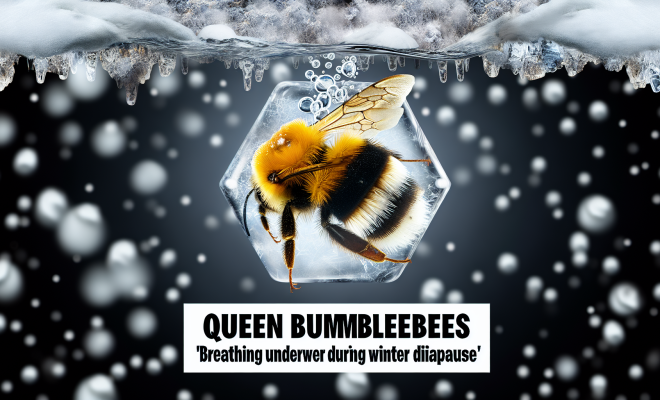
The resilience of nature often astounds scientists, and recent research has revealed a remarkable survival strategy employed by queen bumblebees. These industrious insects, known for their crucial role in pollination, have demonstrated an ability to survive underwater for up to eight days during winter diapause, even when their burrows become flooded. This extraordinary capability is becoming increasingly important as climate change alters weather patterns, leading to more frequent flooding events in spring.

The Discovery of Underwater Breathing

The groundbreaking findings emerged from an unexpected source. Researcher Rondeau stumbled upon this behavior while conducting pesticide experiments in 2024. What began as a routine study transformed into a significant revelation about the adaptive strategies of queen bumblebees. Rondeau observed how these insects manage to maintain their metabolic functions while submerged in water, a phenomenon that had previously gone unnoticed in the field of entomology.

Winter Diapause and Flooding Challenges

During winter, queen bumblebees enter a state known as diapause, a period of dormancy that allows them to survive the cold months when food is scarce. Traditionally, these insects burrow deep into the ground, seeking refuge from the harsh winter elements. However, with rising temperatures leading to increased rainfall and melting snow, many of these burrows are becoming inundated.

This flooding can pose a significant threat to the survival of bumblebee populations. As water fills their burrows, the queens risk drowning or suffering from metabolic distress. The ability to breathe underwater, therefore, is not merely a fascinating adaptation but a vital survival mechanism in the face of changing environmental conditions.

How Bumblebees Breathe Underwater

Rondeau’s research revealed that queen bumblebees can breathe at a remarkably low, yet detectable, rate while submerged. They rely on an anaerobic energy system that allows them to survive in low-oxygen environments. When submerged, their bodies accumulate lactate, a byproduct of anaerobic respiration. This physiological adaptation enables them to maintain energy levels even when cut off from direct oxygen sources.

  • Low Metabolic Rate: Queen bumblebees exhibit a steady metabolic rate while underwater, allowing for prolonged survival.
  • Lactate Accumulation: The accumulation of lactate helps them manage energy stores until they can return to a more oxygen-rich environment.
  • Rapid Recovery: After emerging from submersion, these queens demonstrate a rapid recovery in metabolic activity, with a noticeable spike in energy levels lasting 2-3 days.

Implications for Climate Change

The findings from Rondeau’s study have significant implications in the context of climate change. With spring flooding becoming more common due to erratic weather patterns, understanding how bumblebees adapt to these conditions is crucial for conservation efforts. Pollinators play a vital role in ecosystems and agriculture, making their survival essential for maintaining biodiversity and food security.

As climate change continues to exert pressure on ecosystems, the resilience demonstrated by queen bumblebees may offer insights into how other species might adapt. Their ability to withstand environmental extremes serves as a reminder of the intricate connections within ecosystems and the importance of protecting these vital species.

Conservation Efforts and Future Research

Given the importance of bumblebees in pollination, researchers and conservationists are increasingly focused on protecting their habitats and understanding their behaviors. Rondeau’s study highlights the need for ongoing research into the ecological impacts of climate change on bee populations and their adaptive strategies.

Future studies could investigate:

  • How other bumblebee species respond to flooding and environmental stressors.
  • The genetic and physiological mechanisms that underlie the ability to breathe underwater.
  • Long-term impacts of climate change on bumblebee populations and their ecosystems.

Conclusion

The remarkable ability of queen bumblebees to survive underwater during winter diapause underscores the resilience of nature in the face of environmental extremes. As climate change reshapes our world, understanding these adaptations will be vital for ensuring the survival of pollinators and the ecosystems they support. Rondeau’s findings not only enrich our knowledge of bumblebee biology but also serve as a call to action for conservation efforts worldwide. Protecting these vital insects is more important now than ever, as they navigate the challenges posed by a changing climate.


Previous Article

El Niño 2026: Global Weather Patterns Poised ...

Next Article

Global Weather Update 2026: Climate Trends & ...

Matthew Lynch

Related articles More from author

  • Tech News

    Mastering COUNTIF in Excel: A Comprehensive Guide

    June 15, 2026
    By Matthew Lynch
  • Tech News

    This One AI Company Is Facing a Scandalous Class Action — Here’s Why Investors Are Furious

    August 13, 2026
    By Matthew Lynch
  • Tech News

    Asian Markets Surge 2026: Trump’s Tech & Global Policy Impact

    April 2, 2026
    By Matthew Lynch
  • Tech News

    How to create titles in DaVinci Resolve

    July 29, 2026
    By Matthew Lynch
  • Tech News

    U.S. Inflation & FOMC Insights: Market Waves on April 5, 2026

    April 5, 2026
    By Matthew Lynch
  • Tech News

    Boost Student Resilience with Positive Behavior Support

    July 4, 2026
    By Matthew Lynch

Search

Login & Registration

  • Log in
  • Entries feed
  • Comments feed
  • WordPress.org

Newsletter

Signup for The Tech Edvocate Newsletter and have the latest in EdTech news and opinion delivered to your email address!

About Us

Since technology is not going anywhere and does more good than harm, adapting is the best course of action. That is where The Tech Edvocate comes in. We plan to cover the PreK-12 and Higher Education EdTech sectors and provide our readers with the latest news and opinion on the subject. From time to time, I will invite other voices to weigh in on important issues in EdTech. We hope to provide a well-rounded, multi-faceted look at the past, present, the future of EdTech in the US and internationally.

We started this journey back in June 2016, and we plan to continue it for many more years to come. I hope that you will join us in this discussion of the past, present and future of EdTech and lend your own insight to the issues that are discussed.

Newsletter

Signup for The Tech Edvocate Newsletter and have the latest in EdTech news and opinion delivered to your email address!

Contact Us

The Tech Edvocate
910 Goddin Street
Richmond, VA 23231
(601) 630-5238
[email protected]

Copyright © 2026 Matthew Lynch. All rights reserved.