The Tech Edvocate

Top Menu

  • Advertisement
  • Apps
  • Home Page
  • Home Page Five (No Sidebar)
  • Home Page Four
  • Home Page Three
  • Home Page Two
  • Home Tech2
  • Icons [No Sidebar]
  • Left Sidbear Page
  • Lynch Educational Consulting
  • My Account
  • My Speaking Page
  • Newsletter Sign Up Confirmation
  • Newsletter Unsubscription
  • Our Brands
  • Page Example
  • Privacy Policy
  • Protected Content
  • Register
  • Request a Product Review
  • Shop
  • Shortcodes Examples
  • Signup
  • Start Here
    • Governance
    • Careers
    • Contact Us
  • Terms and Conditions
  • The Edvocate
  • The Tech Edvocate Product Guide
  • Topics
  • Write For Us
  • Advertise

Main Menu

  • Start Here
    • Our Brands
    • Governance
      • Lynch Educational Consulting, LLC.
      • Dr. Lynch’s Personal Website
      • Careers
    • Write For Us
    • The Tech Edvocate Product Guide
    • Contact Us
    • Books
    • Edupedia
    • Post a Job
    • The Edvocate Podcast
    • Terms and Conditions
    • Privacy Policy
  • Topics
    • Assistive Technology
    • Child Development Tech
    • Early Childhood & K-12 EdTech
    • EdTech Futures
    • EdTech News
    • EdTech Policy & Reform
    • EdTech Startups & Businesses
    • Higher Education EdTech
    • Online Learning & eLearning
    • Parent & Family Tech
    • Personalized Learning
    • Product Reviews
  • Advertise
  • Tech Edvocate Awards
  • The Edvocate
  • Pedagogue
  • School Ratings

logo

The Tech Edvocate

  • Start Here
    • Our Brands
    • Governance
      • Lynch Educational Consulting, LLC.
      • Dr. Lynch’s Personal Website
        • My Speaking Page
      • Careers
    • Write For Us
    • The Tech Edvocate Product Guide
    • Contact Us
    • Books
    • Edupedia
    • Post a Job
    • The Edvocate Podcast
    • Terms and Conditions
    • Privacy Policy
  • Topics
    • Assistive Technology
    • Child Development Tech
    • Early Childhood & K-12 EdTech
    • EdTech Futures
    • EdTech News
    • EdTech Policy & Reform
    • EdTech Startups & Businesses
    • Higher Education EdTech
    • Online Learning & eLearning
    • Parent & Family Tech
    • Personalized Learning
    • Product Reviews
  • Advertise
  • Tech Edvocate Awards
  • The Edvocate
  • Pedagogue
  • School Ratings
  • One Crucial Factor Could Decimate Your US Auto Insurance Rates in 2026

  • Unbelievable: Meta Hit With $25 Billion Fine — Is Your Health Data Next?

  • 10 Crucial AI Literacy Courses Every Parent Needs Now

  • The Unseen Force Quietly Reshaping Rural Life: 7 Satellite Internet Providers Battling for Supremacy

  • Best Buy’s Gamers Hub: The Unbelievable Truth About Its “Rewards” And Discounts

  • 8 Crucial Reasons Why MAI-DxO Just Obliterated Doctors in a Head-to-Head Diagnosis Battle

  • The Brutal Truth About Student Loan Refinancing for New Grads in 2024

  • The Brutal Truth: AI Just Blew Up PHP Security – Here’s How to Survive ‘Black October’

  • Sodium-ion storage maker Peak Energy raises $108 million in GM-led round – PV Magazine

  • Stunning: 93,000 Nursing School Applicants Rejected — Here’s Why It’s a Crisis

Digital & Mobile Technology
Home›Digital & Mobile Technology›Power Supply Voltage Tolerances

Power Supply Voltage Tolerances
By Matthew Lynch
July 14, 2023
0
Spread the love

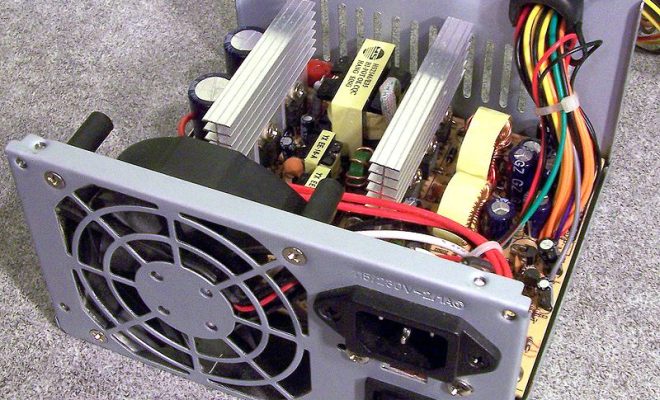
Power supply voltage tolerances refer to the amount of variance that is allowed in the output voltage of a power supply. Power supplies are designed to provide a steady and reliable source of power to electronic devices, and voltage tolerances are an essential part of ensuring that the power supply is operating correctly.

Understanding Voltage Tolerances

Voltage tolerances are typically expressed as a percentage of the nominal output voltage of the power supply. For example, if a power supply has a nominal output voltage of 12 volts and a voltage tolerance of ±5%, the actual output voltage can range from 11.4 volts to 12.6 volts.

In addition to the percentage tolerance, power supplies may also have absolute voltage tolerances, which specify the maximum and minimum voltages that the power supply can output. These tolerances are important because they determine the range of voltages that the power supply can output while still providing a safe and reliable source of power to electronic devices.

Importance of Voltage Tolerances

Voltage tolerances are critical to ensuring the reliable operation of electronic devices. If the voltage output of a power supply is too high or too low, it can cause damage to the electronic components and lead to malfunctions or failures. For example, if a power supply outputs a voltage that is too high, it can cause overheating and damage to the electronic components. If the voltage output is too low, it can cause the electronic device to malfunction or fail to operate at all.

In addition to ensuring the reliable operation of electronic devices, voltage tolerances are also important for safety reasons. If a power supply outputs a voltage that is too high, it can pose a significant risk of electrical shock or fire. Similarly, if the voltage output is too low, it can cause electronic devices to malfunction in a way that poses a safety risk.

Conclusion

In conclusion, power supply voltage tolerances are an essential part of ensuring the reliable and safe operation of electronic devices. Voltage tolerances determine the range of voltages that a power supply can output while still providing a safe and reliable source of power. Understanding voltage tolerances is critical for selecting the right power supply for electronic devices and ensuring that they operate correctly and safely.

Previous Article

What Is a CSI File?

Next Article

Ways to Print From Your iPad

Matthew Lynch

Related articles More from author

  • Digital & Mobile Technology

    Chrome OS Is Missing or Damaged: How to Fix This Error

    June 23, 2023
    By Matthew Lynch
  • Digital & Mobile Technology

    What Is a Dolly Zoom? How and When to Use It

    June 12, 2023
    By Matthew Lynch
  • Digital & Mobile Technology

    Set the Outlook.com Junk Mail Filter to ‘Standard’

    August 5, 2023
    By Matthew Lynch
  • Digital & Mobile Technology

    What’s the Difference Between a Mac and a PC?

    June 1, 2023
    By Matthew Lynch
  • Digital & Mobile Technology

    What Is Hardware Acceleration and When Should You Use It?

    August 3, 2023
    By Matthew Lynch
  • Digital & Mobile Technology

    How to Fix Code 37 Errors

    June 9, 2023
    By Matthew Lynch

Search

Login & Registration

  • Log in
  • Entries feed
  • Comments feed
  • WordPress.org

Newsletter

Signup for The Tech Edvocate Newsletter and have the latest in EdTech news and opinion delivered to your email address!

About Us

Since technology is not going anywhere and does more good than harm, adapting is the best course of action. That is where The Tech Edvocate comes in. We plan to cover the PreK-12 and Higher Education EdTech sectors and provide our readers with the latest news and opinion on the subject. From time to time, I will invite other voices to weigh in on important issues in EdTech. We hope to provide a well-rounded, multi-faceted look at the past, present, the future of EdTech in the US and internationally.

We started this journey back in June 2016, and we plan to continue it for many more years to come. I hope that you will join us in this discussion of the past, present and future of EdTech and lend your own insight to the issues that are discussed.

Newsletter

Signup for The Tech Edvocate Newsletter and have the latest in EdTech news and opinion delivered to your email address!

Contact Us

The Tech Edvocate
910 Goddin Street
Richmond, VA 23231
(601) 630-5238
[email protected]

Copyright © 2026 Matthew Lynch. All rights reserved.