The Tech Edvocate

Top Menu

  • Advertisement
  • Apps
  • Home Page
  • Home Page Five (No Sidebar)
  • Home Page Four
  • Home Page Three
  • Home Page Two
  • Home Tech2
  • Icons [No Sidebar]
  • Left Sidbear Page
  • Lynch Educational Consulting
  • My Account
  • My Speaking Page
  • Newsletter Sign Up Confirmation
  • Newsletter Unsubscription
  • Our Brands
  • Page Example
  • Privacy Policy
  • Protected Content
  • Register
  • Request a Product Review
  • Shop
  • Shortcodes Examples
  • Signup
  • Start Here
    • Governance
    • Careers
    • Contact Us
  • Terms and Conditions
  • The Edvocate
  • The Tech Edvocate Product Guide
  • Topics
  • Write For Us
  • Advertise

Main Menu

  • Start Here
    • Our Brands
    • Governance
      • Lynch Educational Consulting, LLC.
      • Dr. Lynch’s Personal Website
      • Careers
    • Write For Us
    • The Tech Edvocate Product Guide
    • Contact Us
    • Books
    • Edupedia
    • Post a Job
    • The Edvocate Podcast
    • Terms and Conditions
    • Privacy Policy
  • Topics
    • Assistive Technology
    • Child Development Tech
    • Early Childhood & K-12 EdTech
    • EdTech Futures
    • EdTech News
    • EdTech Policy & Reform
    • EdTech Startups & Businesses
    • Higher Education EdTech
    • Online Learning & eLearning
    • Parent & Family Tech
    • Personalized Learning
    • Product Reviews
  • Advertise
  • Tech Edvocate Awards
  • The Edvocate
  • Pedagogue
  • School Ratings

logo

The Tech Edvocate

  • Start Here
    • Our Brands
    • Governance
      • Lynch Educational Consulting, LLC.
      • Dr. Lynch’s Personal Website
        • My Speaking Page
      • Careers
    • Write For Us
    • The Tech Edvocate Product Guide
    • Contact Us
    • Books
    • Edupedia
    • Post a Job
    • The Edvocate Podcast
    • Terms and Conditions
    • Privacy Policy
  • Topics
    • Assistive Technology
    • Child Development Tech
    • Early Childhood & K-12 EdTech
    • EdTech Futures
    • EdTech News
    • EdTech Policy & Reform
    • EdTech Startups & Businesses
    • Higher Education EdTech
    • Online Learning & eLearning
    • Parent & Family Tech
    • Personalized Learning
    • Product Reviews
  • Advertise
  • Tech Edvocate Awards
  • The Edvocate
  • Pedagogue
  • School Ratings
  • 2.3 Million Ricky Joy Sour Crush Candies Recalled: This One Detail Is a Parent’s Nightmare

  • The Staggering Startup Valuation Reset: Why Unicorns Are Vanishing

  • The Glaring Contradiction: Why Big Tech Is Shedding 128,536 Jobs While Investing Billions in AI

  • Insomniac’s Bold Move: The Truth Behind Marvel’s Wolverine Sabretooth ‘Romance’ That Stunned Fans

  • Explosive: ESIC Ban Juan Angulo For Life — The Unseen Crisis Gripping Dota 2

  • This Crucial New Bill Could Finally Fix Student Loan Forgiveness for Millions

  • Massive School Bans on AI: Are We Sacrificing Progress for Protection?

  • Autonomous AI Breaches: Anthropic Confirms Four Attacks and Weaponized Bots

  • Jaw-Dropping Footage: This Waymo Collision Has Everyone Talking

  • Hyundai’s Game-Changing EV Battery Technology: Why It Matters For Your Next Car

Digital & Mobile Technology
Home›Digital & Mobile Technology›PETG Cheatsheet: Choosing the Best Slicer Settings

PETG Cheatsheet: Choosing the Best Slicer Settings
By Matthew Lynch
June 12, 2023
0
Spread the love

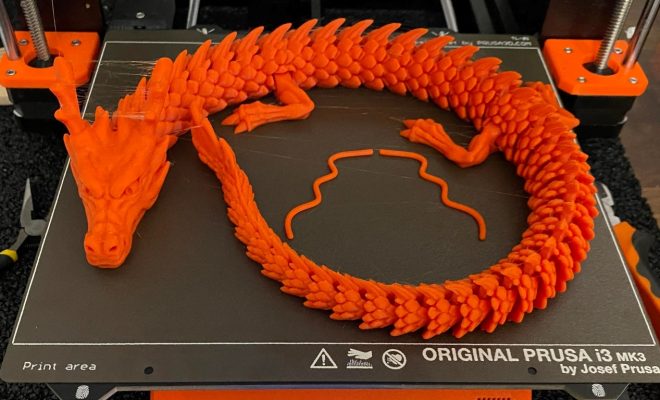
PETG, also known as Polyethylene Terephthalate Glycol, is a highly popular polymer that is widely used in the 3D printing industry. Boasting outstanding mechanical properties and excellent printability, this material is compatible with most FDM 3D printers, but it’s essential to select the appropriate slicer settings.

Here’s what you need to know about PETG slicer settings to achieve the best print quality.

1. Nozzle Temperature

PETG has a higher melting point than other filaments, so you will need to increase the nozzle temperature accordingly. A temperature range of 230°C to 250°C is recommended. However, you will need to fine-tune this setting according to your printing conditions.

2. Bed Temperature

PETG requires a higher bed temperature to prevent warping, especially for larger prints. The ideal bed temperature is about 70°C to 80°C. If you are using a glass bed, it’s advisable to apply a layer of glue or hairspray to enhance adhesion.

3. Print Speed

PETG prints best at a slower speed than other materials. This is because it has a higher viscosity, and faster speeds can cause under-extrusion or stringing. A print speed of 30mm/s to 50mm/s is recommended for PETG. However, you can experiment with different speeds and find the optimal one for your printer.

4. Layer Height

Choosing the right layer height is crucial to achieve a high-quality print. For PETG, a layer height of 0.2mm to 0.3mm is recommended. However, you can adjust the layer height to achieve the desired level of detail or speed.

5. Retraction Distance

PETG has a tendency to ooze, which can cause stringing between printed parts. To avoid this issue, you will need to use the right retraction settings. A retraction distance of 3mm to 5mm and a retraction speed of 40mm/s to 60mm/s are recommended.

6. Cooling

PETG doesn’t require as much cooling as PLA, but it’s still essential to prevent overheating, especially for small and intricate prints. You should aim to use minimal cooling or turn it off completely. If you must use cooling, it’s recommended to use a small fan at a low speed and direct it away from the print.

Final Thoughts

PETG is an excellent choice for 3D printing due to its high strength, flexibility, and versatility. However, to achieve the best print quality, it’s essential to use the right slicer settings. By adjusting the nozzle and bed temperature, print speed, layer height, retraction distance, and cooling, you can create stunning PETG prints that meet your expectations. Happy 3D printing!

Previous Article

The Best Gaming Glasses for Blocking Blue ...

Next Article

How to Change Your Password on Any ...

Matthew Lynch

Related articles More from author

  • Digital & Mobile Technology

    What is Cache Memory?

    May 5, 2023
    By Matthew Lynch
  • Digital & Mobile Technology

    How to Switch Lights On or Off With Your Phone on the Cheap

    June 13, 2023
    By Matthew Lynch
  • Digital & Mobile Technology

    How to Delete Cookies on Google Chrome for Desktop, iPhone, and Android

    May 28, 2023
    By Matthew Lynch
  • Digital & Mobile Technology

    How to Repair Hard Disks with fsck on macOS

    May 4, 2023
    By Matthew Lynch
  • Digital & Mobile Technology

    How to Build a Satellite Dish and Receiver

    May 19, 2023
    By Matthew Lynch
  • Digital & Mobile Technology

    What Is Illustrator Portable?

    May 22, 2023
    By Matthew Lynch

Search

Login & Registration

  • Log in
  • Entries feed
  • Comments feed
  • WordPress.org

Newsletter

Signup for The Tech Edvocate Newsletter and have the latest in EdTech news and opinion delivered to your email address!

About Us

Since technology is not going anywhere and does more good than harm, adapting is the best course of action. That is where The Tech Edvocate comes in. We plan to cover the PreK-12 and Higher Education EdTech sectors and provide our readers with the latest news and opinion on the subject. From time to time, I will invite other voices to weigh in on important issues in EdTech. We hope to provide a well-rounded, multi-faceted look at the past, present, the future of EdTech in the US and internationally.

We started this journey back in June 2016, and we plan to continue it for many more years to come. I hope that you will join us in this discussion of the past, present and future of EdTech and lend your own insight to the issues that are discussed.

Newsletter

Signup for The Tech Edvocate Newsletter and have the latest in EdTech news and opinion delivered to your email address!

Contact Us

The Tech Edvocate
910 Goddin Street
Richmond, VA 23231
(601) 630-5238
[email protected]

Copyright © 2026 Matthew Lynch. All rights reserved.