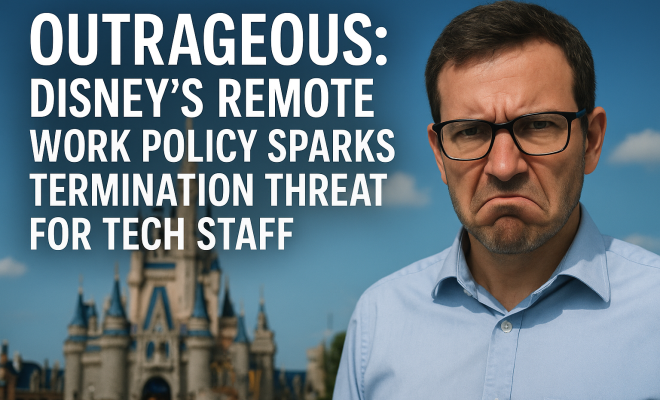
Outrageous: Disney’s Remote Work Policy Sparks Termination Threat for Tech Staff
“`html
When the news broke on September 14, 2026, it hit the tech world like a sudden, unwelcome plot twist from a Disney villain. The Mouse House, a company often associated with magic and dreams, reportedly delivered a stark ultimatum to its remote tech and product employees: show up in the office four days a week, or face termination. This wasn’t a gentle nudge; it was a firm, uncompromising mandate, and it immediately ignited a firestorm of debate across social media and the broader industry. For many, it felt less like a carefully considered business strategy and more like a forced march back to a pre-pandemic reality that many tech professionals had happily left behind. The implications of this aggressive shift in Disney’s remote work policy are far-reaching, touching on everything from talent retention to the very definition of modern work, and it’s a stark reminder that even the biggest corporate titans are still grappling with the evolving landscape of employee expectations.
The Unveiling of Disney’s Strict New Stance
Let’s be clear: this isn’t some vague suggestion or a ‘preference’ being expressed by management. The reports indicate a hard-line stance, explicitly stating that failure to comply with the four-day in-office requirement could lead directly to job loss. This level of rigidity is a significant departure from the flexible arrangements many tech workers have grown accustomed to over the past few years. For those who joined Disney during the height of the pandemic, or even before, under the assumption that remote or hybrid work would remain a core part of their employment, this mandate feels like a rug being pulled out from under them. It forces a fundamental re-evaluation of their career choices and personal lives, particularly for individuals who may have relocated based on the promise of remote flexibility.
The timing of this announcement, too, is curious. We’re well past the initial, frantic scramble of remote adoption. Companies have had years to observe, refine, and adapt their strategies. To introduce such an inflexible policy now, especially for a sector like tech and product development where remote collaboration has proven highly effective, suggests a deeper corporate philosophy at play. Is it about control? A belief that serendipitous in-person interactions are irreplaceable? Or perhaps a desire to justify sprawling, expensive office real estate? Whatever the underlying motivation, the execution has certainly ruffled feathers and generated a level of controversy that Disney, typically a master of public relations, might not have anticipated.
Why The Tech Industry Is Up In Arms Over Disney’s Remote Work Policy
The tech industry, more than almost any other, embraced remote work with open arms. It wasn’t just a temporary fix; for many, it became a strategic advantage. Companies discovered they could access a global talent pool, reduce overhead, and boost employee morale by offering flexibility. Developers, engineers, product managers – these roles often thrive on deep focus, uninterrupted work, and asynchronous collaboration, all of which can be effectively managed outside a traditional office setting. So, when a major player like Disney comes in with such an uncompromising in-office mandate, it’s seen as a direct challenge to these hard-won freedoms and efficiencies.
Think about the typical tech professional. Many value autonomy, work-life balance, and the ability to design a work schedule that fits their personal circumstances. They might have young children, elderly parents to care for, or simply prefer to work from a location that offers a better quality of life than an urban tech hub. A four-day in-office requirement doesn’t just mean a commute; it often means significant changes to childcare arrangements, household logistics, and even living situations. For some, it might necessitate a costly and disruptive relocation. This isn’t a small ask; it’s a demand that impacts every facet of an employee’s life, and for many, the perceived benefits of an in-person mandate simply don’t outweigh these considerable personal costs.
The Talent Exodus: A Looming Threat for Disney?
One of the most immediate and significant risks Disney faces with this aggressive Disney remote work policy is a potential brain drain. Top tech talent is highly sought after, and in a competitive market, flexibility is a powerful differentiator. If Disney is mandating four days in the office, while competitors like Google, Meta, or even smaller, innovative startups are offering hybrid models, fully remote options, or at least more negotiable terms, where do you think the most skilled and experienced professionals will choose to go? It’s not rocket science.
Losing key employees isn’t just about replacing a headcount; it’s about the loss of institutional knowledge, project momentum, and team cohesion. Recruiting new talent is an expensive and time-consuming process, and there’s no guarantee that Disney will be able to attract individuals of the same caliber who are willing to accept such rigid terms. Furthermore, a company’s reputation as an employer can be severely impacted by such policies. In an age where employer branding is critical, being known as a company that forces employees back into the office, even under threat of termination, is hardly an attractive proposition for the best and brightest in tech. It’s a reputation that can linger, making future recruitment efforts even more challenging. (See: BBC on remote work policies.)
The Financial Ripple Effect: More Than Just Salaries
While the immediate focus is often on employee morale and retention, the financial implications of Disney’s remote work policy are also worth considering. For employees, the costs associated with a four-day in-office week can be substantial. We’re talking about increased commuting expenses – gas, public transport, car maintenance – as well as higher costs for professional wardrobes, lunches out, and potentially even more expensive childcare or eldercare solutions. For some, these added expenses could effectively negate any perceived benefits of their salary, leading to a feeling that their compensation has been subtly, but significantly, reduced. For more context, see the crucial AI debate on remote work policies.
From Disney’s perspective, while the policy might be aimed at justifying office space, there are also hidden costs. High turnover rates lead to increased recruitment and training expenses. A decrease in employee satisfaction can translate into lower productivity, less innovation, and a less engaged workforce. And let’s not forget the potential for legal challenges, particularly if employees feel their contracts have been fundamentally altered or if the policy disproportionately impacts certain groups. While the company might be saving on utilities for home offices, the overall financial picture could become far more complex and costly than a simple spreadsheet might initially suggest.
The Broader Battle: Corporate Mandates vs. Employee Autonomy
This situation isn’t just about Disney; it’s a microcosm of a much larger, ongoing struggle playing out across industries. It highlights the fundamental tension between corporate leadership’s desire for control and a growing employee demand for autonomy and flexibility. The pandemic fundamentally shifted perceptions of work, proving to many that productivity isn’t solely tied to a physical office. Employees, especially in knowledge-based sectors, tasted a new level of freedom and work-life integration, and they’re not eager to give it up.
Companies that impose rigid return-to-office policies without genuine consultation or compelling justification risk alienating their workforce and being perceived as out of touch. Progressive organizations are embracing hybrid models, empowering teams to decide what works best, and focusing on outcomes rather than presenteeism. Disney’s approach, in contrast, feels like a throwback – a decision made from the top down, with little apparent consideration for the diverse needs and preferences of its tech and product staff. This top-down rigidity, while perhaps efficient in theory, often breeds resentment and can stifle the very creativity and innovation that companies like Disney rely on from their tech teams.
Legal Ramifications and HR Tech Solutions
Anytime a company issues such a firm mandate with potential termination as a consequence, legal questions inevitably arise. Employment law is a complex field, and the specifics vary widely by jurisdiction. Employees might question whether such a policy constitutes a constructive dismissal, a breach of contract, or if it could lead to discrimination claims if certain groups are disproportionately affected. While Disney undoubtedly has a formidable legal team, the potential for individual or collective disputes cannot be ignored. This scenario creates a fertile ground for legal services specializing in employment law and remote work contracts, as employees seek clarity and recourse.
On the flip side, this situation also underscores the growing demand for sophisticated HR technology solutions. Companies are desperate for tools that can effectively manage flexible workforces, track engagement, ensure compliance, and facilitate communication in a hybrid environment. Solutions focused on talent retention, flexible work management platforms, and even advanced analytics to measure productivity irrespective of location are becoming indispensable. For Disney, had they invested more in robust hybrid work infrastructure and communication tools, perhaps a less draconian measure could have been considered, demonstrating a commitment to adapting rather than simply dictating.
The Future of Office Real Estate in a Post-Mandate World
Beyond the immediate HR and legal implications, Disney’s bold stance has broader implications for the commercial real estate market. Many companies, during the pandemic, either downsized their office footprints or reconfigured their spaces to support hybrid work. The assumption was that a significant portion of the workforce would remain remote or highly flexible. A company as large and influential as Disney mandating a four-day in-office week signals a potential counter-trend, at least for some sectors.
If more large corporations follow suit, it could stabilize demand for traditional office spaces in certain urban centers. However, if the result is a mass exodus of talent from companies with rigid policies to those offering greater flexibility, then the pressure on commercial landlords to adapt their offerings – perhaps towards more flexible co-working spaces or highly amenity-rich, collaboration-focused hubs – will only intensify. The debate over Disney’s remote work policy is a very public battle playing out in a much larger war over the future utility and design of the corporate office, and it’s a fascinating one to watch for anyone involved in urban planning or commercial real estate investment. (See: New York Times on office return policies.)
Lessons for Other Companies Considering a Return-to-Office Push
If you’re a leader at another company contemplating a similar push back to the office, Disney’s experience offers some critical lessons. First, communication is paramount. An ultimatum delivered without clear, compelling justification and empathy is likely to be met with resistance and resentment. Second, consider the competitive landscape. If your competitors are offering greater flexibility, you risk losing your best people. Third, understand the true costs – not just the immediate savings, but the long-term impact on morale, productivity, and your employer brand. For more context, see data security implications of remote work.
Instead of mandates, consider incentives. Can you make the office a place people *want* to come to, rather than have to? Think about enhanced collaboration spaces, better amenities, opportunities for mentorship, or even catered meals. Can you empower teams to decide their own rhythm, focusing on deliverables rather than arbitrary seat time? The most successful organizations in this evolving landscape are those that treat their employees as valuable assets, engaging in dialogue and finding solutions that balance business needs with individual preferences, rather than simply dictating terms. Disney’s approach, while certainly decisive, risks demonstrating a fundamental misunderstanding of what truly motivates and retains high-performing tech talent in the modern era.
The Impact on Diversity and Inclusion Initiatives
A significant, often overlooked, consequence of strict return-to-office mandates like Disney’s remote work policy is their potential negative impact on diversity and inclusion. Remote and hybrid work models have been instrumental in opening up opportunities for individuals who might historically have been excluded from traditional office environments. This includes people with disabilities who face accessibility challenges, caregivers (disproportionately women) who need flexibility to manage family responsibilities, and individuals living in geographical areas without access to major tech hubs. By forcing a four-day in-office requirement, Disney risks alienating these valuable segments of the workforce.
For example, a parent with a child requiring specialized care might find a four-day commute and fixed office hours impossible to manage, even if they’re highly skilled. An employee with a chronic illness might find the energy drain of commuting and navigating a busy office environment too much, impacting their ability to perform their best. While companies often tout their commitment to diversity, policies that remove hard-won flexibility can inadvertently create barriers that push diverse talent out the door. It makes you wonder if the company has fully considered the long-term implications for its workforce demographics and its ability to foster an inclusive culture.
Psychological Toll on Employees: Burnout and Stress
Beyond the practical and financial considerations, the psychological toll of such a rigid policy cannot be underestimated. The abrupt shift from established remote routines to a mandatory four-day in-office schedule can induce significant stress and anxiety. Many employees have built their lives around the flexibility remote work offered, creating routines that balance work, personal well-being, and family needs. Suddenly having to dismantle these routines, often without clear justification, can lead to feelings of resentment, burnout, and a sense of being undervalued.
Employees might feel a loss of autonomy, a core psychological need that contributes to job satisfaction. The increased commute times, the pressure to conform to office norms, and the perceived lack of trust from management can all contribute to a decline in mental health. This isn’t just about ‘grumbling’; sustained stress can impact creativity, problem-solving abilities, and overall job performance. Companies that ignore the psychological well-being of their workforce often pay the price in reduced productivity, higher rates of absenteeism, and a generally disengaged employee base. For more context, see impact on tech industry dynamics. (See: CDC guidelines for businesses.)
The Role of Leadership Communication and Trust
The way a policy like Disney’s remote work policy is communicated speaks volumes about leadership’s relationship with its employees. An ultimatum, particularly one accompanied by threats of termination, signals a fundamental lack of trust. It suggests that leadership believes employees won’t be productive or engaged unless physically supervised, which is a problematic assumption for highly skilled tech professionals. Effective leadership in a modern workforce relies on building trust, fostering transparency, and empowering teams to achieve objectives, regardless of their physical location.
When employees feel that decisions are made unilaterally, without their input or consideration for their circumstances, it erodes morale and loyalty. Instead of fostering a sense of shared purpose, it creates an adversarial dynamic. Leaders who can articulate a clear, compelling vision for a return to office – one that emphasizes tangible benefits for employees and the business, backed by data and a willingness to adapt – are far more likely to achieve buy-in than those who simply dictate terms. This situation highlights a critical misstep in leadership communication, turning what could have been a strategic shift into a public relations and employee relations crisis.
Comparisons to Other Tech Giants’ Approaches
It’s helpful to compare Disney’s approach to how other tech giants are navigating the post-pandemic work landscape. Companies like Google and Apple have opted for hybrid models, often requiring employees to be in the office two or three days a week, with some flexibility for teams to decide their own rhythm. Microsoft has also embraced a flexible hybrid model, emphasizing choice and team autonomy. Even companies known for their strong campus cultures are experimenting with varying degrees of flexibility.
Amazon, for instance, has taken a more nuanced approach, with some teams being fully remote, others hybrid, and others mostly in-office, depending on the specific role and team needs. This variety demonstrates a recognition that a one-size-fits-all approach is rarely effective in the diverse tech industry. Disney’s rigid four-day mandate stands out as particularly inflexible when viewed against these more adaptive and employee-centric strategies, making it an outlier and potentially less attractive to top talent seeking modern work arrangements.
FAQ: Understanding Disney’s Remote Work Policy and Its Implications
- What is Disney’s new remote work policy?
- Disney has reportedly mandated that its remote tech and product employees must return to the office four days a week. Failure to comply with this requirement could lead to termination.
- When was this policy announced?
- The news broke on September 14, 2026, though the exact implementation timeline for all affected employees may vary.
- Which employees are primarily affected by this policy?
- The mandate primarily targets tech and product employees who have been working remotely or under highly flexible hybrid arrangements.
- Why is Disney implementing such a strict policy?
- While Disney has not officially elaborated on its reasoning, common corporate motivations for such policies include a desire to foster in-person collaboration, justify existing office real estate, and exert more direct managerial control.
- What are the main concerns for employees?
- Employees are concerned about increased commuting costs and time, disruption to work-life balance, potential need for relocation, childcare challenges, and a perceived lack of trust from management. Many also feel their employment terms are being fundamentally altered.
- How might this impact Disney’s ability to attract and retain talent?
- A strict, inflexible policy like this could make Disney less attractive to top tech talent, who often prioritize flexibility. It risks a “brain drain” as skilled employees may seek opportunities with companies offering more accommodating remote or hybrid options.
- Are there legal implications for Disney?
- Potentially. Employees might explore claims of constructive dismissal, breach of contract, or discrimination if the policy disproportionately affects certain groups. Employment law varies by jurisdiction, and Disney will likely face legal scrutiny.
- What are other tech companies doing regarding remote work?
- Many other major tech companies, such as Google, Apple, and Microsoft, have adopted more flexible hybrid models, often requiring 2-3 days in the office, or empowering teams to decide their own schedules. Disney’s policy is seen as more rigid in comparison.
- How does this policy affect diversity and inclusion?
- Strict in-office mandates can negatively impact diversity by creating barriers for individuals with disabilities, caregivers, or those living in diverse geographic locations who benefit from remote flexibility. This could undermine a company’s diversity efforts.
- What lessons can other companies learn from Disney’s situation?
- Other companies should prioritize clear and empathetic communication, consider the competitive landscape for talent, understand the full financial and human costs of mandates, and explore incentives to encourage office attendance rather than threats.
The controversy swirling around Disney’s reported four-day in-office mandate for its tech and product staff is more than just a corporate policy dispute; it’s a bellwether for the ongoing evolution of work itself. It forces us to confront fundamental questions about control, trust, flexibility, and the future of professional life. While Disney may believe it’s making a sound business decision, the intense backlash and potential for a talent drain suggest that the magic of the Mouse House might be losing some of its allure for a demographic that values autonomy as much as, if not more than, a paycheck. The coming months will reveal whether this rigid stance helps Disney achieve its goals, or if it inadvertently pushes some of its most valuable employees to seek their happily ever afters elsewhere.
“`
Trending Now
Frequently Asked Questions
What is Disney's new remote work policy for tech employees?
Disney's new remote work policy mandates that tech and product employees must work in the office four days a week. Failure to comply could result in termination, marking a significant shift from the flexible arrangements many employees had come to expect.
Why did Disney implement a strict in-office requirement?
Disney's decision for a strict in-office requirement appears to be a response to evolving corporate strategies and employee expectations. The company aims to realign its workforce dynamics post-pandemic, but this has sparked considerable debate and concern among employees.
How are employees reacting to Disney's remote work ultimatum?
The reaction to Disney's remote work ultimatum has been overwhelmingly negative, with many employees feeling blindsided by the sudden shift. Social media has seen a firestorm of debate regarding talent retention and the implications for work-life balance.
What are the implications of Disney's remote work policy for talent retention?
Disney's rigid remote work policy could severely impact talent retention, as many tech professionals value flexibility. This mandate may prompt employees to reconsider their career choices and could lead to increased turnover as individuals seek companies that offer more adaptable work arrangements.
When did Disney announce the new remote work policy?
Disney announced its new remote work policy on September 14, 2026, which has since caused a stir in the tech industry and raised questions about the future of work within the company.
Agree or disagree? Drop a comment and tell us what you think.