Operation Thunderbolt: US Special Forces Rescue F-15 Crew in Iran
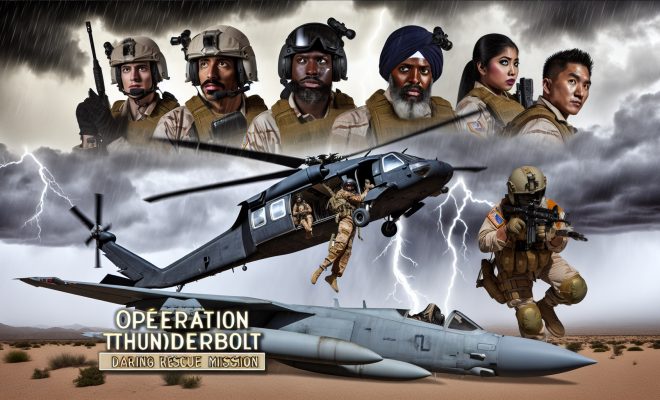
In a high-stakes military operation, the United States successfully executed a daring rescue of the crew from a downed F-15 jet in Iranian territory. This complex mission, involving special forces and a fleet of dozens of aircraft, highlights the United States’ commitment to safeguarding its personnel amid increasing tensions in the region, particularly concerning the strategic Strait of Hormuz.
Background: Escalating Tensions in the Strait of Hormuz
The Strait of Hormuz has long been a hotspot for geopolitical tensions, serving as a critical passage for a significant portion of the world’s oil supply. Recent months have seen an escalation in military engagements in the area, driven by a series of confrontations between U.S. forces and Iranian military assets. The downing of the F-15 jet marked a new chapter in this ongoing conflict, prompting an immediate and robust response from the U.S. military.
The Rescue Operation: A Coordinated Effort
The operation, dubbed “Operation Thunderbolt,” was meticulously planned and executed, showcasing the U.S. military’s capability to conduct personnel recovery in hostile environments. Dozens of planes were involved in the mission, ranging from transport aircraft to fighter jets, ensuring that the operation could adapt to any unforeseen challenges that arose during the extraction.
- Intelligence Gathering: Prior to the mission, U.S. intelligence agencies worked tirelessly to gather information on the location of the downed jet and its crew. This involved satellite imagery, signals intelligence, and reconnaissance missions to ensure a comprehensive understanding of the situation on the ground.
- Special Forces Deployment: A specialized unit of U.S. Navy SEALs and Army Rangers was deployed to carry out the rescue. These elite forces are trained for high-risk operations in hostile territories, making them the perfect candidates for this critical mission.
- Aerial Support: The operation was supported by a variety of aircraft, including fighter jets for air cover, transport aircraft for troop movement, and refueling planes to extend the range of operations. This multi-layered approach ensured that the rescue team could reach the downed crew quickly and safely.
Challenges Faced During the Mission
Executing a rescue operation in Iranian territory posed numerous challenges. The U.S. forces had to contend with not just the physical threats posed by Iranian military units, but also the complexities of operating in a foreign land where rules of engagement could be ambiguous.
- Hostile Environment: Iranian forces were on high alert following the downing of the F-15, making the operation particularly dangerous. U.S. forces had to navigate this hostile environment while minimizing the risk to personnel.
- Timing and Speed: The U.S. military recognized that time was of the essence, as the longer the crew remained in hostile territory, the greater the risk to their safety. The operation was executed with remarkable speed, allowing for a swift extraction.
- Communication Challenges: Coordinating between multiple aircraft and ground forces required seamless communication. High-tech systems were employed to ensure that all units were in sync throughout the operation.
Outcome and Implications
The successful extraction of the F-15 crew not only showcases the U.S. military’s capabilities but also sends a powerful message regarding the lengths to which the United States will go to protect its personnel. This operation is expected to have significant implications for U.S.-Iran relations, as it underscores the seriousness with which the U.S. approaches threats to its military assets.
Political Reactions
In the wake of the operation, political leaders in the U.S. have praised the military’s efforts. President Trump, who has taken an aggressive stance towards Iran, lauded the operation as a testament to U.S. resolve and commitment to its military personnel. Meanwhile, Iranian officials have condemned the operation, warning of potential repercussions for future U.S. actions in the region.
Looking Forward
The events surrounding the F-15 jet rescue are a stark reminder of the precarious nature of international relations in the Middle East. With tensions between the U.S. and Iran continuing to simmer, future military operations may become increasingly likely.
As the U.S. navigates its complex relationship with Iran, the successful execution of operations such as this will undoubtedly play a crucial role in shaping military strategy and diplomatic discussions. The commitment to personnel recovery in high-risk situations continues to be a cornerstone of U.S. military doctrine, ensuring that the safety of service members remains a top priority.
In conclusion, Operation Thunderbolt stands as a significant moment in U.S. military history, reflecting both the challenges and capabilities of modern warfare. As the geopolitical landscape continues to evolve, the implications of this operation will resonate throughout the international community for years to come.