The Tech Edvocate

Top Menu

  • Advertisement
  • Apps
  • Home Page
  • Home Page Five (No Sidebar)
  • Home Page Four
  • Home Page Three
  • Home Page Two
  • Home Tech2
  • Icons [No Sidebar]
  • Left Sidbear Page
  • Lynch Educational Consulting
  • My Account
  • My Speaking Page
  • Newsletter Sign Up Confirmation
  • Newsletter Unsubscription
  • Our Brands
  • Page Example
  • Privacy Policy
  • Protected Content
  • Register
  • Request a Product Review
  • Shop
  • Shortcodes Examples
  • Signup
  • Start Here
    • Governance
    • Careers
    • Contact Us
  • Terms and Conditions
  • The Edvocate
  • The Tech Edvocate Product Guide
  • Topics
  • Write For Us
  • Advertise

Main Menu

  • Start Here
    • Our Brands
    • Governance
      • Lynch Educational Consulting, LLC.
      • Dr. Lynch’s Personal Website
      • Careers
    • Write For Us
    • The Tech Edvocate Product Guide
    • Contact Us
    • Books
    • Edupedia
    • Post a Job
    • The Edvocate Podcast
    • Terms and Conditions
    • Privacy Policy
  • Topics
    • Assistive Technology
    • Child Development Tech
    • Early Childhood & K-12 EdTech
    • EdTech Futures
    • EdTech News
    • EdTech Policy & Reform
    • EdTech Startups & Businesses
    • Higher Education EdTech
    • Online Learning & eLearning
    • Parent & Family Tech
    • Personalized Learning
    • Product Reviews
  • Advertise
  • Tech Edvocate Awards
  • The Edvocate
  • Pedagogue
  • School Ratings

logo

The Tech Edvocate

  • Start Here
    • Our Brands
    • Governance
      • Lynch Educational Consulting, LLC.
      • Dr. Lynch’s Personal Website
        • My Speaking Page
      • Careers
    • Write For Us
    • The Tech Edvocate Product Guide
    • Contact Us
    • Books
    • Edupedia
    • Post a Job
    • The Edvocate Podcast
    • Terms and Conditions
    • Privacy Policy
  • Topics
    • Assistive Technology
    • Child Development Tech
    • Early Childhood & K-12 EdTech
    • EdTech Futures
    • EdTech News
    • EdTech Policy & Reform
    • EdTech Startups & Businesses
    • Higher Education EdTech
    • Online Learning & eLearning
    • Parent & Family Tech
    • Personalized Learning
    • Product Reviews
  • Advertise
  • Tech Edvocate Awards
  • The Edvocate
  • Pedagogue
  • School Ratings
  • The Brutal Truth: Why K-12 Cybersecurity Needs More Than Just Awareness

  • The Unseen Threat: How K-12 Cybersecurity Training Is Quietly Reshaping Education

  • The Staggering Truth: K-12 Cybersecurity Education Is Failing – Here’s How to Fix It

  • Why Millions Are Ditching Degrees For This Career-Boosting Secret

  • 7 Crucial Micro-Credentials Boosting Recent Grads’ Salaries by 15%

  • The Brutal Truth: Why Your College Degree Isn’t Enough Anymore

  • The Ethical AI Auditor Boom: Why Salaries Are Skyrocketing Globally

  • This Crucial Skill Now Pays $150,000 Starting — Here’s How to Get Certified in 2024

  • This Unforeseen Tech Job Pays Six Figures — And You Can Start Today

  • One Stunning Reason Why Quantum Certifications Trump Traditional IT

Digital & Mobile Technology
Home›Digital & Mobile Technology›Operating System (OS) Definition & Examples

Operating System (OS) Definition & Examples
By Matthew Lynch
June 1, 2023
0
Spread the love

An Operating System (OS) is a program that manages computer hardware resources and provides services to applications software. It acts as a bridge between the computer’s hardware and software, ensuring that applications can run smoothly and efficiently. In short, an Operating System is the backbone of any computer system.

The primary function of an OS is to manage the computer’s memory, processors, input and output devices, and storage. It provides a framework for applications to interact with computer hardware, handles security and user permissions, manages network connections and protocols, and facilitates the execution of programs by translating machine code into instructions that the computer can understand.

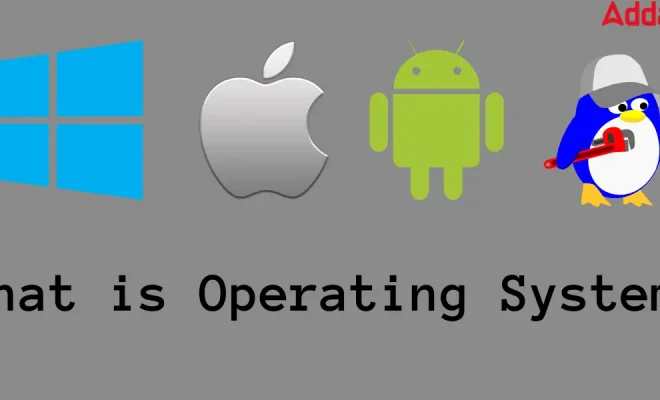
There are many different types of Operating Systems, each with its own set of features and advantages. Some of the most common examples include:

1. Microsoft Windows – this is one of the most popular OS worldwide. It’s easy to use with its graphical user interface (GUI), and supports a wide range of hardware and software applications.

2. MacOS – This is the OS for Apple devices such as MacBooks, iMacs, and Mac Pros. It’s known for its user-friendly interface, built-in software, and high-security features.

3. Linux – This is an open-source Operating System that is typically used in servers and supercomputers. Linux is flexible and customizable, with a command-line interface that can be used for complex tasks.

4. iOS – This is the operating system used on Apple’s mobile devices such as the iPhone, iPad, and iPod Touch. It’s known for its speed, security, and ease of use.

5. Android – This is an open-source OS that powers many smartphones and tablets. It’s known for its flexibility and ability to run on a wide range of hardware devices.

Overall, an Operating System is a critical component of any computer system. It takes care of core functions that make it possible for users to interact with their devices with ease. Whether it’s Windows, MacOS, Linux, iOS, or Android, there’s an Operating System for every user’s needs.

Previous Article

How to Fix It When Find My ...

Next Article

How to Find the Windows Administrator Password

Matthew Lynch

Related articles More from author

  • Digital & Mobile Technology

    What Is an ARW File?

    July 6, 2023
    By Matthew Lynch
  • Digital & Mobile Technology

    How to Change Chromecast Background Images on Your TV or Computer

    June 3, 2023
    By Matthew Lynch
  • Digital & Mobile Technology

    How to Set the Default Calendar for New Appointments in iOS and OS X

    May 8, 2023
    By Matthew Lynch
  • Digital & Mobile Technology

    The Best Mac Desktop Publishing Software of 2023

    June 9, 2023
    By Matthew Lynch
  • Digital & Mobile Technology

    How to Make Headphones Louder

    June 12, 2023
    By Matthew Lynch
  • Digital & Mobile Technology

    What Is DNS (Domain Name System)?

    June 23, 2023
    By Matthew Lynch

Search

Login & Registration

  • Log in
  • Entries feed
  • Comments feed
  • WordPress.org

Newsletter

Signup for The Tech Edvocate Newsletter and have the latest in EdTech news and opinion delivered to your email address!

About Us

Since technology is not going anywhere and does more good than harm, adapting is the best course of action. That is where The Tech Edvocate comes in. We plan to cover the PreK-12 and Higher Education EdTech sectors and provide our readers with the latest news and opinion on the subject. From time to time, I will invite other voices to weigh in on important issues in EdTech. We hope to provide a well-rounded, multi-faceted look at the past, present, the future of EdTech in the US and internationally.

We started this journey back in June 2016, and we plan to continue it for many more years to come. I hope that you will join us in this discussion of the past, present and future of EdTech and lend your own insight to the issues that are discussed.

Newsletter

Signup for The Tech Edvocate Newsletter and have the latest in EdTech news and opinion delivered to your email address!

Contact Us

The Tech Edvocate
910 Goddin Street
Richmond, VA 23231
(601) 630-5238
[email protected]

Copyright © 2026 Matthew Lynch. All rights reserved.