One Stunning Reason Why Trump’s Crypto Bill Could Collapse
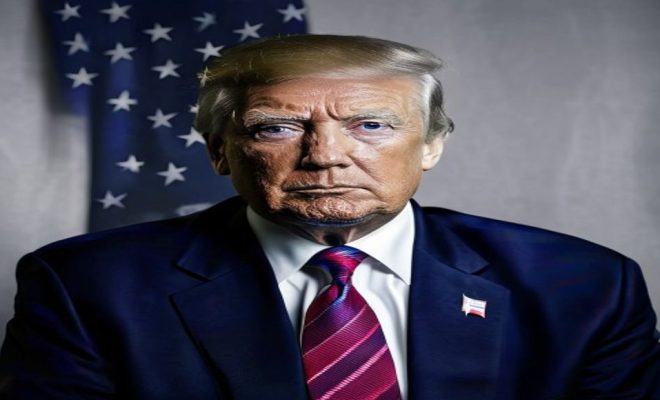
The halls of Washington D.C. are no stranger to political gridlock, but a particularly fascinating and contentious debate is currently playing out over the future of cryptocurrency regulation in the United States. At the heart of it all? Former President Donald Trump, his significant reported crypto earnings, and a bill called the CLARITY Act. This isn’t just about technical definitions or market mechanics; it’s a high-stakes ethical showdown that threatens to derail crucial legislation, leaving the crypto market in a state of prolonged uncertainty.
For years, the digital asset space has been clamoring for clear rules of the road. Investors, innovators, and even regulators themselves have acknowledged the need for a comprehensive framework that fosters innovation while protecting consumers and preventing illicit activities. The CLARITY Act was supposed to be a significant step in that direction, yet it now finds itself entangled in a very public and emotionally charged discussion about conflicts of interest, specifically concerning the potential for public officials to profit handsomely from the very assets they might regulate. When we talk about crypto regulation Trump is a name that inevitably enters the conversation, and his financial entanglements are now shaping the legislative process in a way few could have predicted.
This isn’t just a niche political squabble; it has tangible implications for anyone involved in the crypto market. The lack of regulatory clarity creates an environment ripe for speculation, making it harder for institutional money to flow in, stifling legitimate innovation, and leaving retail investors vulnerable. As we’ll explore, the outcome of this particular legislative battle could reverberate across the entire digital asset ecosystem, influencing everything from Bitcoin’s price to the growth trajectory of emerging blockchain projects. It’s a vivid reminder that in the world of finance, politics and policy are often inextricably linked.
The CLARITY Act: A Beacon of Hope, Now Dimmed by Controversy
Let’s start with the legislation itself. The CLARITY Act, while perhaps not a household name for everyone, represents a concerted effort to bring much-needed definition and structure to the U.S. crypto landscape. Its primary goal is to clarify which digital assets fall under the purview of existing securities laws and which might be considered commodities. This distinction is absolutely critical because it determines whether the Securities and Exchange Commission (SEC) or the Commodity Futures Trading Commission (CFTC) has primary oversight – two agencies with very different mandates, enforcement philosophies, and regulatory toolkits.
For too long, this ambiguity has been a major pain point. Crypto projects have operated in a grey area, constantly under threat of enforcement actions and grappling with uncertainty about how to comply with rules that aren’t clearly defined for their unique products. Imagine trying to build a business when you’re not sure which set of traffic laws applies to your car – it’s a recipe for hesitation and frustration. The CLARITY Act aimed to cut through that fog, providing a framework that would allow legitimate projects to flourish while giving regulators the tools they need to crack down on bad actors.
However, the bill’s journey through Congress has become anything but clear. What began as a bipartisan effort to address a pressing market need has morphed into a battleground over political ethics. The initial enthusiasm for establishing a predictable regulatory environment has been overshadowed by concerns that the legislation, in its current form, might inadvertently create loopholes or even legitimize potential conflicts of interest for high-ranking officials. This ethical entanglement is now proving to be a formidable obstacle, threatening to stall the very progress the crypto community has been advocating for.
Trump’s Reported Crypto Windfall: A Billion-Dollar Question
The immediate catalyst for this legislative friction is the astonishing sum of money former President Donald Trump reportedly earned from cryptocurrencies last year. We’re talking about an estimated $1.4 billion. That’s not a typo; it’s a staggering figure that immediately raises eyebrows, especially when considering the ongoing debate around crypto regulation Trump has indirectly found himself at the center of. This isn’t just a private citizen making money; it’s a prominent political figure with immense influence, and potentially, future executive power, benefiting from an asset class that desperately needs clear governmental oversight.
The details of this income, while widely reported, add another layer of complexity. Much of it is understood to be tied to his ventures into Non-Fungible Tokens (NFTs) and the associated digital assets. While NFTs have their legitimate uses and markets, they also exist in a particularly murky corner of the crypto world, often criticized for speculative bubbles and a lack of robust consumer protections. The sheer scale of Trump’s reported earnings from this sector has fueled the ethical debate, leading many to question whether a future president could use their office to directly or indirectly boost the value of their personal crypto holdings. (See: overview of cryptocurrency regulations.)
It’s important to remember that these aren’t just abstract numbers. $1.4 billion represents a significant financial stake in an asset class that is inherently volatile and sensitive to regulatory shifts. If a public official, particularly one who might ascend to the highest office, holds such a substantial position, the potential for perceived or actual conflicts of interest becomes undeniable. This is the core argument being made by Democratic senators, who are pushing hard for stronger ethics provisions to insulate public service from personal financial gain in this rapidly evolving digital frontier. Related reading: Trump's education stance.
Democratic Senators Push for Stronger Ethics Provisions
The pushback on the CLARITY Act isn’t coming from those who oppose crypto; it’s coming from those who are deeply concerned about the integrity of public office. Democratic senators, observing Trump’s reported crypto earnings, have voiced strong objections to the current version of the bill. Their central argument is straightforward: public officials, especially those with the power to shape policy and enforcement, should not be in a position to profit from the very assets they might be regulating or influencing.
They contend that the current Republican-backed revisions to the CLARITY Act do not go far enough in preventing such conflicts. What exactly are they looking for? Think about it this way: if a president or a high-ranking cabinet member holds a significant amount of Bitcoin, Ether, or even a specific NFT collection, could their policy decisions – say, a directive to the SEC or a public statement about the future of digital currencies – inadvertently or intentionally boost the value of their own portfolio? This isn’t a theoretical concern; it’s a practical one that has haunted public service for centuries, now transplanted into the digital age.
Democrats are advocating for robust ethics provisions that would likely include stricter disclosure requirements, perhaps even divestment mandates for public officials holding substantial crypto assets, or at the very least, a clear framework for recusal from decisions that could directly impact their holdings. They are essentially saying, “We want crypto regulation, but not at the expense of governmental ethics.” This stance has naturally created a significant roadblock, as Republicans, while also seeking regulatory clarity, appear hesitant to embrace provisions that might be seen as targeting a specific political figure or creating undue burdens for public servants who happen to be crypto enthusiasts.
The Republican Stance: Balancing Regulation and Innovation
On the other side of the aisle, Republicans generally agree on the need for clearer crypto regulation. Many in the party see digital assets as a frontier for American innovation and economic growth, and they’re keen to prevent overly restrictive rules that might stifle that potential. They often argue that the current regulatory ambiguity, particularly the SEC’s “regulation by enforcement” approach under Chair Gary Gensler, is actively harming the industry and pushing innovation overseas.
However, the ethical questions raised by Trump’s crypto ventures have put them in a tricky position. While they might agree on the broad strokes of the CLARITY Act, incorporating the kind of stringent ethics provisions Democrats are demanding could be viewed as an implicit criticism of Trump or as setting a precedent they find undesirable. Their revisions to the bill, while aiming for clarity, have evidently not satisfied the Democratic push for stronger conflict-of-interest safeguards.
It’s a delicate balance for Republicans. They want to be seen as pro-innovation and supportive of the emerging digital economy. They also likely want to avoid alienating their base, many of whom are skeptical of increased government oversight. But ignoring the ethical concerns entirely risks accusations of hypocrisy or turning a blind eye to potential conflicts. This internal tug-of-war is contributing significantly to the legislative logjam, as both sides dig in, each convinced of the righteousness of their position. The debate around crypto regulation Trump has become a proxy battle for broader ethical standards in public office, wrapped in the complex world of digital finance.
Impact on Market Expectations and Asset Prices
So, what does all this political wrangling mean for your crypto portfolio? A lot, actually. The market absolutely loathes uncertainty, and right now, the U.S. regulatory landscape for digital assets is a swirling vortex of it. When a significant piece of legislation like the CLARITY Act faces such profound delays, it sends ripples through the entire ecosystem. Investors, both retail and institutional, become hesitant. Why commit large sums of capital when the rules of engagement could change drastically at any moment?
This uncertainty can directly impact the prices of major digital assets like Bitcoin and Ether. While these cryptocurrencies are influenced by a myriad of global factors, U.S. regulatory developments carry immense weight. A clear, favorable regulatory framework could unlock a flood of institutional investment, providing a strong bullish catalyst. Conversely, continued delays, or worse, the eventual passage of overly restrictive legislation, could dampen enthusiasm and exert downward pressure on prices.
Beyond the major coins, the impact on smaller, emerging altcoins and new blockchain projects is even more pronounced. These ventures often rely heavily on clear legal definitions to operate, raise capital, and attract users. If the CLARITY Act remains stalled, or if it passes with provisions that create more hurdles, it could significantly slow down innovation and adoption within the U.S. This isn’t just about price; it’s about the very future of where and how digital assets are developed and utilized. The longer this debate around crypto regulation Trump and his earnings drags on, the longer the market will remain in limbo. (See: impact of regulations on youth and markets.)
The Broader Debate: Ethics in the Digital Age
This isn’t just about one bill or one politician; it’s a microcosm of a much larger, critically important discussion about ethics in the digital age. As technology evolves at lightning speed, our traditional ethical frameworks often struggle to keep pace. Cryptocurrencies, with their decentralized nature, global reach, and often opaque ownership structures, present novel challenges for preventing conflicts of interest and ensuring transparency in public service.
Consider the implications: if a future president or high-ranking official could subtly influence the value of their own multi-billion-dollar crypto portfolio through policy statements, appointments, or even simply by boosting public confidence in the sector, it erodes public trust. It raises fundamental questions about who benefits from policy decisions and whether those decisions are truly made in the public interest or for personal gain. This isn’t a new problem in politics, but the unique characteristics of digital assets amplify its potential impact and make it harder to police.
The debate surrounding Trump’s crypto earnings and the CLARITY Act forces us to confront these uncomfortable truths head-on. How do we design robust ethics rules for assets that are global, often pseudonymous, and can fluctuate wildly in value based on sentiment and regulatory whispers? This isn’t just about preventing corruption; it’s about maintaining the credibility of our democratic institutions in an increasingly digital world. The outcome of this specific legislative battle could set important precedents for how we approach these issues moving forward.
Why This Story Has Gone Viral: High Profile, High Stakes
You might be wondering why this particular legislative hiccup has gained such viral traction. It’s a combination of several powerful elements that consistently capture public attention. First, there’s the undeniable star power of Donald Trump. Love him or loathe him, he is a figure who commands headlines and ignites passionate debate. Any story involving him, especially one with a financial angle, immediately gets amplified.
Second, we have the staggering financial sum: $1.4 billion. That’s a mind-boggling amount of money for anyone, let alone a public figure. It’s a number that’s easy to grasp and instantly makes people pay attention, conjuring images of immense wealth and potential influence. It triggers curiosity: how did he make that much? What exactly are these “cryptocurrencies”? And why is it causing such a fuss?
Finally, and perhaps most importantly, there’s the emotionally charged debate over ethics in a rapidly evolving and often misunderstood space. Cryptocurrency itself is still viewed with a mix of excitement, skepticism, and sometimes outright fear by the general public. Overlaying that with questions of political integrity, conflicts of interest, and the potential for public officials to get rich from their positions creates a potent cocktail of public interest. It touches on fundamental values of fairness, transparency, and accountability, making it a story that resonates far beyond the typical legislative beat.
The Road Ahead: Compromise or Continued Gridlock?
So, what’s next for the CLARITY Act and the broader landscape of crypto regulation Trump is now so intertwined with? There are essentially two paths forward: compromise or continued gridlock. A compromise would involve both Democratic and Republican senators finding common ground on ethics provisions that satisfy concerns about conflicts of interest without unduly burdening public officials or stifling the crypto industry. This might mean clearer disclosure rules, a well-defined recusal process, or perhaps even a blind trust mechanism for public officials with significant crypto holdings. (See: current state of cryptocurrency regulation.)
However, given the highly polarized political environment, compromise is often easier said than done. The alternative is continued gridlock. If neither side is willing to budge, the CLARITY Act could languish in the Senate, effectively dying on the vine. This would be a significant setback for the crypto industry, prolonging the regulatory uncertainty that has plagued it for years. It would also leave the U.S. lagging behind other nations that are moving more decisively to establish clear digital asset frameworks.
The stakes are incredibly high. For the crypto industry, regulatory clarity means legitimacy, growth, and mainstream adoption. For the political system, it’s about maintaining public trust and demonstrating that our institutions can adapt to new technologies while upholding fundamental ethical principles. The resolution of this debate will not only shape the future of digital assets in America but also provide a telling indicator of Congress’s ability to tackle complex, novel issues in an increasingly interconnected world.
Beyond the Headlines: What Investors Should Consider
If you’re an investor in the crypto space, or even just someone watching from the sidelines, this situation offers some critical takeaways. First, never underestimate the impact of politics and regulation on market dynamics. While technological innovation is a primary driver, governmental decisions can make or break entire sectors. When evaluating crypto projects, consider their vulnerability to potential regulatory shifts, especially in major economies like the U.S.
Second, this debate highlights the importance of ethical governance, not just within corporations but also within the public sector. Transparency and the prevention of conflicts of interest are foundational to a healthy financial system. Stories like this serve as a potent reminder that these principles are constantly being tested and redefined in the face of new technologies and economic models.
Finally, while the short-term impact of this gridlock might be increased volatility and uncertainty, the long-term trend for clear crypto regulation remains strong. The industry is simply too large and too globally integrated to operate indefinitely in a legal grey area. Eventually, some form of comprehensive framework will emerge. The question is whether it will be a proactive, well-considered framework like the CLARITY Act aimed to be, or a patchwork of reactive, piecemeal regulations born out of crisis. Your investment thesis should factor in this eventual clarity, even if the path to get there is bumpy and fraught with political drama, especially when high-profile figures like Trump bring such significant financial interests into the regulatory spotlight.
The CLARITY Act’s current predicament is a stark illustration of how deeply intertwined finance, technology, and politics have become. What started as an effort to bring order to a nascent industry has devolved into a heated ethical debate, largely fueled by the reported multi-billion-dollar crypto earnings of a former president. The outcome of this legislative battle won’t just determine the fate of one bill; it will set precedents for how we govern digital assets, manage conflicts of interest in public service, and ultimately, shape the future trajectory of the entire cryptocurrency market in the United States. It’s a complex, compelling narrative that underscores the constant challenge of adapting old rules to new realities.
Trending Now
Frequently Asked Questions
What is the CLARITY Act and why is it important?
The CLARITY Act is a proposed legislation aimed at providing clear regulations for cryptocurrency in the United States. It seeks to establish a comprehensive framework that balances innovation with consumer protection. Its importance lies in addressing the current regulatory uncertainty that hampers investment and innovation in the digital asset space.
How does Trump's involvement affect cryptocurrency regulation?
Former President Donald Trump's significant reported earnings from cryptocurrency have raised concerns about conflicts of interest in the regulatory process. His involvement brings attention to the ethical implications of public officials profiting from assets they are tasked with regulating, potentially complicating the passage of the CLARITY Act.
What are the potential consequences of the CLARITY Act failing?
If the CLARITY Act fails, the lack of regulatory clarity could lead to increased speculation in the crypto market, deter institutional investment, and stifle innovation. This uncertainty could also leave retail investors vulnerable and negatively impact the overall growth of the digital asset ecosystem.
Why is there political gridlock around cryptocurrency regulation?
Political gridlock surrounding cryptocurrency regulation stems from differing views on how to approach the rapidly evolving digital asset space. The debate involves ethical concerns, potential conflicts of interest, and the challenge of balancing innovation with consumer protection, making consensus difficult among lawmakers.
What impact could the CLARITY Act have on Bitcoin and blockchain projects?
The CLARITY Act could provide much-needed regulatory certainty, which is essential for attracting institutional investment and fostering innovation. A successful passage could positively influence Bitcoin's price and support the growth of emerging blockchain projects by creating a stable environment for development.
Have you experienced this yourself? We'd love to hear your story in the comments.