The Tech Edvocate

Top Menu

  • Advertisement
  • Apps
  • Home Page
  • Home Page Five (No Sidebar)
  • Home Page Four
  • Home Page Three
  • Home Page Two
  • Home Tech2
  • Icons [No Sidebar]
  • Left Sidbear Page
  • Lynch Educational Consulting
  • My Account
  • My Speaking Page
  • Newsletter Sign Up Confirmation
  • Newsletter Unsubscription
  • Our Brands
  • Page Example
  • Privacy Policy
  • Protected Content
  • Register
  • Request a Product Review
  • Shop
  • Shortcodes Examples
  • Signup
  • Start Here
    • Governance
    • Careers
    • Contact Us
  • Terms and Conditions
  • The Edvocate
  • The Tech Edvocate Product Guide
  • Topics
  • Write For Us
  • Advertise

Main Menu

  • Start Here
    • Our Brands
    • Governance
      • Lynch Educational Consulting, LLC.
      • Dr. Lynch’s Personal Website
      • Careers
    • Write For Us
    • The Tech Edvocate Product Guide
    • Contact Us
    • Books
    • Edupedia
    • Post a Job
    • The Edvocate Podcast
    • Terms and Conditions
    • Privacy Policy
  • Topics
    • Assistive Technology
    • Child Development Tech
    • Early Childhood & K-12 EdTech
    • EdTech Futures
    • EdTech News
    • EdTech Policy & Reform
    • EdTech Startups & Businesses
    • Higher Education EdTech
    • Online Learning & eLearning
    • Parent & Family Tech
    • Personalized Learning
    • Product Reviews
  • Advertise
  • Tech Edvocate Awards
  • The Edvocate
  • Pedagogue
  • School Ratings

logo

The Tech Edvocate

  • Start Here
    • Our Brands
    • Governance
      • Lynch Educational Consulting, LLC.
      • Dr. Lynch’s Personal Website
        • My Speaking Page
      • Careers
    • Write For Us
    • The Tech Edvocate Product Guide
    • Contact Us
    • Books
    • Edupedia
    • Post a Job
    • The Edvocate Podcast
    • Terms and Conditions
    • Privacy Policy
  • Topics
    • Assistive Technology
    • Child Development Tech
    • Early Childhood & K-12 EdTech
    • EdTech Futures
    • EdTech News
    • EdTech Policy & Reform
    • EdTech Startups & Businesses
    • Higher Education EdTech
    • Online Learning & eLearning
    • Parent & Family Tech
    • Personalized Learning
    • Product Reviews
  • Advertise
  • Tech Edvocate Awards
  • The Edvocate
  • Pedagogue
  • School Ratings
  • Ramp’s Staggering $60 Billion Valuation: 8 Reasons Why Investors Are Piling In

  • Uncovering the Cost: Why This AI Startup’s Collapse Is a Troubling Sign for Tech

  • The Silent Crisis: Why Your Next Console Will Cost a Fortune

  • Advisers urged to steer clear of ‘hyperscale’ AI models

  • The Quiet Crisis: Is AI in Education Creating an ‘Illusion of Learning’?

  • 84% of Ransomware Attacks Use AI: This Is How Your Own Systems Are Turning Against You

  • The Staggering Truth About Healthcare Cyberattacks: 76.6 Million Records Exposed in 2026

  • This Crucial Deadline For Rogue AI Is Much Closer Than You Think

  • This RNA Breakthrough Could Rewrite Alzheimer’s Treatment

  • This One Thing Is Silently Crushing US Consumer Inflation — And Your Wallet

Virtual Reality
Home›Virtual Reality›Oculus Quest 2: How the VR Headset Compares to the First Quest

Oculus Quest 2: How the VR Headset Compares to the First Quest

By Matthew Lynch
February 4, 2024
0
Spread the love

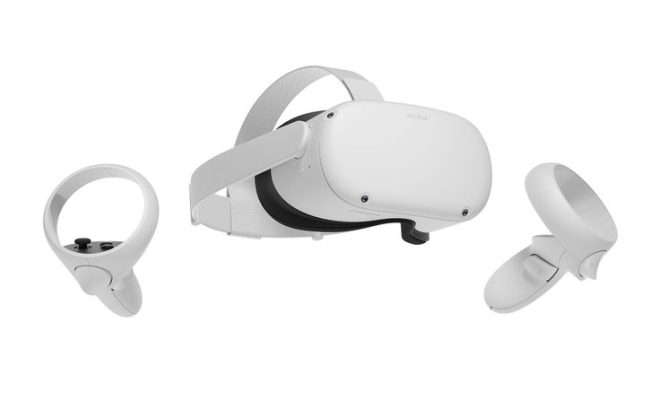
The Oculus Quest 2 stands as a significant upgrade over its predecessor, the original Oculus Quest, in several key areas. This article will explore how the latest VR headset model compares to the first generation, giving potential buyers and VR enthusiasts insight into the developments and enhancements made by Oculus, now a part of Facebook’s parent company, Meta.

One of the most noticeable improvements is in the display department. The Quest 2 boasts a single fast-switch LCD with a resolution of 1832 x 1920 pixels per eye, which is a notable jump from the Quest’s 1440 x 1600 pixels per eye on an OLED panel. The increased resolution translates to crisper images and better overall visual fidelity.

In terms of performance, Quest 2 steps up with the Qualcomm Snapdragon XR2 platform compared to the older Snapdragon 835 used in the first Quest. The newer chipset is specifically designed for VR and AR environments, enhancing the processing power significantly. Coupled with 6GB of RAM, an increase from the original’s 4GB, users experience smoother performance and can run more demanding applications.

The design and comfort of the headset have also been addressed. The Oculus Quest 2 is lighter than its predecessor, weighing in at around 503 grams compared to Quest’s approximately 571 grams. This weight reduction helps reduce fatigue during long play sessions. However, some users have noted that the new strap design on the Quest 2 might be less comfortable for certain head shapes, but this can be mitigated with additional accessories like the Elite Strap.

Battery life between both headsets remains similar with roughly two to three hours of playtime depending on usage. Both devices also share inside-out tracking capabilities without needing external sensors and have hand tracking features for immersive gameplay.

Oculus has moved toward a more streamlined VR experience by integrating features like faster refresh rates on Quest 2 (up to 90Hz, support planned for 120Hz), compared to the standard 72Hz on Quest. This makes for smoother motion and animation, which can also reduce motion sickness for some users.

A distinctive change that has raised debates is Facebook’s requirement for all new Oculus headset users to log in via a Facebook account to use their device fully—a condition that wasn’t mandatory with the original Quest.

Quest’s game library remains accessible on Quest 2 with backward compatibility, ensuring existing owners of Oculus content can enjoy their purchases on the new hardware. Further enriching this ecosystem are improvements in app development due to increased power of Quest 2—as developers have more resources to create complex and graphically rich experiences.

Price-wise, Oculus made a compelling move by offering the base model of Quest 2 at a lower price point than the original at launch. Despite being an advanced piece of hardware, it incentivizes upgrades and attracts newcomers to virtual reality.

In conclusion, although both headsets have their pros and cons with particular user preferences varying greatly, it’s clear that Oculus has refined its approach to standalone VR gaming with significant improvements across display resolution, processing power, design changes and refreshing rates with its Oculus Quest 2 headset.

Previous Article

These 2019 cars will have the best ...

Next Article

Best Internet Providers in Tyler, Texas

Matthew Lynch

Related articles More from author

  • Virtual Reality

    The Quest 2 Price Cut Becomes Permanent: $249 Gets You Into the Metaverse

    February 3, 2024
    By Matthew Lynch
  • Virtual Reality

    Best VR Headset of 2024

    March 8, 2024
    By Matthew Lynch
  • Virtual Reality

    Let’s look at the weird Nintendo VR Labo creations

    February 3, 2024
    By Matthew Lynch
  • Virtual Reality

    Waveroom Virtual Recording Studio Review

    February 20, 2024
    By Matthew Lynch
  • Virtual Reality

    6 Best Virtual Machine Software for Windows in 2024

    March 15, 2024
    By Matthew Lynch
  • Virtual Reality

    Best of the Best Collaborative Virtual Learning Spaces 2026

    October 24, 2025
    By Matthew Lynch

Search

Login & Registration

  • Log in
  • Entries feed
  • Comments feed
  • WordPress.org

Newsletter

Signup for The Tech Edvocate Newsletter and have the latest in EdTech news and opinion delivered to your email address!

About Us

Since technology is not going anywhere and does more good than harm, adapting is the best course of action. That is where The Tech Edvocate comes in. We plan to cover the PreK-12 and Higher Education EdTech sectors and provide our readers with the latest news and opinion on the subject. From time to time, I will invite other voices to weigh in on important issues in EdTech. We hope to provide a well-rounded, multi-faceted look at the past, present, the future of EdTech in the US and internationally.

We started this journey back in June 2016, and we plan to continue it for many more years to come. I hope that you will join us in this discussion of the past, present and future of EdTech and lend your own insight to the issues that are discussed.

Newsletter

Signup for The Tech Edvocate Newsletter and have the latest in EdTech news and opinion delivered to your email address!

Contact Us

The Tech Edvocate
910 Goddin Street
Richmond, VA 23231
(601) 630-5238
[email protected]

Copyright © 2026 Matthew Lynch. All rights reserved.