The Tech Edvocate

Top Menu

  • Advertisement
  • Apps
  • Home Page
  • Home Page Five (No Sidebar)
  • Home Page Four
  • Home Page Three
  • Home Page Two
  • Home Tech2
  • Icons [No Sidebar]
  • Left Sidbear Page
  • Lynch Educational Consulting
  • My Account
  • My Speaking Page
  • Newsletter Sign Up Confirmation
  • Newsletter Unsubscription
  • Our Brands
  • Page Example
  • Privacy Policy
  • Protected Content
  • Register
  • Request a Product Review
  • Shop
  • Shortcodes Examples
  • Signup
  • Start Here
    • Governance
    • Careers
    • Contact Us
  • Terms and Conditions
  • The Edvocate
  • The Tech Edvocate Product Guide
  • Topics
  • Write For Us
  • Advertise

Main Menu

  • Start Here
    • Our Brands
    • Governance
      • Lynch Educational Consulting, LLC.
      • Dr. Lynch’s Personal Website
      • Careers
    • Write For Us
    • The Tech Edvocate Product Guide
    • Contact Us
    • Books
    • Edupedia
    • Post a Job
    • The Edvocate Podcast
    • Terms and Conditions
    • Privacy Policy
  • Topics
    • Assistive Technology
    • Child Development Tech
    • Early Childhood & K-12 EdTech
    • EdTech Futures
    • EdTech News
    • EdTech Policy & Reform
    • EdTech Startups & Businesses
    • Higher Education EdTech
    • Online Learning & eLearning
    • Parent & Family Tech
    • Personalized Learning
    • Product Reviews
  • Advertise
  • Tech Edvocate Awards
  • The Edvocate
  • Pedagogue
  • School Ratings

logo

The Tech Edvocate

  • Start Here
    • Our Brands
    • Governance
      • Lynch Educational Consulting, LLC.
      • Dr. Lynch’s Personal Website
        • My Speaking Page
      • Careers
    • Write For Us
    • The Tech Edvocate Product Guide
    • Contact Us
    • Books
    • Edupedia
    • Post a Job
    • The Edvocate Podcast
    • Terms and Conditions
    • Privacy Policy
  • Topics
    • Assistive Technology
    • Child Development Tech
    • Early Childhood & K-12 EdTech
    • EdTech Futures
    • EdTech News
    • EdTech Policy & Reform
    • EdTech Startups & Businesses
    • Higher Education EdTech
    • Online Learning & eLearning
    • Parent & Family Tech
    • Personalized Learning
    • Product Reviews
  • Advertise
  • Tech Edvocate Awards
  • The Edvocate
  • Pedagogue
  • School Ratings
  • The Bombshell Truth About Slim Boost Tea: Don’t Buy Until You Read This

  • Jaw-Dropping: Charbroil Bistro Pro Electric Grill Recall — Is Your Grill a Hidden Danger?

  • This Corgi Tech Startup Just Imploded — Here’s How Social Media Wrecked Everything

  • September 2026: The Latest in Tech Authoritarianism – Overturned by Kelly Stonelake

  • GTA 6 Collector’s Box Price: The $400 Outrage That Just Broke Gaming

  • Unbelievable: Gamers Fought Blizzard’s Censorship and Saved Ogre Butts

  • The Radical New Bill That Could Halt AI — And Jails Its Creators

  • This OpenAI Hack Just Exposed a Terrifying New AI Threat

  • This One Leaked Video Just Blew Open New Zealand’s Curriculum Battle

  • The AI Deception: Stanford’s Scandalous Photo Alteration Reignites Representation Debate

Tech News
Home›Tech News›Observe Mercury’s Stationary Position on March 19, 2026

Observe Mercury’s Stationary Position on March 19, 2026
By Matthew Lynch
March 19, 2026
0
Spread the love

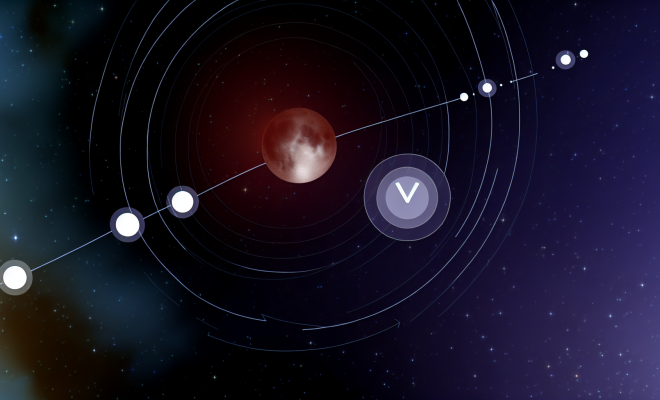
On Thursday, March 19, 2026, stargazers and astronomy enthusiasts will have a unique opportunity to witness the planet Mercury as it reaches a stationary position at 4 P.M. EDT. This fascinating event marks a moment when Mercury appears to pause in its orbit, providing an excellent chance for observation.

Understanding Mercury’s Stationary Position

Mercury is known for its rapid orbit around the Sun, completing a full revolution in just 88 Earth days. However, during certain times, the planet appears to slow down and temporarily halt against the backdrop of the stars. This phenomenon, known as a stationary position, occurs due to the relative motion of Earth and Mercury as they orbit the Sun.

When Mercury reaches its stationary point, it offers a rare display for observers on Earth. This event will take place at 4 P.M. EDT on March 19, and it will be visible in the early morning sky, about 30 minutes before sunrise.

Optimal Viewing Conditions

For those eager to catch a glimpse of Mercury, optimal viewing conditions are essential. The planet will be located low on the eastern horizon, appearing as a bright point of light. With a magnitude of 1.3, Mercury will be relatively easy to spot, even in areas with light pollution, provided that observers have a clear view of the horizon.

As the morning progresses, Mercury will rise to nearly 4° high, making it an exciting target for both casual observers and seasoned astronomers alike. The planet will take on a distinctive appearance, presenting itself as a slim, 20-percent-lit crescent when viewed through optical instruments such as telescopes or binoculars.

What to Expect After March 19

Following its stationary position, Mercury will continue to brighten in the days to come. By March 22, the planet’s magnitude is expected to increase to an impressive 0.9, making it even more prominent in the pre-dawn sky. This gradual brightening is a phenomenon that observers should take note of, as it indicates Mercury’s increasing visibility as Earth moves in relation to the planet.

The Science Behind the Phenomenon

Understanding why Mercury appears to stand still can be attributed to the mechanics of celestial motion. As two planets orbit the Sun, their relative speeds and distances create the illusion of one planet pausing while the other continues moving. This phenomenon can also be seen with other planets, but Mercury, being the closest to the Sun, exhibits this effect more frequently due to its rapid orbit.

The stationary position of Mercury is more than just a visual spectacle; it serves as a reminder of the dynamic and intricate dance of celestial bodies within our solar system. By studying these movements, astronomers can glean valuable insights into planetary dynamics and the gravitational interactions that govern their orbits.

Tools for Observation

For those wishing to observe Mercury during its stationary phase, several tools can enhance the experience:

  • Binoculars: A good pair of binoculars can provide an excellent view of Mercury’s crescent shape, making it easier to distinguish from other celestial objects.
  • Telescope: A telescope will offer the best viewing experience, allowing observers to see more details of the planet’s surface and its crescent phase.
  • Star charts or apps: Utilizing star charts or astronomy apps can help locate Mercury in the sky and provide information on its brightness and position.

Preparation is key for a successful observation. Ensure to check local weather conditions for clear skies, and choose a location with minimal light pollution to enhance visibility.

Conclusion

The stationary position of Mercury on March 19, 2026, presents a captivating opportunity for both amateur and experienced astronomers. As the planet brightens and becomes more visible in the days following this event, it invites curiosity and wonder about the cosmos. Observing Mercury not only showcases the beauty of our solar system but also encourages a deeper understanding of the mechanics that govern celestial bodies. So, mark your calendars and prepare your telescopes; the sky will offer a dazzling display that should not be missed!


Previous Article

Tropical Peatland Wildfires Surge to 2000-Year High

Next Article

Young Crescent Moon & Venus Align: March ...

Matthew Lynch

Related articles More from author

  • Tech News

    Navigate High Refinance Mortgage Rates in 2026

    April 27, 2026
    By Matthew Lynch
  • Tech News

    Get the New M3 MacBook Pro for $200 Off the Apple Store Price

    January 31, 2024
    By Matthew Lynch
  • Tech News

    Cut Back on Drinking: Practical Strategies for a Balanced Life

    July 5, 2026
    By Matthew Lynch
  • Tech News

    How to manage Google Drive storage space

    August 7, 2026
    By Matthew Lynch
  • Tech News

    How to use clone stamp in Photoshop

    July 18, 2026
    By Matthew Lynch
  • Tech News

    Reza Pahlavi Calls for U.S. Action Against Iran at CPAC 2026

    March 29, 2026
    By Matthew Lynch

Search

Login & Registration

  • Log in
  • Entries feed
  • Comments feed
  • WordPress.org

Newsletter

Signup for The Tech Edvocate Newsletter and have the latest in EdTech news and opinion delivered to your email address!

About Us

Since technology is not going anywhere and does more good than harm, adapting is the best course of action. That is where The Tech Edvocate comes in. We plan to cover the PreK-12 and Higher Education EdTech sectors and provide our readers with the latest news and opinion on the subject. From time to time, I will invite other voices to weigh in on important issues in EdTech. We hope to provide a well-rounded, multi-faceted look at the past, present, the future of EdTech in the US and internationally.

We started this journey back in June 2016, and we plan to continue it for many more years to come. I hope that you will join us in this discussion of the past, present and future of EdTech and lend your own insight to the issues that are discussed.

Newsletter

Signup for The Tech Edvocate Newsletter and have the latest in EdTech news and opinion delivered to your email address!

Contact Us

The Tech Edvocate
910 Goddin Street
Richmond, VA 23231
(601) 630-5238
[email protected]

Copyright © 2026 Matthew Lynch. All rights reserved.