The Tech Edvocate

Top Menu

  • Advertisement
  • Apps
  • Home Page
  • Home Page Five (No Sidebar)
  • Home Page Four
  • Home Page Three
  • Home Page Two
  • Home Tech2
  • Icons [No Sidebar]
  • Left Sidbear Page
  • Lynch Educational Consulting
  • My Account
  • My Speaking Page
  • Newsletter Sign Up Confirmation
  • Newsletter Unsubscription
  • Our Brands
  • Page Example
  • Privacy Policy
  • Protected Content
  • Register
  • Request a Product Review
  • Shop
  • Shortcodes Examples
  • Signup
  • Start Here
    • Governance
    • Careers
    • Contact Us
  • Terms and Conditions
  • The Edvocate
  • The Tech Edvocate Product Guide
  • Topics
  • Write For Us
  • Advertise

Main Menu

  • Start Here
    • Our Brands
    • Governance
      • Lynch Educational Consulting, LLC.
      • Dr. Lynch’s Personal Website
      • Careers
    • Write For Us
    • The Tech Edvocate Product Guide
    • Contact Us
    • Books
    • Edupedia
    • Post a Job
    • The Edvocate Podcast
    • Terms and Conditions
    • Privacy Policy
  • Topics
    • Assistive Technology
    • Child Development Tech
    • Early Childhood & K-12 EdTech
    • EdTech Futures
    • EdTech News
    • EdTech Policy & Reform
    • EdTech Startups & Businesses
    • Higher Education EdTech
    • Online Learning & eLearning
    • Parent & Family Tech
    • Personalized Learning
    • Product Reviews
  • Advertise
  • Tech Edvocate Awards
  • The Edvocate
  • Pedagogue
  • School Ratings

logo

The Tech Edvocate

  • Start Here
    • Our Brands
    • Governance
      • Lynch Educational Consulting, LLC.
      • Dr. Lynch’s Personal Website
        • My Speaking Page
      • Careers
    • Write For Us
    • The Tech Edvocate Product Guide
    • Contact Us
    • Books
    • Edupedia
    • Post a Job
    • The Edvocate Podcast
    • Terms and Conditions
    • Privacy Policy
  • Topics
    • Assistive Technology
    • Child Development Tech
    • Early Childhood & K-12 EdTech
    • EdTech Futures
    • EdTech News
    • EdTech Policy & Reform
    • EdTech Startups & Businesses
    • Higher Education EdTech
    • Online Learning & eLearning
    • Parent & Family Tech
    • Personalized Learning
    • Product Reviews
  • Advertise
  • Tech Edvocate Awards
  • The Edvocate
  • Pedagogue
  • School Ratings
  • Can Clio accept client payments

  • How to dispatch jobs in FieldAware

  • Can ServiceTitan do call booking

  • How to onboard construction workers BambooHR

  • Is FieldAware worth it for contractors

  • How many users in Jobber

  • Can JobNimbus track leads

  • How to create estimates in Housecall Pro

  • How many users in mHelpDesk

  • How to track certifications in BambooHR construction

Math Education
Home›Math Education›Mathematicians Identify the Best Versions of Iconic Shapes

Mathematicians Identify the Best Versions of Iconic Shapes
By Matthew Lynch
March 4, 2024
0
Spread the love

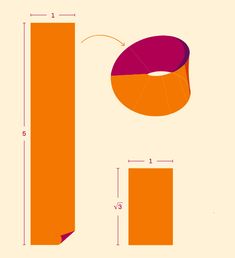
Through the analytical lens and abstract thinking, mathematicians have continually contributed to the understanding of geometry, providing comprehensive insights into the structures that are all too familiar in our daily lives. The pursuit of identifying the best versions of iconic shapes has long intrigued scholars and enthusiasts alike, leading to a series of fascinating discoveries that unpack the intrinsic properties of these geometrical forms.

Historically, the quest for defining ‘best’ has been rooted in the principles of symmetry, simplicity, and optimality. The circle, with its perfectly equidistant points from a central locus, represents a kind of geometric nirvana, symmetrical and simple. Similarly, the square signifies optimal subdivision of space into equal areas with minimal perimeter.

Recent endeavors by mathematicians have delved deeper into classic forms, exploring their various manifestations across different dimensions and contexts. The groundbreaking research was driven by mathematical optimization and computer algorithms designed to test and compare different shapes under manifold criteria.

One landmark finding concerned the Platonic solids—a set known since antiquity—which mathematicians re-evaluated. Through computational analysis, they confirmed that these shapes indeed represent an ideal form considering factors like symmetry, surface area to volume ratio, and stability.

Another intriguing area of study has been on tessellations: patterns that fill a plane with no overlaps and no gaps. Mathematicians have unearthed new tessellation shapes that minimize boundaries—a characteristic that could inform efficient spatial planning in various scientific fields.

In higher dimensions, research on hypercubes and other complex polytopes has unveiled configurations with unprecedented efficiency properties. These shapes could have significant implications for data storage and retrieval systems in computing architectures.

More esoteric advances involve curved spaces and non-Euclidean geometries. The studying of optimized shapes within these realms has not only deepened understanding but has also revealed inherent beauty in forms unfathomable within traditional Euclidean constraints.

Mathematicians believe that their work decoding these ideal shape structures holds potential for multiple applications—a ranging spectrum from architectural design to nanotechnology. As such, this melding of aesthetic allure with practical function captures the quintessence of mathematical elegance—an art form sown from the seeds of logical rigor and empirical investigation.

Where this journey into geometrical perfection will lead remains an ever-evolving narrative. However, its impact resonates far beyond the confines of mathematics; it inspires a deeper appreciation for the subtle contours governing our physical reality.


Previous Article

Here Are The 7 Absolute Best Pumpkin ...

Next Article

Visit the 10 Best Fall Destinations in ...

Matthew Lynch

Related articles More from author

  • Math Education

    Taking Math Class Outdoors

    November 29, 2022
    By Matthew Lynch
  • Math Education

    Why 52 Sets Might Just Be the Optimum Number

    March 21, 2024
    By Matthew Lynch
  • Math Education

    What is Phase Shift?

    May 10, 2023
    By Matthew Lynch
  • Math Education

    How We Learn Math Patterns

    November 10, 2022
    By Matthew Lynch
  • Math Education

    Math Teachers and Math Ed. Professors Don’t See Eye to Eye on Best Practices

    March 7, 2024
    By Matthew Lynch
  • Math Education

    20 Volume Of A Cone Geometry Activities For Middle Schoolers

    March 12, 2025
    By Matthew Lynch

Search

Login & Registration

  • Log in
  • Entries feed
  • Comments feed
  • WordPress.org

Newsletter

Signup for The Tech Edvocate Newsletter and have the latest in EdTech news and opinion delivered to your email address!

About Us

Since technology is not going anywhere and does more good than harm, adapting is the best course of action. That is where The Tech Edvocate comes in. We plan to cover the PreK-12 and Higher Education EdTech sectors and provide our readers with the latest news and opinion on the subject. From time to time, I will invite other voices to weigh in on important issues in EdTech. We hope to provide a well-rounded, multi-faceted look at the past, present, the future of EdTech in the US and internationally.

We started this journey back in June 2016, and we plan to continue it for many more years to come. I hope that you will join us in this discussion of the past, present and future of EdTech and lend your own insight to the issues that are discussed.

Newsletter

Signup for The Tech Edvocate Newsletter and have the latest in EdTech news and opinion delivered to your email address!

Contact Us

The Tech Edvocate
910 Goddin Street
Richmond, VA 23231
(601) 630-5238
[email protected]

Copyright © 2026 Matthew Lynch. All rights reserved.