The Tech Edvocate

Top Menu

  • Advertisement
  • Apps
  • Home Page
  • Home Page Five (No Sidebar)
  • Home Page Four
  • Home Page Three
  • Home Page Two
  • Home Tech2
  • Icons [No Sidebar]
  • Left Sidbear Page
  • Lynch Educational Consulting
  • My Account
  • My Speaking Page
  • Newsletter Sign Up Confirmation
  • Newsletter Unsubscription
  • Our Brands
  • Page Example
  • Privacy Policy
  • Protected Content
  • Register
  • Request a Product Review
  • Shop
  • Shortcodes Examples
  • Signup
  • Start Here
    • Governance
    • Careers
    • Contact Us
  • Terms and Conditions
  • The Edvocate
  • The Tech Edvocate Product Guide
  • Topics
  • Write For Us
  • Advertise

Main Menu

  • Start Here
    • Our Brands
    • Governance
      • Lynch Educational Consulting, LLC.
      • Dr. Lynch’s Personal Website
      • Careers
    • Write For Us
    • The Tech Edvocate Product Guide
    • Contact Us
    • Books
    • Edupedia
    • Post a Job
    • The Edvocate Podcast
    • Terms and Conditions
    • Privacy Policy
  • Topics
    • Assistive Technology
    • Child Development Tech
    • Early Childhood & K-12 EdTech
    • EdTech Futures
    • EdTech News
    • EdTech Policy & Reform
    • EdTech Startups & Businesses
    • Higher Education EdTech
    • Online Learning & eLearning
    • Parent & Family Tech
    • Personalized Learning
    • Product Reviews
  • Advertise
  • Tech Edvocate Awards
  • The Edvocate
  • Pedagogue
  • School Ratings

logo

The Tech Edvocate

  • Start Here
    • Our Brands
    • Governance
      • Lynch Educational Consulting, LLC.
      • Dr. Lynch’s Personal Website
        • My Speaking Page
      • Careers
    • Write For Us
    • The Tech Edvocate Product Guide
    • Contact Us
    • Books
    • Edupedia
    • Post a Job
    • The Edvocate Podcast
    • Terms and Conditions
    • Privacy Policy
  • Topics
    • Assistive Technology
    • Child Development Tech
    • Early Childhood & K-12 EdTech
    • EdTech Futures
    • EdTech News
    • EdTech Policy & Reform
    • EdTech Startups & Businesses
    • Higher Education EdTech
    • Online Learning & eLearning
    • Parent & Family Tech
    • Personalized Learning
    • Product Reviews
  • Advertise
  • Tech Edvocate Awards
  • The Edvocate
  • Pedagogue
  • School Ratings
  • Your Essential Guide to Navigating Consumer Tech News in 2023

  • Unveiling the Future: Must-Have Gadgets and Innovations Transforming Consumer Tech

  • Revolutionizing Everyday Life: The Must-Have Consumer Tech Innovations of 2026

  • Top Android Phones of 2026: Unveiling the Must-Have Smartphones for Every User

  • Fashion Nova 2026: A Comprehensive Review and Competitor Comparison

  • China and the US Engage in Crucial Economic Talks in Paris

  • Gold Prices in Turmoil: Will They Hold Above $5,200 Amid Geopolitical Tensions?

  • Bank of Japan Set to Maintain Interest Rates Amid Rising Global Uncertainty

  • Oil Prices Surge Amidst Geopolitical Tensions: A Closer Look at March 2026 Trends

  • Bitcoin’s Resilience: How BTC Holds Steady at $70,982 Amid Market Turbulence

Digital & Mobile Technology
Home›Digital & Mobile Technology›How to Validate HTML Forms Using Regular Expressions

How to Validate HTML Forms Using Regular Expressions
By Matthew Lynch
July 31, 2023
0
Spread the love

HTML forms are a crucial aspect of web development and allow users to input data that can be submitted and sent to a server for processing. However, it is essential to ensure that the data being collected is of the correct format and follows a specific pattern. Regular expressions can be used to validate HTML forms and ensure that the data collected is in the right format. In this article, we will explain how to validate HTML forms using regular expressions.

What is Regular Expression?

A regular expression is a sequence of characters that defines a search pattern. It is a powerful tool used to search, match, and manipulate strings of text in programming languages. Regular expressions consist of a combination of metacharacters and literals that define the pattern to be matched.

Why Use Regular Expressions to Validate HTML Forms?

HTML forms are used to collect information and data from users. However, the data collected may not always be in the expected or correct format. Using regular expressions, web developers can validate the form input and ensure that the data matches the desired pattern and format. Regular expressions can be used to validate various types of data, including email addresses, phone numbers, URLs, and dates.

Steps to Validate HTML Forms Using Regular Expressions

To validate HTML forms using regular expressions, follow these steps:

Step 1: Add the Pattern Attribute

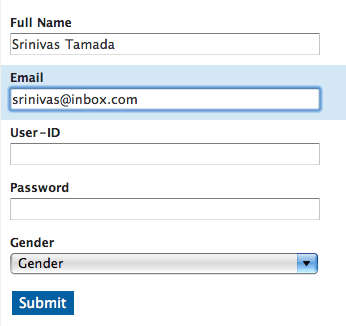
To validate HTML forms, the first step is to add the pattern attribute to the input fields. The pattern attribute specifies the regular expression pattern to be matched. The pattern attribute can be added to various input fields like text, email, password, etc.

For example, to validate an email address, the pattern attribute can be set to:

The above regular expression validates the email address where the user needs to enter the email address with a specific format.

The expression matches an email address containing a string of one or more lowercase letters, digits, dot, underscore, percent, plus, and hyphen characters, followed by @ symbol, followed by one or more lowercase letters, digits, dot, and hyphen characters, then a period, and two or more lowercase letters.

Step 2: Define the Regular Expression Pattern

The next step is to define the regular expression pattern to be used to validate the form input. Regular expressions follow a specific syntax and can be quite complex.

For instance, to validate phone numbers, the following regular expression can be used:

The above regular expression validates the phone number where the user needs to enter the phone number with ten digits.

The expression matches a string consisting of ten digits.

Step 3: Test the Regular Expression Pattern

After defining the regular expression pattern, the next step is to test the pattern to ensure that it works as expected. Regular expressions can be tested using various online tools and sites.

For example, to test the email address regular expression pattern, visit the site, https://regex101.com/. Paste the regular expression pattern into the pattern box and enter an email address in the test string box. The tool will show whether the email address matches the specified pattern or not.

Step 4: Validate the Form Input

Finally, after adding the pattern attribute, defining the regular expression pattern, and testing the pattern, the last step is to validate the form input.

When the user inputs data into the form field, the browser automatically validates the data using the specified regular expression pattern. If the data matches the pattern, the form can be submitted, and if not, an error message will be displayed.

Conclusion

Regular expressions are a powerful tool that can be used to validate HTML forms and ensure that the data collected is of the correct format. By following the steps outlined above, web developers can validate various types of data, including email addresses, phone numbers, URLs, and dates. Regular expression syntax can be challenging to understand, but with practice, developers can master the art and use it to build robust, secure, and user-friendly web applications.

Previous Article

6 Reasons Why You Shouldn’t Use Apple ...

Next Article

Is Amazon Prime Worth Your Money? We ...

Matthew Lynch

Related articles More from author

  • Digital & Mobile Technology

    Bose QuietComfort Earbuds 2 Review: Best Noise Canceling, Bar None

    April 11, 2023
    By Matthew Lynch
  • Digital & Mobile Technology

    Best Free Media Players for Windows

    June 23, 2023
    By Matthew Lynch
  • Digital & Mobile Technology

    How to Play Music From Your Phone to a Car Stereo

    September 8, 2023
    By Matthew Lynch
  • Digital & Mobile Technology

    How to Upgrade From Windows 7 to Windows 10

    June 1, 2023
    By Matthew Lynch
  • Digital & Mobile Technology

    How Digital Handwriting Could Replace Your Keyboard

    June 12, 2023
    By Matthew Lynch
  • Digital & Mobile Technology

    What Is a Hard Disk Drive?

    June 8, 2023
    By Matthew Lynch

Search

Login & Registration

  • Register
  • Log in
  • Entries feed
  • Comments feed
  • WordPress.org

Newsletter

Signup for The Tech Edvocate Newsletter and have the latest in EdTech news and opinion delivered to your email address!

About Us

Since technology is not going anywhere and does more good than harm, adapting is the best course of action. That is where The Tech Edvocate comes in. We plan to cover the PreK-12 and Higher Education EdTech sectors and provide our readers with the latest news and opinion on the subject. From time to time, I will invite other voices to weigh in on important issues in EdTech. We hope to provide a well-rounded, multi-faceted look at the past, present, the future of EdTech in the US and internationally.

We started this journey back in June 2016, and we plan to continue it for many more years to come. I hope that you will join us in this discussion of the past, present and future of EdTech and lend your own insight to the issues that are discussed.

Newsletter

Signup for The Tech Edvocate Newsletter and have the latest in EdTech news and opinion delivered to your email address!

Contact Us

The Tech Edvocate
910 Goddin Street
Richmond, VA 23231
(601) 630-5238
[email protected]

Copyright © 2025 Matthew Lynch. All rights reserved.