The Tech Edvocate

Top Menu

  • Advertisement
  • Apps
  • Home Page
  • Home Page Five (No Sidebar)
  • Home Page Four
  • Home Page Three
  • Home Page Two
  • Home Tech2
  • Icons [No Sidebar]
  • Left Sidbear Page
  • Lynch Educational Consulting
  • My Account
  • My Speaking Page
  • Newsletter Sign Up Confirmation
  • Newsletter Unsubscription
  • Our Brands
  • Page Example
  • Privacy Policy
  • Protected Content
  • Register
  • Request a Product Review
  • Shop
  • Shortcodes Examples
  • Signup
  • Start Here
    • Governance
    • Careers
    • Contact Us
  • Terms and Conditions
  • The Edvocate
  • The Tech Edvocate Product Guide
  • Topics
  • Write For Us
  • Advertise

Main Menu

  • Start Here
    • Our Brands
    • Governance
      • Lynch Educational Consulting, LLC.
      • Dr. Lynch’s Personal Website
      • Careers
    • Write For Us
    • The Tech Edvocate Product Guide
    • Contact Us
    • Books
    • Edupedia
    • Post a Job
    • The Edvocate Podcast
    • Terms and Conditions
    • Privacy Policy
  • Topics
    • Assistive Technology
    • Child Development Tech
    • Early Childhood & K-12 EdTech
    • EdTech Futures
    • EdTech News
    • EdTech Policy & Reform
    • EdTech Startups & Businesses
    • Higher Education EdTech
    • Online Learning & eLearning
    • Parent & Family Tech
    • Personalized Learning
    • Product Reviews
  • Advertise
  • Tech Edvocate Awards
  • The Edvocate
  • Pedagogue
  • School Ratings

logo

The Tech Edvocate

  • Start Here
    • Our Brands
    • Governance
      • Lynch Educational Consulting, LLC.
      • Dr. Lynch’s Personal Website
        • My Speaking Page
      • Careers
    • Write For Us
    • The Tech Edvocate Product Guide
    • Contact Us
    • Books
    • Edupedia
    • Post a Job
    • The Edvocate Podcast
    • Terms and Conditions
    • Privacy Policy
  • Topics
    • Assistive Technology
    • Child Development Tech
    • Early Childhood & K-12 EdTech
    • EdTech Futures
    • EdTech News
    • EdTech Policy & Reform
    • EdTech Startups & Businesses
    • Higher Education EdTech
    • Online Learning & eLearning
    • Parent & Family Tech
    • Personalized Learning
    • Product Reviews
  • Advertise
  • Tech Edvocate Awards
  • The Edvocate
  • Pedagogue
  • School Ratings
  • Viaim Opennote Review: The AI Note-Taker That Disappears Into Your Daily Routine

  • A Visitors Guide to Long Beach (CA), United States

  • A Visitor’s Guide to Fresno (CA), United States

  • A Visitors Guide to New Orleans (LA), United States

  • A Visitors Guide to Sacramento (CA), United States

  • A Visitors Guide to Lyon, France

  • JisuLife Ultra2 Portable Fan: A Powerful Multi-Function Cooling Solution

  • A Visitors Guide to Viña del Mar, Chile

  • A Visitors Guide to Århus, Denmark

  • A Visitors Guide to Bakersfield (CA), United States

Assistive Technology
Home›Assistive Technology›How to Use Nintendo Switch Joy-Cons on PC

How to Use Nintendo Switch Joy-Cons on PC
By Matthew Lynch
June 8, 2023
0
Spread the love

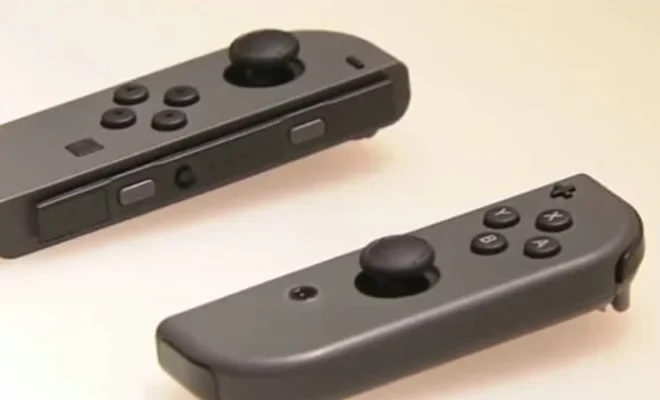
As Nintendo Switch Joy-Cons have become a popular gaming accessory, some gamers may be curious about how to use them on their personal computers. Fortunately, the process is relatively simple, and anyone can do it with just a few steps. Here is a guide on how to use Nintendo Switch Joy-Cons on PC.

Step 1: Pair Joy-Cons with PC

The first step is to pair the Joy-Cons with your PC. For this, you will need to download an application called “BetterJoyforCemu” from GitHub. Depending on your system’s architecture, you will have to download either the 32-bit or 64-bit software. Once downloaded, open the application and connect your Joy-Cons to your PC using Bluetooth. You can do this by opening your PC’s Bluetooth settings, clicking on “Add Bluetooth or other device,” and selecting “Bluetooth” then hold the sync button on the Joy-Cons until they pair with your PC.

Step 2: Calibrate the Joy-Cons

After the Joy-Cons are connected to your PC, you will need to calibrate them. This process ensures that the Joy-Cons’ motion controls and buttons are functioning correctly. To calibrate the Joy-Cons, open the “Configure Controllers” section in “BetterJoyforCemu” and click on “Calibrate.” Follow the on-screen instructions to calibrate each Joy-Con.

Step 3: Configure Joy-Con Controls

Now it’s time to configure Joy-Con controls for your games. Some games might recognize the Joy-Cons right away, and others may require additional software to configure them. The good news is, you have a few options to choose from. Popular software like JoyToKey and Xpadder are easy-to-use and free to download that you can use to map each Joy-Con button to a keyboard key or a different controller.

To use JoyToKey, you will need to map each Joy-Con button to a keyboard key or a different controller. Open JoyToKey and, in the “Options” menu, click on “Configure Joysticks.” Press the buttons on your Joy-Cons, and JoyToKey will recognize them. It will then allow you to map those buttons to keyboard keys or an alternative controller.

Step 4: Test Joy-Con Controls

The final step is to test your Joy-Con controls. Launch a game, and check if your Joy-Cons are working correctly. If they are not working as intended, go back to the previous steps and make sure everything is correctly configured, calibrated, and mapped.

In conclusion, using Nintendo Switch Joy-Cons on PC is easy to do, and this guide should have helped you through the process. By taking advantage of the calibration and configuration features, you can now use the Joy-Cons on all your favorite PC games. With these functional controllers, you can now experience a more immersive gaming experience on your PC

Previous Article

How to Change Search Engines on a ...

Next Article

What It Means When Friends Put ‘LMS’ ...

Matthew Lynch

Related articles More from author

  • Assistive Technology

    How to Use Amazon Alexa From the Alexa App

    June 22, 2023
    By Matthew Lynch
  • Assistive Technology

    Windows Sonic vs Dolby Atmos: Which Headphones Are Best for Xbox One?

    June 9, 2023
    By Matthew Lynch
  • Assistive Technology

    How to Reset a Parental Controls Password on Kindle

    June 6, 2023
    By Matthew Lynch
  • Assistive Technology

    Different Ways of Writing Conditional Statements in JavaScript

    June 15, 2023
    By Matthew Lynch
  • Assistive Technology

    How to Send a Picture in Gmail

    June 10, 2023
    By Matthew Lynch
  • Assistive Technology

    How Long Should Headlights Last?

    June 11, 2023
    By Matthew Lynch

Search

Login & Registration

  • Register
  • Log in
  • Entries feed
  • Comments feed
  • WordPress.org

Newsletter

Signup for The Tech Edvocate Newsletter and have the latest in EdTech news and opinion delivered to your email address!

About Us

Since technology is not going anywhere and does more good than harm, adapting is the best course of action. That is where The Tech Edvocate comes in. We plan to cover the PreK-12 and Higher Education EdTech sectors and provide our readers with the latest news and opinion on the subject. From time to time, I will invite other voices to weigh in on important issues in EdTech. We hope to provide a well-rounded, multi-faceted look at the past, present, the future of EdTech in the US and internationally.

We started this journey back in June 2016, and we plan to continue it for many more years to come. I hope that you will join us in this discussion of the past, present and future of EdTech and lend your own insight to the issues that are discussed.

Newsletter

Signup for The Tech Edvocate Newsletter and have the latest in EdTech news and opinion delivered to your email address!

Contact Us

The Tech Edvocate
910 Goddin Street
Richmond, VA 23231
(601) 630-5238
[email protected]

Copyright © 2025 Matthew Lynch. All rights reserved.