The Tech Edvocate

Top Menu

  • Advertisement
  • Apps
  • Home Page
  • Home Page Five (No Sidebar)
  • Home Page Four
  • Home Page Three
  • Home Page Two
  • Home Tech2
  • Icons [No Sidebar]
  • Left Sidbear Page
  • Lynch Educational Consulting
  • My Account
  • My Speaking Page
  • Newsletter Sign Up Confirmation
  • Newsletter Unsubscription
  • Our Brands
  • Page Example
  • Privacy Policy
  • Protected Content
  • Register
  • Request a Product Review
  • Shop
  • Shortcodes Examples
  • Signup
  • Start Here
    • Governance
    • Careers
    • Contact Us
  • Terms and Conditions
  • The Edvocate
  • The Tech Edvocate Product Guide
  • Topics
  • Write For Us
  • Advertise

Main Menu

  • Start Here
    • Our Brands
    • Governance
      • Lynch Educational Consulting, LLC.
      • Dr. Lynch’s Personal Website
      • Careers
    • Write For Us
    • The Tech Edvocate Product Guide
    • Contact Us
    • Books
    • Edupedia
    • Post a Job
    • The Edvocate Podcast
    • Terms and Conditions
    • Privacy Policy
  • Topics
    • Assistive Technology
    • Child Development Tech
    • Early Childhood & K-12 EdTech
    • EdTech Futures
    • EdTech News
    • EdTech Policy & Reform
    • EdTech Startups & Businesses
    • Higher Education EdTech
    • Online Learning & eLearning
    • Parent & Family Tech
    • Personalized Learning
    • Product Reviews
  • Advertise
  • Tech Edvocate Awards
  • The Edvocate
  • Pedagogue
  • School Ratings

logo

The Tech Edvocate

  • Start Here
    • Our Brands
    • Governance
      • Lynch Educational Consulting, LLC.
      • Dr. Lynch’s Personal Website
        • My Speaking Page
      • Careers
    • Write For Us
    • The Tech Edvocate Product Guide
    • Contact Us
    • Books
    • Edupedia
    • Post a Job
    • The Edvocate Podcast
    • Terms and Conditions
    • Privacy Policy
  • Topics
    • Assistive Technology
    • Child Development Tech
    • Early Childhood & K-12 EdTech
    • EdTech Futures
    • EdTech News
    • EdTech Policy & Reform
    • EdTech Startups & Businesses
    • Higher Education EdTech
    • Online Learning & eLearning
    • Parent & Family Tech
    • Personalized Learning
    • Product Reviews
  • Advertise
  • Tech Edvocate Awards
  • The Edvocate
  • Pedagogue
  • School Ratings
  • Michigan Students Gain Key Insight Through Civic Education Effort

  • The Rise of Day Trips: A New Trend in Travel

  • Navigating AI in Education: Beyond Bans

  • Companies Need a New Playbook to Unlock the Value of AI Agents

  • The New Wave of Soccer Players: Key Habits for Young Athletes

  • BrandPilot AI Expands into European Markets with Performance-Based Advertising

  • The Brutal Truth: Why K-12 Cybersecurity Needs More Than Just Awareness

  • The Unseen Threat: How K-12 Cybersecurity Training Is Quietly Reshaping Education

  • The Staggering Truth: K-12 Cybersecurity Education Is Failing – Here’s How to Fix It

  • Why Millions Are Ditching Degrees For This Career-Boosting Secret

Digital & Mobile Technology
Home›Digital & Mobile Technology›How to Use a Multimeter to Measure Current

How to Use a Multimeter to Measure Current
By Matthew Lynch
June 15, 2023
0
Spread the love

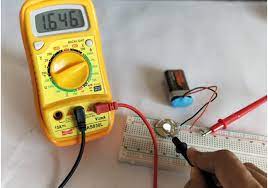
A multimeter is a versatile instrument that can measure various electrical properties such as voltage, resistance, and current. In this article, we will focus on how to use a multimeter to measure current.

But first, let’s understand what current is. Current or electric current is the flow of electric charge in a circuit. It is measured in amperes or amps. The current can be either AC or DC, depending on the type of circuit.

To measure current using a multimeter, follow these steps:

Step 1: Determine the type of current you are measuring

As mentioned earlier, current can be AC or DC. Check the circuit to see what type of current is flowing before proceeding. If it is a DC circuit, select DC current mode on the multimeter. If it is an AC circuit, select AC current mode.

Step 2: Set the multimeter to current mode

The next step is to set the multimeter to current mode. Turn on the multimeter and select the current mode by rotating the dial to the appropriate setting. On most multimeters, it is indicated by the symbol “A” with a straight line.

Step 3: Connect the multimeter in series with the circuit

To measure the current, the multimeter has to be connected in series with the circuit. This means that you will have to break the circuit and connect the multimeter between the two ends of the break. There are two ways to do this. You can either use the multimeter’s built-in amp meter or use an external amp meter.

For the built-in amp meter:

– Switch off the circuit and break the connection at the point where you want to measure the current.
– Connect the red probe of the multimeter to the positive end of the break.
– Connect the black probe of the multimeter to the negative end of the break.
– Switch on the circuit and take the reading.

For the external amp meter:

– Switch off the circuit and break the connection at the point where you want to measure the current.
– Connect the red probe of the multimeter to the input jack of the meter.
– Connect the black probe of the multimeter to the output jack of the meter.
– Connect the meter in series with the circuit at the break point.
– Switch on the circuit and take the reading.

Step 4: Take the reading

Once the multimeter is connected in series with the circuit, turn on the circuit and take the reading. The reading will be displayed in amps or milliamps, depending on the range you have set.

Step 5: Interpret the reading

Interpreting the reading depends on the circuit’s requirements. For example, if the circuit requires a current of 2 amps, and you measure a current of 1 amp, then the circuit is not working correctly. On the other hand, if the circuit requires a current of 1 amp, and you measure a current of 2 amps, then the circuit might be overloaded.

Conclusion

Measuring current using a multimeter is a simple process. However, it requires breaking the circuit to connect the multimeter in series, which can be tricky for some circuits. Always read the multimeter’s manual and follow the instructions carefully to avoid any damage or harm. Happy measuring!


Previous Article

How to Download TikTok Videos on PC ...

Next Article

What Is the Site Address of a ...

Matthew Lynch

Related articles More from author

  • Digital & Mobile Technology

    What Does Grinding Mean in Video Games?

    June 23, 2023
    By Matthew Lynch
  • Digital & Mobile Technology

    How to Check Call History of a Number on Android

    May 29, 2023
    By Matthew Lynch
  • Digital & Mobile Technology

    How to Sign a PDF Document on Android

    May 9, 2023
    By Matthew Lynch
  • Digital & Mobile TechnologyOnline Learning & eLearning

    Online Classes that Teach Science, Technology, Engineering, and Math Skills

    May 24, 2021
    By Matthew Lynch
  • Digital & Mobile Technology

    The iPad’s Screen Resolution for Different Models

    June 10, 2023
    By Matthew Lynch
  • Digital & Mobile Technology

    How to Fix It When Spotify Can’t Play the Current Song

    June 2, 2023
    By Matthew Lynch

Search

Login & Registration

  • Log in
  • Entries feed
  • Comments feed
  • WordPress.org

Newsletter

Signup for The Tech Edvocate Newsletter and have the latest in EdTech news and opinion delivered to your email address!

About Us

Since technology is not going anywhere and does more good than harm, adapting is the best course of action. That is where The Tech Edvocate comes in. We plan to cover the PreK-12 and Higher Education EdTech sectors and provide our readers with the latest news and opinion on the subject. From time to time, I will invite other voices to weigh in on important issues in EdTech. We hope to provide a well-rounded, multi-faceted look at the past, present, the future of EdTech in the US and internationally.

We started this journey back in June 2016, and we plan to continue it for many more years to come. I hope that you will join us in this discussion of the past, present and future of EdTech and lend your own insight to the issues that are discussed.

Newsletter

Signup for The Tech Edvocate Newsletter and have the latest in EdTech news and opinion delivered to your email address!

Contact Us

The Tech Edvocate
910 Goddin Street
Richmond, VA 23231
(601) 630-5238
[email protected]

Copyright © 2026 Matthew Lynch. All rights reserved.