The Tech Edvocate

Top Menu

  • Advertisement
  • Apps
  • Home Page
  • Home Page Five (No Sidebar)
  • Home Page Four
  • Home Page Three
  • Home Page Two
  • Home Tech2
  • Icons [No Sidebar]
  • Left Sidbear Page
  • Lynch Educational Consulting
  • My Account
  • My Speaking Page
  • Newsletter Sign Up Confirmation
  • Newsletter Unsubscription
  • Our Brands
  • Page Example
  • Privacy Policy
  • Protected Content
  • Register
  • Request a Product Review
  • Shop
  • Shortcodes Examples
  • Signup
  • Start Here
    • Governance
    • Careers
    • Contact Us
  • Terms and Conditions
  • The Edvocate
  • The Tech Edvocate Product Guide
  • Topics
  • Write For Us
  • Advertise

Main Menu

  • Start Here
    • Our Brands
    • Governance
      • Lynch Educational Consulting, LLC.
      • Dr. Lynch’s Personal Website
      • Careers
    • Write For Us
    • The Tech Edvocate Product Guide
    • Contact Us
    • Books
    • Edupedia
    • Post a Job
    • The Edvocate Podcast
    • Terms and Conditions
    • Privacy Policy
  • Topics
    • Assistive Technology
    • Child Development Tech
    • Early Childhood & K-12 EdTech
    • EdTech Futures
    • EdTech News
    • EdTech Policy & Reform
    • EdTech Startups & Businesses
    • Higher Education EdTech
    • Online Learning & eLearning
    • Parent & Family Tech
    • Personalized Learning
    • Product Reviews
  • Advertise
  • Tech Edvocate Awards
  • The Edvocate
  • Pedagogue
  • School Ratings

logo

The Tech Edvocate

  • Start Here
    • Our Brands
    • Governance
      • Lynch Educational Consulting, LLC.
      • Dr. Lynch’s Personal Website
        • My Speaking Page
      • Careers
    • Write For Us
    • The Tech Edvocate Product Guide
    • Contact Us
    • Books
    • Edupedia
    • Post a Job
    • The Edvocate Podcast
    • Terms and Conditions
    • Privacy Policy
  • Topics
    • Assistive Technology
    • Child Development Tech
    • Early Childhood & K-12 EdTech
    • EdTech Futures
    • EdTech News
    • EdTech Policy & Reform
    • EdTech Startups & Businesses
    • Higher Education EdTech
    • Online Learning & eLearning
    • Parent & Family Tech
    • Personalized Learning
    • Product Reviews
  • Advertise
  • Tech Edvocate Awards
  • The Edvocate
  • Pedagogue
  • School Ratings
  • A Visitors Guide to Long Beach (CA), United States

  • A Visitor’s Guide to Fresno (CA), United States

  • A Visitors Guide to New Orleans (LA), United States

  • A Visitors Guide to Sacramento (CA), United States

  • A Visitors Guide to Lyon, France

  • JisuLife Ultra2 Portable Fan: A Powerful Multi-Function Cooling Solution

  • A Visitors Guide to Viña del Mar, Chile

  • A Visitors Guide to Århus, Denmark

  • A Visitors Guide to Bakersfield (CA), United States

  • A Visitors Guide to Aurora (CO), United States

Digital & Mobile Technology
Home›Digital & Mobile Technology›How to SSH Into a Raspberry Pi for Remote Access

How to SSH Into a Raspberry Pi for Remote Access
By Matthew Lynch
June 26, 2023
0
Spread the love

Raspberry Pi is a small yet powerful computer that’s perfect for various projects, from setting up a home media server to designing a DIY IoT device, and much more. Remote access to your Raspberry Pi is beneficial when you want to manage your project from outside, gather data or troubleshoot issues. With Secure Shell (SSH), you can securely access your Raspberry Pi remotely from anywhere.

This article highlights the steps to SSH into a Raspberry Pi for remote access.

Step 1: Install an Operating System on Your Raspberry Pi

Before you can access your Raspberry Pi remotely, you need to have an operating system (OS) installed on it. The Raspberry Pi OS is a popular choice, and it’s the main operating system for Raspberry Pi. However, there are other options like Ubuntu, Debian, or Arch Linux.

If you don’t have an OS installed on your Raspberry Pi yet, check out our beginner’s guide to setting it up.

Step 2: Connect to Your Raspberry Pi Locally

For security reasons, you should always connect to your Raspberry Pi locally before attempting remote access. This allows you to configure the settings necessary for remote access.

To connect locally, you can plug in a mouse, keyboard, and monitor into your Raspberry Pi. Alternatively, if you want to avoid clutter, you can use a remote desktop software that allows you to access your Raspberry Pi from another computer via a graphical interface.

Step 3: Enable SSH

SSH is disabled by default on the Raspberry Pi OS for security reasons. To enable it, you need to follow these steps:

  1. Open the terminal by going to the taskbar and clicking the Raspberry Pi logo.
  2. Type “sudo raspi-config” and press enter.
  3. Navigate to the “Interfacing Options” and select “SSH” by pressing enter.
  4. Choose “Yes” and press enter to enable SSH.
  5. Reboot your Raspberry Pi to apply the changes.

Step 4: Determine Your Raspberry Pi’s IP Address

To access your Raspberry Pi remotely, you need to connect to its IP address. You can find your Raspberry Pi’s IP address by following these steps:

  1. Open the terminal and type “ip addr” and press enter.
  2. Look for the line starting with “inet” and has a number following.
  3. This number is your Raspberry Pi’s IP address.

Step 5: Connect to Your Raspberry Pi Remotely using SSH

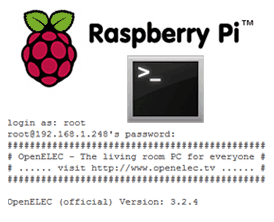
Now you’re ready to connect to your Raspberry Pi remotely using the SSH client. There are several SSH clients you can use, including OpenSSH and PuTTY. In this example, we’ll be using OpenSSH.

  1. Open the terminal on your local computer.
  2. Type “ssh pi@yourIPAddress” and press enter.
  3. Enter the password for the Raspberry Pi user (the default is “raspberry”).
  4. You should now be connected to your Raspberry Pi via SSH remotely.
Previous Article

Everything You Need to Know About the ...

Next Article

Services That Can Help You Find a ...

Matthew Lynch

Related articles More from author

  • Digital & Mobile Technology

    How to Add Search Engines to Internet Explorer 11

    July 24, 2023
    By Matthew Lynch
  • Digital & Mobile Technology

    Classic Online Instant Messaging Services to Chat With Friends

    June 15, 2023
    By Matthew Lynch
  • Digital & Mobile Technology

    Easy Fixes for the Kernel Mode Heap Corruption Error on Windows 10

    September 8, 2023
    By Matthew Lynch
  • Digital & Mobile Technology

    How Is a Router Different From a Switch?

    September 7, 2023
    By Matthew Lynch
  • Digital & Mobile Technology

    Deep Learning vs. Machine Learning: What’s the Difference?

    June 10, 2023
    By Matthew Lynch
  • Digital & Mobile Technology

    How to Get NFL Sunday Ticket Without DirecTV

    June 1, 2023
    By Matthew Lynch

Search

Login & Registration

  • Register
  • Log in
  • Entries feed
  • Comments feed
  • WordPress.org

Newsletter

Signup for The Tech Edvocate Newsletter and have the latest in EdTech news and opinion delivered to your email address!

About Us

Since technology is not going anywhere and does more good than harm, adapting is the best course of action. That is where The Tech Edvocate comes in. We plan to cover the PreK-12 and Higher Education EdTech sectors and provide our readers with the latest news and opinion on the subject. From time to time, I will invite other voices to weigh in on important issues in EdTech. We hope to provide a well-rounded, multi-faceted look at the past, present, the future of EdTech in the US and internationally.

We started this journey back in June 2016, and we plan to continue it for many more years to come. I hope that you will join us in this discussion of the past, present and future of EdTech and lend your own insight to the issues that are discussed.

Newsletter

Signup for The Tech Edvocate Newsletter and have the latest in EdTech news and opinion delivered to your email address!

Contact Us

The Tech Edvocate
910 Goddin Street
Richmond, VA 23231
(601) 630-5238
[email protected]

Copyright © 2025 Matthew Lynch. All rights reserved.