
The Tech Edvocate

Top Menu

  • Advertisement
  • Apps
  • Home Page
  • Home Page Five (No Sidebar)
  • Home Page Four
  • Home Page Three
  • Home Page Two
  • Home Tech2
  • Icons [No Sidebar]
  • Left Sidbear Page
  • Lynch Educational Consulting
  • My Account
  • My Speaking Page
  • Newsletter Sign Up Confirmation
  • Newsletter Unsubscription
  • Our Brands
  • Page Example
  • Privacy Policy
  • Protected Content
  • Register
  • Request a Product Review
  • Shop
  • Shortcodes Examples
  • Signup
  • Start Here
    • Governance
    • Careers
    • Contact Us
  • Terms and Conditions
  • The Edvocate
  • The Tech Edvocate Product Guide
  • Topics
  • Write For Us
  • Advertise

Main Menu

  • Start Here
    • Our Brands
    • Governance
      • Lynch Educational Consulting, LLC.
      • Dr. Lynch’s Personal Website
      • Careers
    • Write For Us
    • The Tech Edvocate Product Guide
    • Contact Us
    • Books
    • Edupedia
    • Post a Job
    • The Edvocate Podcast
    • Terms and Conditions
    • Privacy Policy
  • Topics
    • Assistive Technology
    • Child Development Tech
    • Early Childhood & K-12 EdTech
    • EdTech Futures
    • EdTech News
    • EdTech Policy & Reform
    • EdTech Startups & Businesses
    • Higher Education EdTech
    • Online Learning & eLearning
    • Parent & Family Tech
    • Personalized Learning
    • Product Reviews
  • Advertise
  • Tech Edvocate Awards
  • The Edvocate
  • Pedagogue
  • School Ratings

logo

The Tech Edvocate

  • Start Here
    • Our Brands
    • Governance
      • Lynch Educational Consulting, LLC.
      • Dr. Lynch’s Personal Website
        • My Speaking Page
      • Careers
    • Write For Us
    • The Tech Edvocate Product Guide
    • Contact Us
    • Books
    • Edupedia
    • Post a Job
    • The Edvocate Podcast
    • Terms and Conditions
    • Privacy Policy
  • Topics
    • Assistive Technology
    • Child Development Tech
    • Early Childhood & K-12 EdTech
    • EdTech Futures
    • EdTech News
    • EdTech Policy & Reform
    • EdTech Startups & Businesses
    • Higher Education EdTech
    • Online Learning & eLearning
    • Parent & Family Tech
    • Personalized Learning
    • Product Reviews
  • Advertise
  • Tech Edvocate Awards
  • The Edvocate
  • Pedagogue
  • School Ratings
  • Trader Joe’s March 2026 Arrivals: Affordable Gems and Customer Favorites

  • Mark Sprague Takes the Helm as Director of St. Pete-Clearwater International Airport

  • Consumer Attitudes Toward Editing Claim Images: A Growing Concern for Insurers

  • ProstaVive: A Comprehensive Review of the Prostate Health Supplement in 2026

  • Discover Trader Joe’s Top Picks for 2026: Customer Choice Awards Highlights

  • U.S. Stock Market Faces Uncertainty Amid Rising Oil Prices and Geopolitical Tensions

  • Asian Markets Show Mixed Results Amid Rising Oil Prices and U.S. Futures Decline

  • Stability in Fuel Prices Amidst Global Crude Market Turmoil: An Analysis

  • Crude Oil Prices Surge Amid Tensions in the Strait of Hormuz

  • Indian Stock Market Opens Flat Amid Geopolitical Tensions and Oil Price Fluctuations

How To
Home›How To›How to Scale in AutoCAD: 13 Steps

How to Scale in AutoCAD: 13 Steps
By Matthew Lynch
March 6, 2024
0
Spread the love

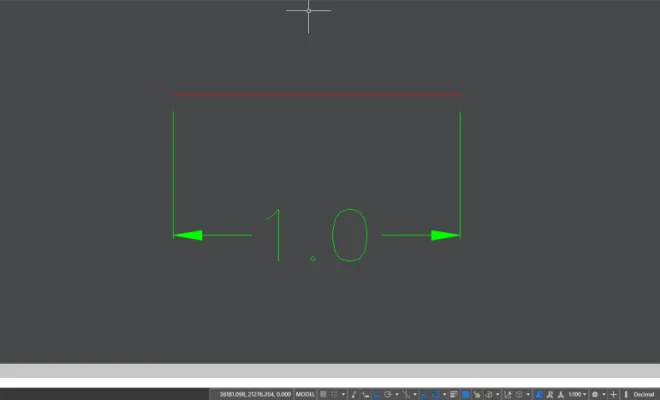
AutoCAD is a widely used design and drafting software. One of its key features includes the ability to scale drawings, which allows you to resize objects without altering their proportions. In this article, we will cover 13 steps to help you understand how to scale in AutoCAD.

1. Open AutoCAD: Launch the program and either open an existing project or start a new one.

2. Create or select the object: If necessary, create the object (e.g., line, circle, rectangle) that you want to scale. Otherwise, select the object(s) already present in your drawing.

3. Activate scale command: Type “SCALE” or “SC” in the command line and press enter.

4. Choose a base point: Click on any point on the object that will remain unchanged during the scaling operation. This point is now set as the base point for the action.

5. Specify reference length: When prompted, specify a reference length by clicking two points within the drawing that define the current size of the object.

6. Specify new length: Enter a new value for the length, either directly by typing numbers into the command line or graphically by clicking two points within the drawing.

7. Repeat scaling (optional): If you need to scale more than one object, repeat steps 1-6 as needed.

8. Use copy and scale (optional): To avoid modifying your original object while scaling it, use the COPY command before scaling it so that you have a duplicate to work with.

9. Confirm with Enter: Press Enter after performing all required steps to finalize your scaling operation.

10. Review your scaled object: Examine your scaled object(s) visually and make any necessary adjustments or modifications.

11. Save your drawing: After completing all actions, save your drawing as a .DWG file format so that you can review and edit it in AutoCAD.

12. Check dimensions: Double check that your scaled object has the correct dimensions and proportions by using the DIMENSION command.

13. Practice! To become efficient at scaling in AutoCAD, practice using this tool on various objects in different drawings. This will help you gauge how well you’re using the software and identify any areas where you need to improve.

By following these 13 steps, you can effectively scale objects within AutoCAD to meet your project’s requirements accurately. The more you practice, the more comfortable and proficient you will become at using this powerful feature.


Previous Article

How to Track Stocks: 15 Steps

Next Article

Look Friendly to Dogs: 11 Steps

Matthew Lynch

Related articles More from author

  • How To

    4 Ways to Ask a Girl to Prom

    December 15, 2023
    By Matthew Lynch
  • How To

    How to Use an RV Water Heater

    November 10, 2023
    By Matthew Lynch
  • How To

    How to Do the Stanky Leg: 9 Steps

    November 9, 2023
    By Matthew Lynch
  • How To

    How to Do the Cup Game

    March 7, 2024
    By Matthew Lynch
  • How To

    3 Ways to Subtract Fractions

    January 28, 2024
    By Matthew Lynch
  • How To

    10 Ways to Deal with Simps

    November 10, 2023
    By Matthew Lynch

Search

Login & Registration

  • Register
  • Log in
  • Entries feed
  • Comments feed
  • WordPress.org

Newsletter

Signup for The Tech Edvocate Newsletter and have the latest in EdTech news and opinion delivered to your email address!

About Us

Since technology is not going anywhere and does more good than harm, adapting is the best course of action. That is where The Tech Edvocate comes in. We plan to cover the PreK-12 and Higher Education EdTech sectors and provide our readers with the latest news and opinion on the subject. From time to time, I will invite other voices to weigh in on important issues in EdTech. We hope to provide a well-rounded, multi-faceted look at the past, present, the future of EdTech in the US and internationally.

We started this journey back in June 2016, and we plan to continue it for many more years to come. I hope that you will join us in this discussion of the past, present and future of EdTech and lend your own insight to the issues that are discussed.

Newsletter

Signup for The Tech Edvocate Newsletter and have the latest in EdTech news and opinion delivered to your email address!

Contact Us

The Tech Edvocate
910 Goddin Street
Richmond, VA 23231
(601) 630-5238
[email protected]

Copyright © 2025 Matthew Lynch. All rights reserved.