The Tech Edvocate

Top Menu

  • Advertisement
  • Apps
  • Home Page
  • Home Page Five (No Sidebar)
  • Home Page Four
  • Home Page Three
  • Home Page Two
  • Home Tech2
  • Icons [No Sidebar]
  • Left Sidbear Page
  • Lynch Educational Consulting
  • My Account
  • My Speaking Page
  • Newsletter Sign Up Confirmation
  • Newsletter Unsubscription
  • Our Brands
  • Page Example
  • Privacy Policy
  • Protected Content
  • Register
  • Request a Product Review
  • Shop
  • Shortcodes Examples
  • Signup
  • Start Here
    • Governance
    • Careers
    • Contact Us
  • Terms and Conditions
  • The Edvocate
  • The Tech Edvocate Product Guide
  • Topics
  • Write For Us
  • Advertise

Main Menu

  • Start Here
    • Our Brands
    • Governance
      • Lynch Educational Consulting, LLC.
      • Dr. Lynch’s Personal Website
      • Careers
    • Write For Us
    • The Tech Edvocate Product Guide
    • Contact Us
    • Books
    • Edupedia
    • Post a Job
    • The Edvocate Podcast
    • Terms and Conditions
    • Privacy Policy
  • Topics
    • Assistive Technology
    • Child Development Tech
    • Early Childhood & K-12 EdTech
    • EdTech Futures
    • EdTech News
    • EdTech Policy & Reform
    • EdTech Startups & Businesses
    • Higher Education EdTech
    • Online Learning & eLearning
    • Parent & Family Tech
    • Personalized Learning
    • Product Reviews
  • Advertise
  • Tech Edvocate Awards
  • The Edvocate
  • Pedagogue
  • School Ratings

logo

The Tech Edvocate

  • Start Here
    • Our Brands
    • Governance
      • Lynch Educational Consulting, LLC.
      • Dr. Lynch’s Personal Website
        • My Speaking Page
      • Careers
    • Write For Us
    • The Tech Edvocate Product Guide
    • Contact Us
    • Books
    • Edupedia
    • Post a Job
    • The Edvocate Podcast
    • Terms and Conditions
    • Privacy Policy
  • Topics
    • Assistive Technology
    • Child Development Tech
    • Early Childhood & K-12 EdTech
    • EdTech Futures
    • EdTech News
    • EdTech Policy & Reform
    • EdTech Startups & Businesses
    • Higher Education EdTech
    • Online Learning & eLearning
    • Parent & Family Tech
    • Personalized Learning
    • Product Reviews
  • Advertise
  • Tech Edvocate Awards
  • The Edvocate
  • Pedagogue
  • School Ratings
  • The Narwal Freo 20 Is the Prime Day Gift That Actually Saves Time

  • Study: Nearly all personal care and cleaning products contain undisclosed chemicals

  • This One AI Wearable Feature Is Quietly Erasing Public Privacy

  • Brutal: Over 200,000 Tech Layoffs in 2026 as AI’s Long Reset Unfolds

  • The Radical Proposal: Why Palantir’s Alex Karp Wants AI Labs Nationalized

  • Heartbreaking: Hyper Light Drifter Studio Nearly Wiped Out After Publisher Abandons Deal

  • Unbelievable: Kojima’s Physint Jumps to Xbox – The September 2026 Big Game Reveals Just Got Wild!

  • This Crucial AI Development Could Trigger Global Chaos

Digital & Mobile Technology
Home›Digital & Mobile Technology›How to Mirror a Laptop to a TV

How to Mirror a Laptop to a TV
By Matthew Lynch
June 1, 2023
0
Spread the love

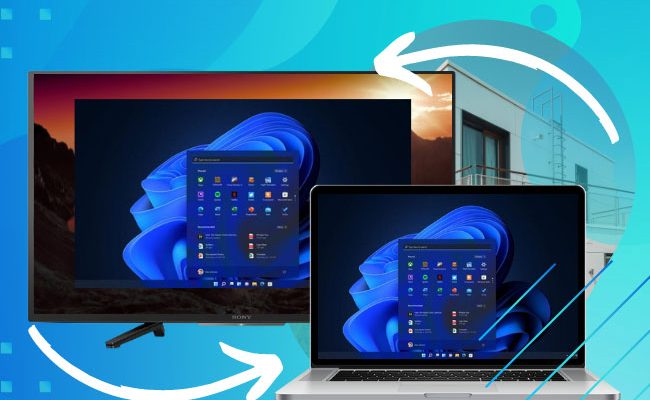
As more and more people are working and studying from home, the need for a bigger screen becomes necessary. One way to achieve this is by mirroring a laptop to a TV screen. This process allows users to display whatever is on their laptop screen onto a larger TV screen, making it easier for multiple people to view the content simultaneously. In this article, we will discuss how to mirror a laptop to a TV.

Check for Compatibility

Firstly, it’s important to check whether the laptop and TV are compatible for mirroring. Laptops and TVs have multiple connectivity options, including HDMI, VGA, DVI, and DisplayPort. Identifying which ports are present on both devices is essential. To establish compatibility, one can look for the I/O ports on the laptop and TV and match them accordingly.

Connecting HDMI Cable

One of the most convenient ways to connect a laptop to a TV is by using an HDMI cable. Here are the steps to follow:

1. Plug one end of the HDMI cable into the HDMI port on the back of the TV.
2. Plug the other end of the HDMI cable into the HDMI port on the laptop.
3. Turn on the TV and change the input source to HDMI, which is usually done by pressing the Input or Source button on the TV remote.
4. On the laptop, press the Windows Key + P or Command + F2 keys to bring up the display settings.
5. From the “Project” page, select “Duplicate,” which should mirror the laptop screen on the TV.
6. Lastly, adjust the settings on the TV to display the content in the desired resolution.

Wireless Mirroring

Alternatively, some laptops and TVs support wireless mirroring, which eliminates the need for cables. In these cases, we need to use a cast-enabled device such as a Chromecast, Apple TV, or an Amazon Fire TV Stick. If the TV doesn’t natively support this feature, we can plug the device into one of the HDMI ports.

1. Connect both the TV and the laptop to the same Wi-Fi network.
2. Enable wireless display or “Screen Mirroring” from the laptop by pressing the Windows key + P.
3. From the settings, select the required device name, and connect it to the TV.
4. Once connected, the laptop’s screen will be mirrored on the TV.

The quality of the wireless mirroring is dependent on the quality of the Wi-Fi signal, and hence, users should ensure that the network is strong and stable.

Conclusion

Mirroring a laptop screen onto a TV is an affordable and easy way to increase the screen size for various purposes. However, it’s essential to ensure compatibility between the laptop and TV before starting the process. With the proper connectivity setup, you can easily get your work done, view your favorite shows, or play games on the bigger screen of your TV.


Previous Article

How to Set up and Use Microsoft ...

Next Article

Best Mini PCs for Gaming in 2023

Matthew Lynch

Related articles More from author

  • Digital & Mobile Technology

    What’s the Difference Between an APU, CPU, and GPU?

    June 8, 2023
    By Matthew Lynch
  • Digital & Mobile Technology

    How to Fix the “IndentationError: expected an indented block” Error in Your Python Code

    September 8, 2023
    By Matthew Lynch
  • Digital & Mobile Technology

    What Is Google Docs? How to Use It Like a Pro

    June 6, 2023
    By Matthew Lynch
  • Digital & Mobile Technology

    How to Switch Apple Watch to New iPhone

    May 10, 2023
    By Matthew Lynch
  • Digital & Mobile Technology

    What Is a JPG (JPEG) File?

    June 1, 2023
    By Matthew Lynch
  • Digital & Mobile Technology

    How to Fix the Microsoft Teams caa70004 Error in Windows 10 & 11

    September 8, 2023
    By Matthew Lynch

Search

Login & Registration

  • Log in
  • Entries feed
  • Comments feed
  • WordPress.org

Newsletter

Signup for The Tech Edvocate Newsletter and have the latest in EdTech news and opinion delivered to your email address!

About Us

Since technology is not going anywhere and does more good than harm, adapting is the best course of action. That is where The Tech Edvocate comes in. We plan to cover the PreK-12 and Higher Education EdTech sectors and provide our readers with the latest news and opinion on the subject. From time to time, I will invite other voices to weigh in on important issues in EdTech. We hope to provide a well-rounded, multi-faceted look at the past, present, the future of EdTech in the US and internationally.

We started this journey back in June 2016, and we plan to continue it for many more years to come. I hope that you will join us in this discussion of the past, present and future of EdTech and lend your own insight to the issues that are discussed.

Newsletter

Signup for The Tech Edvocate Newsletter and have the latest in EdTech news and opinion delivered to your email address!

Contact Us

The Tech Edvocate
910 Goddin Street
Richmond, VA 23231
(601) 630-5238
[email protected]

Copyright © 2026 Matthew Lynch. All rights reserved.