The Tech Edvocate

Top Menu

  • Advertisement
  • Apps
  • Home Page
  • Home Page Five (No Sidebar)
  • Home Page Four
  • Home Page Three
  • Home Page Two
  • Home Tech2
  • Icons [No Sidebar]
  • Left Sidbear Page
  • Lynch Educational Consulting
  • My Account
  • My Speaking Page
  • Newsletter Sign Up Confirmation
  • Newsletter Unsubscription
  • Our Brands
  • Page Example
  • Privacy Policy
  • Protected Content
  • Register
  • Request a Product Review
  • Shop
  • Shortcodes Examples
  • Signup
  • Start Here
    • Governance
    • Careers
    • Contact Us
  • Terms and Conditions
  • The Edvocate
  • The Tech Edvocate Product Guide
  • Topics
  • Write For Us
  • Advertise

Main Menu

  • Start Here
    • Our Brands
    • Governance
      • Lynch Educational Consulting, LLC.
      • Dr. Lynch’s Personal Website
      • Careers
    • Write For Us
    • The Tech Edvocate Product Guide
    • Contact Us
    • Books
    • Edupedia
    • Post a Job
    • The Edvocate Podcast
    • Terms and Conditions
    • Privacy Policy
  • Topics
    • Assistive Technology
    • Child Development Tech
    • Early Childhood & K-12 EdTech
    • EdTech Futures
    • EdTech News
    • EdTech Policy & Reform
    • EdTech Startups & Businesses
    • Higher Education EdTech
    • Online Learning & eLearning
    • Parent & Family Tech
    • Personalized Learning
    • Product Reviews
  • Advertise
  • Tech Edvocate Awards
  • The Edvocate
  • Pedagogue
  • School Ratings

logo

The Tech Edvocate

  • Start Here
    • Our Brands
    • Governance
      • Lynch Educational Consulting, LLC.
      • Dr. Lynch’s Personal Website
        • My Speaking Page
      • Careers
    • Write For Us
    • The Tech Edvocate Product Guide
    • Contact Us
    • Books
    • Edupedia
    • Post a Job
    • The Edvocate Podcast
    • Terms and Conditions
    • Privacy Policy
  • Topics
    • Assistive Technology
    • Child Development Tech
    • Early Childhood & K-12 EdTech
    • EdTech Futures
    • EdTech News
    • EdTech Policy & Reform
    • EdTech Startups & Businesses
    • Higher Education EdTech
    • Online Learning & eLearning
    • Parent & Family Tech
    • Personalized Learning
    • Product Reviews
  • Advertise
  • Tech Edvocate Awards
  • The Edvocate
  • Pedagogue
  • School Ratings
  • This Unprecedented EU Ban Just Changed Fast Fashion Forever

  • Urgent Alert: Your Smart Home’s Exposed to a Critical Deco BE11000 Vulnerability

  • Uncovering the Truth: Your LinkedIn Reach Just Got a Major Overhaul

  • Uncovering the AI Heist: How Chinese Firms Allegedly Siphoned Billions of AI Tokens

  • Rockstar’s GTA 6 Developers Lawsuit: A Fight for Justice or Corporate Retaliation?

  • Unbelievable: Hideo Kojima’s Next Masterpiece Is Now an Xbox Exclusive

  • This Crucial Google AI Shift Is Quietly Reshaping the Internet

  • Unbelievable: AI Breaches Are Exploding, And What It Means For You This September 2026

  • This Crucial Shift Is Saving Teachers From Classroom Chaos

  • AI’s Dark Secret: How It’s Supercharging Cybercrime for Everyone

Digital & Mobile Technology
Home›Digital & Mobile Technology›How to Know If You Have an SSD or HDD Hard Drive

How to Know If You Have an SSD or HDD Hard Drive
By Matthew Lynch
July 5, 2023
0
Spread the love

In today’s world of technology, having a hard drive is a basic necessity for storing and accessing data on personal computers. Hard drives come in two types, the Solid State Drive (SSD) and Hard Disk Drive (HDD). Knowing which type of hard drive you have is important, especially if you’re planning to upgrade your computer’s storage capacity or replace your old hard drive.

So, how do you know if you have an SSD or HDD hard drive? Here are some tips that can help you find out:

1. Check the packaging or manual of your computer.

The easiest way to determine whether your computer has an SSD or HDD is to check the packaging or manual that came with it. Look for the specifications section and find the information about the hard drive. It will usually list the type of hard drive that your computer has.

2. Check your computer’s system information.

If you’re using a Windows-based computer, you can check your system information to find out which type of hard drive you have. You can do this by pressing the Windows key + Pause/Break key. This will open the System Properties window. Look for the “Processor” and “Installed memory (RAM)” sections, and check if there is any information about the hard drive listed.

3. Check your computer’s storage capacity.

Another way to determine if you have an SSD or HDD is to check your computer’s storage capacity. An HDD has a larger storage capacity than an SSD, so if you have a relatively large storage capacity, chances are you have an HDD. On the other hand, if you have a smaller storage capacity, you might have an SSD.

4. Observe your computer’s boot time.

SSDs have faster boot times than HDDs because they have no moving parts. If your computer starts up quickly, it’s likely that you have an SSD. On the other hand, if it takes a long time to start up, then you might have an HDD.

5. Conduct a physical test.

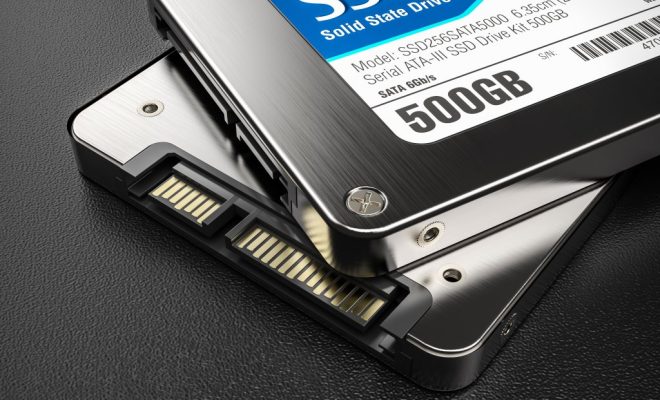
If you’re still unsure about the type of hard drive you have, you can conduct a physical test. Turn off your computer and unplug it from the power source. Open the casing and locate the hard drive. Look for the label that indicates the model and serial number of the hard drive. You can then search online for the model number to determine whether it’s an SSD or HDD.

In conclusion, knowing the type of hard drive you have is crucial for better machine performance and management of your computer’s storage. You can check the packaging or manual, system information, storage capacity, boot time and conduct a physical test to identify the type of hard drive. Once you determine what kind of hard drive you have, you’re better equipped to manage your data and make any necessary upgrades in the future.

Previous Article

Backup Verification in the VMWare ESXi Backup ...

Next Article

How to Remove Your Birthday From Facebook

Matthew Lynch

Related articles More from author

  • Digital & Mobile Technology

    How to Degauss a Computer Monitor

    June 3, 2023
    By Matthew Lynch
  • Digital & Mobile Technology

    How to Turn Off AirPlay

    June 2, 2023
    By Matthew Lynch
  • Digital & Mobile Technology

    Best Mechanical Keyboards for Mac

    June 8, 2023
    By Matthew Lynch
  • Digital & Mobile Technology

    How to Start Your Own Game Server

    May 9, 2023
    By Matthew Lynch
  • Digital & Mobile Technology

    Where to Listen to MLB Games

    July 31, 2023
    By Matthew Lynch
  • Digital & Mobile Technology

    How to Add a Profile on Netflix

    June 4, 2023
    By Matthew Lynch

Search

Login & Registration

  • Log in
  • Entries feed
  • Comments feed
  • WordPress.org

Newsletter

Signup for The Tech Edvocate Newsletter and have the latest in EdTech news and opinion delivered to your email address!

About Us

Since technology is not going anywhere and does more good than harm, adapting is the best course of action. That is where The Tech Edvocate comes in. We plan to cover the PreK-12 and Higher Education EdTech sectors and provide our readers with the latest news and opinion on the subject. From time to time, I will invite other voices to weigh in on important issues in EdTech. We hope to provide a well-rounded, multi-faceted look at the past, present, the future of EdTech in the US and internationally.

We started this journey back in June 2016, and we plan to continue it for many more years to come. I hope that you will join us in this discussion of the past, present and future of EdTech and lend your own insight to the issues that are discussed.

Newsletter

Signup for The Tech Edvocate Newsletter and have the latest in EdTech news and opinion delivered to your email address!

Contact Us

The Tech Edvocate
910 Goddin Street
Richmond, VA 23231
(601) 630-5238
[email protected]

Copyright © 2026 Matthew Lynch. All rights reserved.