The Tech Edvocate

Top Menu

  • Advertisement
  • Apps
  • Home Page
  • Home Page Five (No Sidebar)
  • Home Page Four
  • Home Page Three
  • Home Page Two
  • Home Tech2
  • Icons [No Sidebar]
  • Left Sidbear Page
  • Lynch Educational Consulting
  • My Account
  • My Speaking Page
  • Newsletter Sign Up Confirmation
  • Newsletter Unsubscription
  • Our Brands
  • Page Example
  • Privacy Policy
  • Protected Content
  • Register
  • Request a Product Review
  • Shop
  • Shortcodes Examples
  • Signup
  • Start Here
    • Governance
    • Careers
    • Contact Us
  • Terms and Conditions
  • The Edvocate
  • The Tech Edvocate Product Guide
  • Topics
  • Write For Us
  • Advertise

Main Menu

  • Start Here
    • Our Brands
    • Governance
      • Lynch Educational Consulting, LLC.
      • Dr. Lynch’s Personal Website
      • Careers
    • Write For Us
    • The Tech Edvocate Product Guide
    • Contact Us
    • Books
    • Edupedia
    • Post a Job
    • The Edvocate Podcast
    • Terms and Conditions
    • Privacy Policy
  • Topics
    • Assistive Technology
    • Child Development Tech
    • Early Childhood & K-12 EdTech
    • EdTech Futures
    • EdTech News
    • EdTech Policy & Reform
    • EdTech Startups & Businesses
    • Higher Education EdTech
    • Online Learning & eLearning
    • Parent & Family Tech
    • Personalized Learning
    • Product Reviews
  • Advertise
  • Tech Edvocate Awards
  • The Edvocate
  • Pedagogue
  • School Ratings

logo

The Tech Edvocate

  • Start Here
    • Our Brands
    • Governance
      • Lynch Educational Consulting, LLC.
      • Dr. Lynch’s Personal Website
        • My Speaking Page
      • Careers
    • Write For Us
    • The Tech Edvocate Product Guide
    • Contact Us
    • Books
    • Edupedia
    • Post a Job
    • The Edvocate Podcast
    • Terms and Conditions
    • Privacy Policy
  • Topics
    • Assistive Technology
    • Child Development Tech
    • Early Childhood & K-12 EdTech
    • EdTech Futures
    • EdTech News
    • EdTech Policy & Reform
    • EdTech Startups & Businesses
    • Higher Education EdTech
    • Online Learning & eLearning
    • Parent & Family Tech
    • Personalized Learning
    • Product Reviews
  • Advertise
  • Tech Edvocate Awards
  • The Edvocate
  • Pedagogue
  • School Ratings
  • A Visitor’s Guide to Fresno (CA), United States

  • A Visitors Guide to New Orleans (LA), United States

  • A Visitors Guide to Sacramento (CA), United States

  • A Visitors Guide to Lyon, France

  • JisuLife Ultra2 Portable Fan: A Powerful Multi-Function Cooling Solution

  • A Visitors Guide to Viña del Mar, Chile

  • A Visitors Guide to Århus, Denmark

  • A Visitors Guide to Bakersfield (CA), United States

  • A Visitors Guide to Aurora (CO), United States

  • A Visitor’s Guide to Toledo (OH), United States

Digital & Mobile Technology
Home›Digital & Mobile Technology›How to Fix Windows 10 Error Code 0xc00000e

How to Fix Windows 10 Error Code 0xc00000e
By Matthew Lynch
June 23, 2023
0
Spread the love

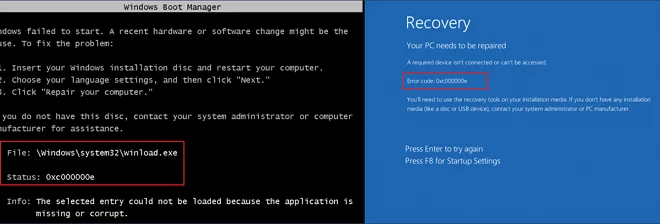
Windows 10 error code 0xc00000e appears when your computer is trying to boot up but cannot find the necessary files to start Windows. This error can occur for a number of reasons, including corrupted system files or hardware issues. Here are some steps you can take to fix the error code 0xc00000e.

Step 1: Use the Windows Automatic Repair Tool

One of the first things you can try is to use the Windows Automatic Repair Tool. This tool can fix many common issues that prevent your computer from booting up properly. Here’s how to use it:

1. Insert your Windows installation media or recovery disk into your computer.

2. Restart your computer and press the F8 key to enter the boot menu.

3. Select your installation media or recovery disk from the list and press Enter.

4. Follow the on-screen instructions to launch the Windows Automatic Repair Tool.

5. Let the tool run until it completes the repair process.

After the tool has finished running, restart your computer and see if the error code 0xc00000e has been resolved.

Step 2: Use the System File Checker (SFC) scan

If the Windows Automatic Repair Tool doesn’t work or if the error code reappears, you can try using the System File Checker (SFC) scan. This tool checks for any corrupted system files and attempts to repair them. Here’s how:

1. Press the Windows key + X and select “Command Prompt (Admin)” from the menu.

2. Type “sfc /scannow” (without the quotes) and press Enter.

3. The SFC scan will begin. Wait for it to complete.

4. Restart your computer and check if the error code 0xc00000e has disappeared.

Step 3: Use the Check Disk (CHKDSK) Tool

If the SFC scan did not fix the error code 0xc00000e, you can try using the Check Disk (CHKDSK) tool. This tool scans your disk for any errors and can fix them. Here’s how to use it:

1. Press the Windows key + X and select “Command Prompt (Admin)” from the menu.

2. Type “chkdsk /f /r” (without the quotes) and press Enter.

3. You will be asked if you want to schedule a disk check for the next time you restart your computer. Type “Y” and press Enter.

4. Restart your computer and wait for the disk check to complete.

5. Once the disk check is finished, restart your computer again and check if the error code 0xc00000e has been resolved.

Step 4: Update your Drivers or BIOS

Sometimes the error code 0xc00000e can be caused by outdated drivers or BIOS settings. You can try updating your drivers or BIOS to see if that fixes the issue. To update your drivers, follow these steps:

1. Press the Windows key + X and select “Device Manager” from the menu.

2. Right-click on the device driver you want to update and select “Update Driver Software”.

3. Follow the on-screen instructions to update the driver.

To update your BIOS, follow these steps:

1. Go to your computer manufacturer’s website and download the latest BIOS update for your model.

2. Follow the manufacturer’s instructions to install the update.

Step 5: Reset your PC to Factory Settings

If none of the above steps worked, you can try resetting your PC to its factory settings. This will restore your computer to the state it was in when you first purchased it. Here’s how to do it:

1. Press the Windows key + I to open the Settings app.

2. Click on “Update & Security”.

3. Click on “Recovery”.

4. Click on “Get started” under “Reset this PC”.

5. Choose how you want to reset your PC and follow the on-screen instructions.

Note: Resetting your PC will erase all your personal files and installed applications, so make sure to back up your important data before proceeding.


Previous Article

How to Fix Overwatch 2’s BC-153 Error ...

Next Article

Can You Call Private or Withheld Numbers?

Matthew Lynch

Related articles More from author

  • Digital & Mobile Technology

    Perfect Golden Hour Captions to Use on Social Media

    June 6, 2023
    By Matthew Lynch
  • Digital & Mobile Technology

    What Is “Group Policy” in Windows?

    April 15, 2023
    By Matthew Lynch
  • Digital & Mobile Technology

    How to Upgrade Your Laptop Hard Drive

    May 30, 2023
    By Matthew Lynch
  • Digital & Mobile Technology

    The Complete List of Command Prompt (CMD) Commands

    May 30, 2023
    By Matthew Lynch
  • Digital & Mobile Technology

    What is a Chat Room?

    April 16, 2023
    By Matthew Lynch
  • Digital & Mobile Technology

    How to Use Safari to Access an FTP Site

    May 30, 2023
    By Matthew Lynch

Search

Login & Registration

  • Register
  • Log in
  • Entries feed
  • Comments feed
  • WordPress.org

Newsletter

Signup for The Tech Edvocate Newsletter and have the latest in EdTech news and opinion delivered to your email address!

About Us

Since technology is not going anywhere and does more good than harm, adapting is the best course of action. That is where The Tech Edvocate comes in. We plan to cover the PreK-12 and Higher Education EdTech sectors and provide our readers with the latest news and opinion on the subject. From time to time, I will invite other voices to weigh in on important issues in EdTech. We hope to provide a well-rounded, multi-faceted look at the past, present, the future of EdTech in the US and internationally.

We started this journey back in June 2016, and we plan to continue it for many more years to come. I hope that you will join us in this discussion of the past, present and future of EdTech and lend your own insight to the issues that are discussed.

Newsletter

Signup for The Tech Edvocate Newsletter and have the latest in EdTech news and opinion delivered to your email address!

Contact Us

The Tech Edvocate
910 Goddin Street
Richmond, VA 23231
(601) 630-5238
[email protected]

Copyright © 2025 Matthew Lynch. All rights reserved.