The Tech Edvocate

Top Menu

  • Advertisement
  • Apps
  • Home Page
  • Home Page Five (No Sidebar)
  • Home Page Four
  • Home Page Three
  • Home Page Two
  • Home Tech2
  • Icons [No Sidebar]
  • Left Sidbear Page
  • Lynch Educational Consulting
  • My Account
  • My Speaking Page
  • Newsletter Sign Up Confirmation
  • Newsletter Unsubscription
  • Our Brands
  • Page Example
  • Privacy Policy
  • Protected Content
  • Register
  • Request a Product Review
  • Shop
  • Shortcodes Examples
  • Signup
  • Start Here
    • Governance
    • Careers
    • Contact Us
  • Terms and Conditions
  • The Edvocate
  • The Tech Edvocate Product Guide
  • Topics
  • Write For Us
  • Advertise

Main Menu

  • Start Here
    • Our Brands
    • Governance
      • Lynch Educational Consulting, LLC.
      • Dr. Lynch’s Personal Website
      • Careers
    • Write For Us
    • The Tech Edvocate Product Guide
    • Contact Us
    • Books
    • Edupedia
    • Post a Job
    • The Edvocate Podcast
    • Terms and Conditions
    • Privacy Policy
  • Topics
    • Assistive Technology
    • Child Development Tech
    • Early Childhood & K-12 EdTech
    • EdTech Futures
    • EdTech News
    • EdTech Policy & Reform
    • EdTech Startups & Businesses
    • Higher Education EdTech
    • Online Learning & eLearning
    • Parent & Family Tech
    • Personalized Learning
    • Product Reviews
  • Advertise
  • Tech Edvocate Awards
  • The Edvocate
  • Pedagogue
  • School Ratings

logo

The Tech Edvocate

  • Start Here
    • Our Brands
    • Governance
      • Lynch Educational Consulting, LLC.
      • Dr. Lynch’s Personal Website
        • My Speaking Page
      • Careers
    • Write For Us
    • The Tech Edvocate Product Guide
    • Contact Us
    • Books
    • Edupedia
    • Post a Job
    • The Edvocate Podcast
    • Terms and Conditions
    • Privacy Policy
  • Topics
    • Assistive Technology
    • Child Development Tech
    • Early Childhood & K-12 EdTech
    • EdTech Futures
    • EdTech News
    • EdTech Policy & Reform
    • EdTech Startups & Businesses
    • Higher Education EdTech
    • Online Learning & eLearning
    • Parent & Family Tech
    • Personalized Learning
    • Product Reviews
  • Advertise
  • Tech Edvocate Awards
  • The Edvocate
  • Pedagogue
  • School Ratings
  • A Visitors Guide to Santa Maria, Brazil

  • Uncovering the Truth: This Salmonella Outbreak Sprouts Warning You Can’t Ignore

  • This One Flaw Just Melted an RTX 5090 — What Happens Next?

  • This Startup Just Raised $40 Million to Revolutionize Women’s Health

  • This AI Coding Startup Just Tripled Its Value to $5 Billion Overnight

  • The Blood Of Dawnwalker: 10 Burning Questions After Its Console Demo Scandal

  • Gamers vs. Critics: Why Wolverine Game Reviews Are Sparking a Culture War

  • AI-Generated Content Is Flooding Social Media, Research Shows

  • Florida’s Latest Education Scandal: The Climate Change Curriculum You Won’t Believe

  • Millions Face a Brutal Student Loan Payment Hike — What You MUST Do Now

Digital & Mobile Technology
Home›Digital & Mobile Technology›How to Download and Install File Checksum Integrity Verifier (FCIV) 1

How to Download and Install File Checksum Integrity Verifier (FCIV) 1
By Matthew Lynch
June 10, 2023
0
Spread the love

File Checksum Integrity Verifier (FCIV) is a tool developed by Microsoft for verifying the integrity of files. It is a free and simple-to-use command-line utility that can be used to calculate and compare MD5 or SHA1 hashes for files to ensure that they have not been tampered with.

In this article, we will guide you through the steps to download and install FCIV on your Windows PC.

Step 1: Download FCIV

To download FCIV, visit the Microsoft Download Center and search for FCIV. Then, click on the “Download” button to initiate the download process.

Step 2: Extract the FCIV archive

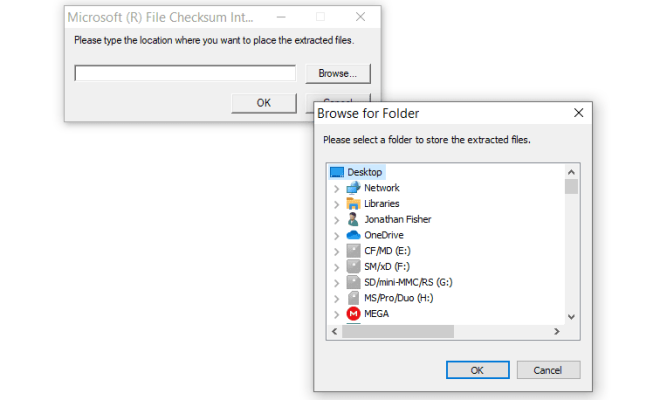
After the download is complete, extract the FCIV archive to a folder of your choice. To do this, right-click on the downloaded file and select “Extract All” from the context menu. Choose a location where you would like to extract the files and click on the “Extract” button.

Step 3: Open a Command Prompt window

To start using FCIV, you need to open a Command Prompt window. Press the “Windows” key + “R” to open the Run dialog box, type “cmd” and press Enter. Alternatively, you can search for ”Command Prompt” in the Windows Start menu and open it from there.

Step 4: Navigate to the FCIV folder

In the Command Prompt window, navigate to the folder where you extracted FCIV. To do this, type “cd ” and hit Enter. Replace “” with the correct path to the folder where you extracted FCIV.

Step 5: Verify a file’s checksum

To verify a file’s checksum using FCIV, type “fciv -v ” and hit Enter. Replace “” with the name of the file you want to check. FCIV will then calculate the hash value of the file and compare it to the one stored in the checksum file. If the hash values match, FCIV will return a “verified” message. If they don’t match, it will return a “failed” message.

Step 6: Generate checksums for files

You can also use FCIV to generate checksums for files. To do this, type “fciv -add ” and hit Enter. This will calculate the MD5 or SHA1 hash value of the file and store it in a checksum file with the same name as the original file, but with a “.md5” or “.sha1” extension.

In conclusion, using File Checksum Integrity Verifier (FCIV) is a great way to ensure that your files have not been tampered with. By following the steps outlined in this article, you should be able to download, install and use FCIV on your Windows PC with ease.


Previous Article

YouTube TV: What You Need to Know

Next Article

Everything You Need to Know About iTunes ...

Matthew Lynch

Related articles More from author

  • Digital & Mobile Technology

    Rules to Remember When Uploading Videos to Twitter

    June 6, 2023
    By Matthew Lynch
  • Digital & Mobile Technology

    How to Use Emojis in Windows 11 Using Keyboard Shortcuts

    June 22, 2023
    By Matthew Lynch
  • Digital & Mobile Technology

    Release and Renew Your IP Address in Microsoft Windows

    June 8, 2023
    By Matthew Lynch
  • Digital & Mobile Technology

    What Is Samsung One Connect? Can You Watch a Samsung TV Without It?

    August 5, 2023
    By Matthew Lynch
  • Digital & Mobile Technology

    How to Reset a Router Remotely

    June 4, 2023
    By Matthew Lynch
  • Digital & Mobile Technology

    What Is Dogfooding, and How Does It Help Developers?

    June 22, 2023
    By Matthew Lynch

Search

Login & Registration

  • Log in
  • Entries feed
  • Comments feed
  • WordPress.org

Newsletter

Signup for The Tech Edvocate Newsletter and have the latest in EdTech news and opinion delivered to your email address!

About Us

Since technology is not going anywhere and does more good than harm, adapting is the best course of action. That is where The Tech Edvocate comes in. We plan to cover the PreK-12 and Higher Education EdTech sectors and provide our readers with the latest news and opinion on the subject. From time to time, I will invite other voices to weigh in on important issues in EdTech. We hope to provide a well-rounded, multi-faceted look at the past, present, the future of EdTech in the US and internationally.

We started this journey back in June 2016, and we plan to continue it for many more years to come. I hope that you will join us in this discussion of the past, present and future of EdTech and lend your own insight to the issues that are discussed.

Newsletter

Signup for The Tech Edvocate Newsletter and have the latest in EdTech news and opinion delivered to your email address!

Contact Us

The Tech Edvocate
910 Goddin Street
Richmond, VA 23231
(601) 630-5238
[email protected]

Copyright © 2026 Matthew Lynch. All rights reserved.