Catch the Southern Delta Aquariids 2026 Meteor Shower Despite the Full Moon
“`html
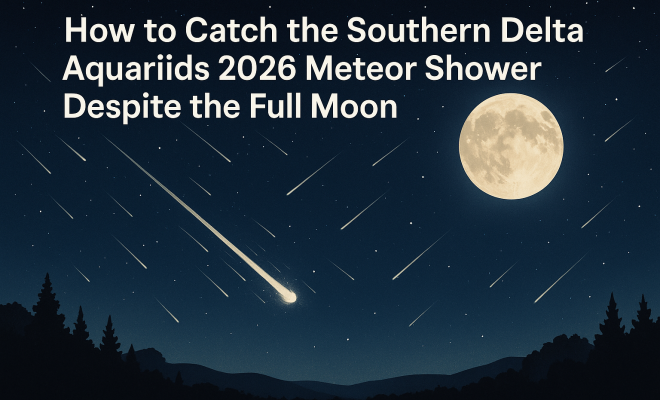
The Southern Delta Aquariids 2026 meteor shower is set to light up the night sky from July 18 to July 30, with its peak occurring around July 30. This annual event has become a favorite among skywatchers due to the chances of catching some stunning meteors streaking across the heavens. However, in 2026, a bright Full Moon poses a unique challenge, potentially overshadowing these faint meteors. But don’t let that deter you! With the right strategies, you can still enjoy this celestial spectacle.
1. Understanding the Southern Delta Aquariids
The Southern Delta Aquariids are one of the lesser-known meteor showers, but they are no less fascinating. Originating from the debris left by Comet 96P/Machholz, these meteors are known for their swift speed of up to 25 miles per second, creating bright trails across the sky. The shower typically produces around 5 to 7 meteors per hour during its peak, although under optimal conditions, historical records show that it can reach 15 to 20 meteors per hour. Observers in the Southern Hemisphere and the southern parts of the Northern Hemisphere have the best chance of seeing these meteors as they radiate from the constellation Aquarius.
In 2026, the Southern Delta Aquariids will coincide with other astronomical events, which may enhance the experience. For example, the planets Mars and Saturn will be visible in the evening sky, providing a dynamic backdrop for your meteor shower viewing. Additionally, the southern horizon may offer views of other constellations that can contribute to an enriching night under the stars.
2. The Challenge of the Full Moon
The biggest hurdle for skywatchers in 2026 is the bright Full Moon that will occur during the peak of the Southern Delta Aquariids. The moonlight can wash out the visibility of fainter meteors, creating a frustrating situation for those eager to catch a glimpse of these celestial wonders. While the Full Moon has the potential to create a barrier to visibility, it’s important to remember that meteors can still be seen, especially if you’re strategically prepared.
In fact, the moon will rise in the evening, providing a window of opportunity for viewing before it fully illuminates the sky. Awareness of when the moon will be in its cycle is crucial for those planning to watch the meteor shower. It’s also worth mentioning that the Full Moon has been known to create a unique viewing experience where brighter meteors can still shine through, often appearing more vivid against the moonlit backdrop.
3. Best Viewing Times for the Southern Delta Aquariids
For optimal viewing of the Southern Delta Aquariids 2026, timing is everything. The meteors will start appearing after midnight, with their peak visibility around 2 a.m. local time. During these hours, the sky is typically darker, providing a better contrast for spotting faint meteors. Although the Full Moon will still be present, you may still be able to catch some meteors.
To maximize your chances, find a location with a clear view of the eastern horizon where Aquarius will rise. This constellation will become visible as the night progresses, and you’ll want to keep your eyes peeled in that direction. While you may not see a large number of meteors, patience and careful observation can yield rewarding results. Additionally, consider tracking the meteors using a designated app that can give you real-time updates on activity peaks during the shower.
4. Choosing the Right Viewing Location
Finding an ideal viewing spot is crucial for your Southern Delta Aquariids experience. As light pollution can significantly hinder visibility, aim for locations away from city lights. Darker areas like parks or rural settings can amplify your chances of spotting meteors. If you’re unable to travel far, even a relatively dark backyard can work if you minimize artificial light exposure.
Additionally, consider factors like comfort and convenience. Bring blankets or reclining chairs to help you relax while watching the sky. You’ll want to be comfortable, as you may have to spend some time waiting for meteors to appear. Being settled in a cozy spot can make the experience more enjoyable despite the Full Moon’s challenge. If possible, check local astronomy forums or social media groups to find recommended viewing locations in your area. (See: Understanding meteor showers.)
5. Pre-Viewing Preparations
Before you head out to witness the Southern Delta Aquariids, there are a few preparations you should consider. First, allow your eyes to adjust to the darkness. This process can take around 30 minutes, which is essential for spotting the fainter meteors against the lunar backdrop. Avoid looking at your phone or other bright screens during this time, as it can significantly hinder your night vision.
Another tip is to equip yourself with the right gear. Bring a comfortable chair or blanket for reclining, and make sure to dress appropriately for the weather. Having snacks and drinks on hand can enhance your experience while you wait for the meteors to appear. Remember, attending a meteor shower is as much about the experience as it is about the viewing! Furthermore, consider packing a small telescope or binoculars to observe the surrounding stars and planets, enriching your stargazing experience even further.
6. Understanding Meteor Showers
To truly appreciate the Southern Delta Aquariids, it’s helpful to understand how meteor showers work. Each year, as Earth orbits the Sun, it passes through trails of debris left by comets. When these tiny particles enter our atmosphere at high speeds, they produce the swift streaks of light we see as meteors. The Southern Delta Aquariids occur every year around this time, making them a reliable celestial event.
Interestingly, meteor showers can often be unpredictable. While the Southern Delta Aquariids typically produce a lower number of meteors than more famous showers like the Perseids or Geminids, their consistent timing and the thrill of catching a glimpse can be rewarding. They offer a chance to connect with the cosmos, even if conditions aren’t perfect. A fun fact to note is that the Southern Delta Aquariids are often considered a precursor to the more prolific Perseid meteor shower that follows in August, allowing enthusiasts to get a taste of celestial events to come.
7. Tips for Maximizing Meteor Visibility
Despite the challenges posed by the Full Moon, there are strategies you can employ to maximize your chances of seeing meteors during the Southern Delta Aquariids. First, focus on your surroundings. Ensure you’re in a dark area, shielded from light pollution as much as possible. You can also use a meteor shower app to track real-time visibility and adjust your viewing plans accordingly.
Additionally, remember to be patient. Meteor showers can come in bursts, with several meteors appearing in a short period followed by quiet stretches. If you find yourself becoming discouraged, take a break, stretch, and then return your gaze to the sky. A relaxed attitude can significantly enhance your enjoyment of the experience. Furthermore, consider inviting friends or family to join you. Sharing the experience can make it more enjoyable, and having someone to talk to during the quieter times can help keep the excitement alive.
8. Engaging with the Astronomy Community
For astronomy enthusiasts and casual stargazers alike, meteor showers are a shared experience that often brings people together. Engaging with local astronomy clubs or online communities can enhance your experience. Many clubs host viewing events where you can meet fellow skywatchers and share tips. Plus, experiencing the thrill of catching a meteor alongside others can create lasting memories.
Social media is another great platform to engage with others. Use hashtags related to the Southern Delta Aquariids to share your experience or see what others are witnessing. You can find advice, share photos, and learn from each other’s experiences. This communal aspect not only enriches your viewing experience but also fosters a greater appreciation for the wonders of the universe. If you’re looking for a deeper dive into astronomy, consider joining online webinars or attending local lectures that discuss meteor phenomena and related topics.
9. Expert Perspectives on Meteor Showers
Understanding meteor showers isn’t just for enthusiasts; even experts weigh in on their significance. According to Dr. Jane Fletcher, an astrophysicist at the National Institute of Astrophysics, “Meteor showers like the Southern Delta Aquariids provide an excellent opportunity for people to connect with the cosmos and witness the remnants of past celestial events.” Dr. Fletcher emphasizes that these encounters with meteors can ignite a curiosity about our universe, leading to a greater interest in space exploration and science in general. (See: NASA's guide on meteor showers.) For more on this, see How to view the meteor shower.
Moreover, meteor showers serve an important scientific purpose. They provide valuable data for researchers studying the composition of comets and asteroids. Each meteor that streaks across the sky is a fragment of cosmic history, giving insights into the materials that formed the solar system billions of years ago. Such studies have been pivotal in understanding not only our planet’s past but also the conditions that could support life elsewhere in the universe.
10. Frequently Asked Questions (FAQ)
What causes meteor showers like the Southern Delta Aquariids?
Meteor showers occur when Earth passes through trails of debris left by comets. As these tiny particles enter our atmosphere, they burn up, creating the streaks of light we see as meteors.
How many meteors can I expect to see during the Southern Delta Aquariids 2026?
During peak activity, you can typically expect to see 5 to 7 meteors per hour. However, under ideal conditions, this number can increase to 15 to 20 meteors per hour.
What is the best way to find meteors in the sky?
Look towards the constellation Aquarius, from which the Southern Delta Aquariids radiate. However, meteors can appear anywhere in the sky, so it’s good to keep your gaze wide and be patient.
How does light pollution affect meteor visibility?
Light pollution can significantly diminish your ability to see meteors, as the brightness of city lights can wash out fainter meteors. Choosing a dark location away from urban areas is crucial for optimal viewing.
Can I see meteors even with a Full Moon?
Yes, while the Full Moon does impact visibility, particularly for fainter meteors, you can still catch brighter meteors. Planning your viewing time around the moon’s rise can also help.
Are there any other meteor showers happening in July 2026?
In addition to the Southern Delta Aquariids, July typically features other minor meteor showers such as the Alpha Capricornids. While not as prolific, observing these alongside the Aquariids can enhance your stargazing experience.
11. Additional Astronomical Events in July 2026
July 2026 is not just about the Southern Delta Aquariids; several other fascinating astronomical events are lined up. For example, there will be a penumbral lunar eclipse on July 23. During this event, the moon will pass through the Earth’s outer shadow, creating a subtle shading effect. Although it won’t be as dramatic as a total eclipse, it’s still a beautiful sight worth observing. (See: Impact of space weather on Earth.)
You can also look forward to planetary conjunctions. On the 24th, Venus and Jupiter will be close to each other in the night sky, making for a stunning view. Observers can capture great photos and enjoy the celestial ballet of these bright planets, which will add excitement to the meteor shower experience.
12. Understanding the Science Behind Meteor Showers
Meteor showers like the Southern Delta Aquariids are fascinating not just for their visual spectacle but also for the science behind them. When a comet travels through the solar system, it sheds debris composed of dust, ice, and rock. As Earth orbits the Sun, it occasionally crosses these debris trails. The bits and pieces, usually no larger than a grain of sand, collide with our atmosphere at incredible speeds. This process generates heat, causing the particles to vaporize and create the brilliant streaks of light known as meteors.
The Southern Delta Aquariids have a particularly interesting origin. Comet 96P/Machholz, a short-period comet (taking approximately 5.3 years to orbit the Sun), is responsible for this shower. Its debris, which we encounter every July, is relatively fresh, making the meteors from this shower particularly swift and bright. Related reading: Tips for observing the Aquariids.
Additionally, the study of meteor showers contributes to our understanding of planetary science. By analyzing the composition of meteorites that survive their atmospheric plunge, scientists gain insights into the building blocks of planets and the early solar system. In fact, some meteorites contain organic compounds that may provide clues about the origins of life on Earth.
13. Final Thoughts on the Southern Delta Aquariids 2026
The Southern Delta Aquariids 2026 present an exciting opportunity for night sky enthusiasts, even with the challenges posed by the Full Moon. By planning ahead, finding the right viewing location, and understanding the nature of meteor showers, you can still have a memorable experience. Remember, while the meteors may be faint, the joy of witnessing the cosmos in action is always profound.
So gather your gear, head to a dark spot under the night sky, and enjoy the celestial dance of the Southern Delta Aquariids. Whether you see one meteor or several, the excitement of connecting with the universe is what truly matters. Happy stargazing!
“`
Trending Now
Frequently Asked Questions
When is the Southern Delta Aquariids meteor shower in 2026?
The Southern Delta Aquariids meteor shower will occur from July 18 to July 30, 2026, with its peak expected around July 30. This annual event is a favorite among skywatchers for its stunning meteors.
What is the impact of the Full Moon on the Southern Delta Aquariids in 2026?
The Full Moon during the peak of the Southern Delta Aquariids in 2026 poses a challenge as its bright light can wash out the visibility of fainter meteors, making it difficult to see them clearly.
How many meteors can I expect to see during the Southern Delta Aquariids?
During its peak, the Southern Delta Aquariids typically produces around 5 to 7 meteors per hour, but under optimal conditions, it can reach up to 15 to 20 meteors per hour.
Where is the best place to watch the Southern Delta Aquariids?
The best places to watch the Southern Delta Aquariids are in the Southern Hemisphere and southern parts of the Northern Hemisphere, as the meteors radiate from the constellation Aquarius.
What other celestial events coincide with the Southern Delta Aquariids in 2026?
In 2026, the Southern Delta Aquariids will coincide with the visibility of planets Mars and Saturn in the evening sky, providing a dynamic backdrop for meteor shower viewing.
Agree or disagree? Drop a comment and tell us what you think.