
The Tech Edvocate

Top Menu

  • Advertisement
  • Apps
  • Home Page
  • Home Page Five (No Sidebar)
  • Home Page Four
  • Home Page Three
  • Home Page Two
  • Home Tech2
  • Icons [No Sidebar]
  • Left Sidbear Page
  • Lynch Educational Consulting
  • My Account
  • My Speaking Page
  • Newsletter Sign Up Confirmation
  • Newsletter Unsubscription
  • Our Brands
  • Page Example
  • Privacy Policy
  • Protected Content
  • Register
  • Request a Product Review
  • Shop
  • Shortcodes Examples
  • Signup
  • Start Here
    • Governance
    • Careers
    • Contact Us
  • Terms and Conditions
  • The Edvocate
  • The Tech Edvocate Product Guide
  • Topics
  • Write For Us
  • Advertise

Main Menu

  • Start Here
    • Our Brands
    • Governance
      • Lynch Educational Consulting, LLC.
      • Dr. Lynch’s Personal Website
      • Careers
    • Write For Us
    • The Tech Edvocate Product Guide
    • Contact Us
    • Books
    • Edupedia
    • Post a Job
    • The Edvocate Podcast
    • Terms and Conditions
    • Privacy Policy
  • Topics
    • Assistive Technology
    • Child Development Tech
    • Early Childhood & K-12 EdTech
    • EdTech Futures
    • EdTech News
    • EdTech Policy & Reform
    • EdTech Startups & Businesses
    • Higher Education EdTech
    • Online Learning & eLearning
    • Parent & Family Tech
    • Personalized Learning
    • Product Reviews
  • Advertise
  • Tech Edvocate Awards
  • The Edvocate
  • Pedagogue
  • School Ratings

logo

The Tech Edvocate

  • Start Here
    • Our Brands
    • Governance
      • Lynch Educational Consulting, LLC.
      • Dr. Lynch’s Personal Website
        • My Speaking Page
      • Careers
    • Write For Us
    • The Tech Edvocate Product Guide
    • Contact Us
    • Books
    • Edupedia
    • Post a Job
    • The Edvocate Podcast
    • Terms and Conditions
    • Privacy Policy
  • Topics
    • Assistive Technology
    • Child Development Tech
    • Early Childhood & K-12 EdTech
    • EdTech Futures
    • EdTech News
    • EdTech Policy & Reform
    • EdTech Startups & Businesses
    • Higher Education EdTech
    • Online Learning & eLearning
    • Parent & Family Tech
    • Personalized Learning
    • Product Reviews
  • Advertise
  • Tech Edvocate Awards
  • The Edvocate
  • Pedagogue
  • School Ratings
  • The Brutal Truth: Why Your AI Skills Training Is Failing (And How to Fix It)

  • 8 Essential AI Upskilling Programs Your Business Needs to Thrive Now

  • One Critical Mistake Companies Make With AI Skills Training

  • The AI Career Showdown: Which Path Pays More And Fits You Best?

  • The Shocking Truth About the Highest Paying AI Jobs in 2026

  • The Staggering Truth About 5 AI Job Roles That Will Redefine Your Career by 2026

  • Crypto Crackdown: Is the FCA’s Iron Fist Crushing Innovation, or Just Protecting You?

  • 7 Critical Steps to Survive the Crypto Crackdown: How to Navigate FCA Regulations

  • This One Thing Is Quietly Reshaping Illegal Crypto Trading — And Regulators Are Panicking

  • The AI Cyberattack That Changed Everything: Top Autonomous Security Software Reviews 2026

How To
Home›How To›How to Calculate Heat Capacity: 8 Steps

How to Calculate Heat Capacity: 8 Steps
By Matthew Lynch
March 22, 2024
0
Spread the love

1. Understand the concept of heat capacity: Heat capacity is an extensive property of a substance or object, which represents the amount of heat needed to achieve an increment in temperature by one degree Celsius (or one Kelvin). This property allows us to predict how substances and objects will react when exposed to heat energy. Different materials have different heat capacities, making them suitable for various applications.

2. Know the units: Heat capacity is usually expressed in joules per Kelvin (J/K) or calories per degree Celsius (cal/°C). Different countries may use different units, but both systems express the same concept.

3. Familiarize yourself with the related concepts: Specific heat capacity is an intensive property that represents the amount of heat needed to raise the temperature of 1 kilogram of a substance by one degree Celsius (or one Kelvin). Molar heat capacity is another closely related term which measures the amount of heat required to raise the temperature of one mole of a substance by one degree Celsius (or one Kelvin).

4. Identify the type of calculation you need to perform: Dependingon your problem or experiment, you may have different data available. Therefore, you will need to decide whether you are calculating specific heat capacity, heat capacity for an object or system, or molar heat capacity.

5. Collect and organize your data: Before proceeding with the calculations, gather all relevant data such as mass (m), temperature change (ΔT), heat transfer (q), and molar mass (M) if necessary.

6. Use the appropriate formula:

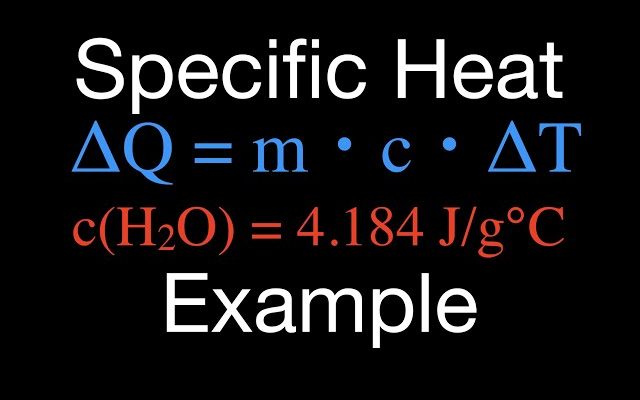
– For specific heat capacity (c): c = q / (m * ΔT)

– For object/system heat capacity (C): C = q / ΔT

– For molar heat capacity (Cm): Cm = q / (n * ΔT)

Here, n represents the number of moles of the substance.

7. Perform the calculation: Once the appropriate formula is identified, plug in your data and use a calculator to compute the heat capacity. Remember to practice using units consistently throughout your calculation.

8. Interpret and apply the results: Based on the calculated heat capacity, you can understand how substances or objects will behave with changes in temperature and use this information for practical purposes such as selecting materials for insulation or designing more energy-efficient systems.

By following these eight steps, you can successfully calculate heat capacity with confidence, enhancing your ability to predict thermal behaviors and inform decision-making for various applications.

Previous Article

Best Microgreens to Grow Indoors – 11 ...

Next Article

3 Ways to Add in Excel

Matthew Lynch

Related articles More from author

  • How To

    Simple Ways to Create a Kindle Book

    March 3, 2024
    By Matthew Lynch
  • How To

    How to Get a Sweet Girlfriend

    December 26, 2023
    By Matthew Lynch
  • How To

    How to Get a Girlfriend

    September 29, 2023
    By Matthew Lynch
  • How To

    3 Ways to Cook Bluefish

    April 7, 2024
    By Matthew Lynch
  • How To

    How to Draw a Football: 13 Steps

    November 10, 2023
    By Matthew Lynch
  • How To

    3 Ways to Pay Off Debt When You Are Broke

    January 6, 2024
    By Matthew Lynch

Search

Login & Registration

  • Log in
  • Entries feed
  • Comments feed
  • WordPress.org

Newsletter

Signup for The Tech Edvocate Newsletter and have the latest in EdTech news and opinion delivered to your email address!

About Us

Since technology is not going anywhere and does more good than harm, adapting is the best course of action. That is where The Tech Edvocate comes in. We plan to cover the PreK-12 and Higher Education EdTech sectors and provide our readers with the latest news and opinion on the subject. From time to time, I will invite other voices to weigh in on important issues in EdTech. We hope to provide a well-rounded, multi-faceted look at the past, present, the future of EdTech in the US and internationally.

We started this journey back in June 2016, and we plan to continue it for many more years to come. I hope that you will join us in this discussion of the past, present and future of EdTech and lend your own insight to the issues that are discussed.

Newsletter

Signup for The Tech Edvocate Newsletter and have the latest in EdTech news and opinion delivered to your email address!

Contact Us

The Tech Edvocate
910 Goddin Street
Richmond, VA 23231
(601) 630-5238
[email protected]

Copyright © 2026 Matthew Lynch. All rights reserved.
