NASA’s Psyche Mission: Mars Flyby in 2026 & Asteroid Secrets
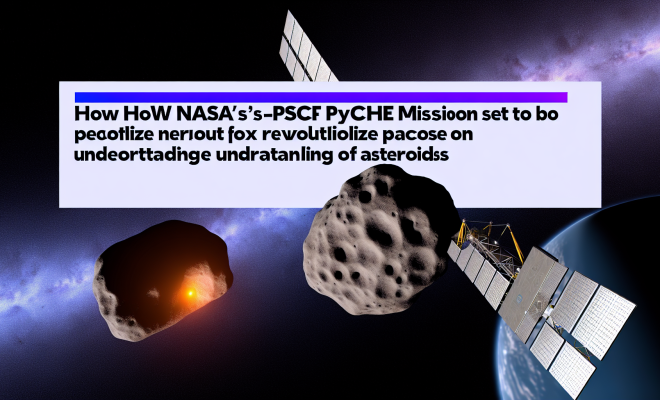
The NASA Psyche mission, an ambitious endeavor to explore the metallic asteroid Psyche, is poised to reach a critical milestone with its scheduled flyby of Mars on May 15, 2026. This event marks a significant moment in the mission’s timeline, as the spacecraft will pass remarkably close to Mars—just 2,800 miles from the planet’s surface—while traveling at a staggering speed of 12,333 mph. This close encounter is not only a technical achievement but also a pivotal moment that will help propel the spacecraft towards its ultimate destination and enhance our understanding of planetary formation.
The Importance of the Mars Flyby
The Nasa Psyche mission aims to visit the asteroid Psyche, which is unique in that it is believed to be an exposed metallic core of a protoplanet that never fully formed. By using Mars’s gravitational field as a slingshot, the spacecraft will be able to adjust its trajectory, gaining speed and direction as it heads towards the asteroid belt located between Mars and Jupiter.
This flyby exemplifies the application of gravitational assist technology, which has been a cornerstone of space exploration for decades. Such techniques enable spacecraft to increase their velocity and alter their course by utilizing the gravitational pull of planets. For the Psyche mission, this is more than just a functional maneuver; it represents the culmination of years of planning and engineering.
Social Media Buzz and Public Engagement
As the date of the flyby approaches, excitement is building in the space exploration community and beyond. Social media platforms are abuzz with real-time tracking information, countdown posts, and discussions about the mission’s implications. Space enthusiasts and casual observers alike are eagerly sharing updates, generating a palpable sense of anticipation. This engagement reflects a growing public interest in space missions, bolstered by the accessibility of information through various online platforms.
The anticipation surrounding the NASA Psyche mission highlights how modern technology allows for real-time participation in space exploration. The ability to follow a spacecraft as it approaches another planet fosters a unique connection between the public and the scientific community, igniting curiosity and inspiring the next generation of explorers.
The Science Behind the Mission
Studying Psyche offers a rare opportunity to investigate the building blocks of planetary cores. Unlike rocky bodies like Earth and Mars, Psyche is composed primarily of metals, including nickel, iron, and potentially other materials. This metallic makeup provides insights into the formation of terrestrial planets and the early solar system.
By examining the asteroid, scientists aim to answer fundamental questions about how planetary bodies develop and evolve. The Psyche mission carries a suite of scientific instruments designed to analyze the asteroid’s surface and gather data on its composition, topography, and magnetic field.
- Magnetometer: To measure the magnetic field.
- Multi-Spectral Imager: For capturing detailed images across various wavelengths.
- Gamma Ray and Neutron Spectrometer: To analyze elemental composition.
This suite of instruments makes the Nasa Psyche mission one of the most scientifically rich missions to target an asteroid. The data collected will provide unprecedented insights, helping to bridge gaps in our understanding of planetary formation.
Challenges Ahead
While the upcoming Mars flyby is exciting, it is not without its challenges. The spacecraft must navigate a complex environment characterized by various gravitational influences and potential space debris. Ensuring that the spacecraft can maintain its trajectory and avoid hazards will require precise calculations and real-time adjustments by mission control.
Moreover, the Psyche spacecraft’s journey is long and fraught with uncertainties. After the flyby, the spacecraft will continue its journey towards the asteroid belt, where it will take several more years to reach its destination. Mission engineers will have to monitor the spacecraft closely and make adjustments as necessary throughout this extended journey.
The Public’s Role in Space Exploration
The excitement generated around the Nasa Psyche mission underscores the critical role that public engagement plays in the success of space missions. As the general public becomes more invested in these missions, they not only foster a supportive environment for funding and research but also inspire future scientists, engineers, and explorers.
Social media serves as a powerful tool for engaging the public, allowing them to feel like part of the mission. The sharing of countdowns, mission updates, and educational content helps demystify space exploration, making it more accessible to a broader audience.
As interest in space continues to grow, initiatives that encourage public participation will be crucial in sustaining enthusiasm for future missions. Educational programs, outreach activities, and online engagement can help cultivate a culture of curiosity and exploration that benefits scientific endeavors.
Future Implications of the Psyche Mission
The findings from the Nasa Psyche mission could have far-reaching implications for our understanding of not just asteroids, but the formation of planets throughout the solar system. By studying an object that is believed to be a remnant of the early solar system, scientists hope to glean insights that could redefine our models of planetary formation.
One of the critical questions that the mission seeks to answer is whether Psyche represents a typical example of a planetary core. If so, it could offer clues about the composition and characteristics of many other metallic bodies in the universe. This knowledge would not only advance our understanding of the solar system but also inform future exploration efforts beyond our immediate celestial neighborhood.
Looking Ahead: The Journey Continues
The Nasa Psyche mission represents a new frontier in space exploration. As we approach the Mars flyby, the scientific community and the public alike are filled with anticipation. This milestone marks not only a critical trajectory adjustment but also a testament to human ingenuity and our relentless quest for knowledge.
As the spacecraft embarks on its journey to Psyche, it carries with it the hopes and dreams of many. The mission highlights the importance of collaborative efforts in science and technology, uniting engineers, scientists, and enthusiasts worldwide in a shared pursuit of discovery.
In closing, the Nasa Psyche mission is more than just a scientific endeavor; it is a journey that connects humanity with the cosmos, reigniting our curiosity and reminding us of our place in the universe. As we watch the spacecraft approach Mars, we are reminded that each milestone in space exploration brings us closer to unraveling the mysteries of our solar system.