The Tech Edvocate

Top Menu

  • Advertisement
  • Apps
  • Home Page
  • Home Page Five (No Sidebar)
  • Home Page Four
  • Home Page Three
  • Home Page Two
  • Home Tech2
  • Icons [No Sidebar]
  • Left Sidbear Page
  • Lynch Educational Consulting
  • My Account
  • My Speaking Page
  • Newsletter Sign Up Confirmation
  • Newsletter Unsubscription
  • Our Brands
  • Page Example
  • Privacy Policy
  • Protected Content
  • Register
  • Request a Product Review
  • Shop
  • Shortcodes Examples
  • Signup
  • Start Here
    • Governance
    • Careers
    • Contact Us
  • Terms and Conditions
  • The Edvocate
  • The Tech Edvocate Product Guide
  • Topics
  • Write For Us
  • Advertise

Main Menu

  • Start Here
    • Our Brands
    • Governance
      • Lynch Educational Consulting, LLC.
      • Dr. Lynch’s Personal Website
      • Careers
    • Write For Us
    • The Tech Edvocate Product Guide
    • Contact Us
    • Books
    • Edupedia
    • Post a Job
    • The Edvocate Podcast
    • Terms and Conditions
    • Privacy Policy
  • Topics
    • Assistive Technology
    • Child Development Tech
    • Early Childhood & K-12 EdTech
    • EdTech Futures
    • EdTech News
    • EdTech Policy & Reform
    • EdTech Startups & Businesses
    • Higher Education EdTech
    • Online Learning & eLearning
    • Parent & Family Tech
    • Personalized Learning
    • Product Reviews
  • Advertise
  • Tech Edvocate Awards
  • The Edvocate
  • Pedagogue
  • School Ratings

logo

The Tech Edvocate

  • Start Here
    • Our Brands
    • Governance
      • Lynch Educational Consulting, LLC.
      • Dr. Lynch’s Personal Website
        • My Speaking Page
      • Careers
    • Write For Us
    • The Tech Edvocate Product Guide
    • Contact Us
    • Books
    • Edupedia
    • Post a Job
    • The Edvocate Podcast
    • Terms and Conditions
    • Privacy Policy
  • Topics
    • Assistive Technology
    • Child Development Tech
    • Early Childhood & K-12 EdTech
    • EdTech Futures
    • EdTech News
    • EdTech Policy & Reform
    • EdTech Startups & Businesses
    • Higher Education EdTech
    • Online Learning & eLearning
    • Parent & Family Tech
    • Personalized Learning
    • Product Reviews
  • Advertise
  • Tech Edvocate Awards
  • The Edvocate
  • Pedagogue
  • School Ratings
  • The Shocking Truth: ESG Training Programs Are Quietly Reshaping Your Career Path

  • Why Millions of People Are Switching to These Green Energy Certifications Right Now

  • The green skills gap in 2026: How to address this growing problem

  • The Shocking Truth: Your Degree Won’t Land You the Best IT Jobs in 2026

  • The Brutal Truth About Degrees: Why Micro-Credentials Are Quietly Dominating Careers by 2026

  • Why 96% of Employers Now Prefer Skills Over Degrees: The Micro-Credential Revolution

  • This Crucial Mistake With AI Is Stunting Student Minds: Here’s How to Fix It

  • The AI ‘Cognitive Surrender’ Crisis: 7 Tools Every Educator Needs NOW

  • This Crucial Mistake Is Quietly Killing Students’ Brains, Says MIT

  • The Sneaky Truth About RTO: How to Negotiate Flexible Work Without Losing Your Job

Digital & Mobile Technology
Home›Digital & Mobile Technology›How HTTP Works: Hypertext Transfer Protocol Explained

How HTTP Works: Hypertext Transfer Protocol Explained
By Matthew Lynch
June 12, 2023
0
Spread the love

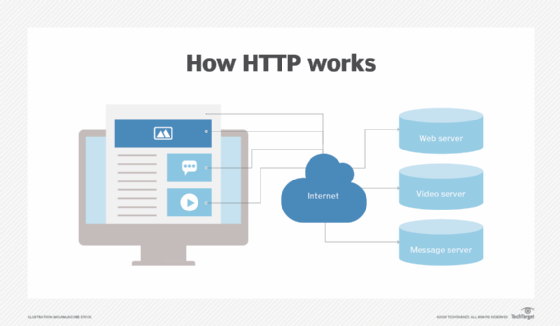
HTTP, or Hypertext Transfer Protocol, is the backbone of the modern internet. It is a protocol that governs the transfer of information between web servers and web users or clients, enabling us to view websites, send emails, and access various online services.

At its simplest, HTTP is a set of rules that enables computers to communicate with one another over the internet. It defines the syntax, structure, and semantics of messages exchanged between two entities – the client and the server.

When a user enters a URL into their browser, the browser sends an HTTP request to the web server that hosts the desired website. This request typically includes the URL, as well as other headers and parameters that provide context for the request.

The server receives the request and responds with an HTTP response message. This response typically includes the requested resource – such as a webpage or image – as well as headers that provide additional information about the resource.

HTTP uses a range of methods to allow clients to interact with servers. The most commonly used methods are GET and POST. The GET method is typically used to retrieve information from a server, while the POST method is used to send information to a server for processing.

In addition to requests and responses, HTTP also defines a range of status codes that both clients and servers can use to communicate the outcome of a request. These status codes include 2xx codes for successful requests, 3xx codes for redirection, 4xx codes for client errors, and 5xx codes for server errors.

While HTTP is a powerful protocol that enables us to access information from anywhere in the world, there are some limitations to its design. For example, HTTP requests are sent in plaintext, which means that they can be intercepted and read by anyone who has access to the network.

To address this issue, a more secure version of HTTP called HTTPS was developed. HTTPS encrypts HTTP requests and responses using SSL/TLS, making it much more secure than traditional HTTP.

In conclusion, HTTP is a fundamental protocol that enables us to access the vast resources of the internet. It defines the rules for communicating between web servers and clients, and it forms the basis for a wide range of online services. While it has some limitations, such as the lack of encryption, it remains an essential technology that powers much of the modern web.


Previous Article

How to Change Your Spotify Username

Next Article

Reset This PC: Repair Tool for Serious ...

Matthew Lynch

Related articles More from author

  • Digital & Mobile Technology

    Is the Email From “[email protected]” Legitimate?

    June 6, 2023
    By Matthew Lynch
  • Digital & Mobile Technology

    What Is Safe Mode in Windows 10?

    August 3, 2023
    By Matthew Lynch
  • Digital & Mobile Technology

    Can I Upgrade or Downgrade to OS X Snow Leopard (OS X 10.6)?

    June 11, 2023
    By Matthew Lynch
  • Digital & Mobile Technology

    How to Use the Net Use Command in Windows

    June 1, 2023
    By Matthew Lynch
  • Digital & Mobile Technology

    What is VPN Client Software?

    May 14, 2023
    By Matthew Lynch
  • Digital & Mobile Technology

    What Is a 3GP File?

    June 12, 2023
    By Matthew Lynch

Search

Login & Registration

  • Log in
  • Entries feed
  • Comments feed
  • WordPress.org

Newsletter

Signup for The Tech Edvocate Newsletter and have the latest in EdTech news and opinion delivered to your email address!

About Us

Since technology is not going anywhere and does more good than harm, adapting is the best course of action. That is where The Tech Edvocate comes in. We plan to cover the PreK-12 and Higher Education EdTech sectors and provide our readers with the latest news and opinion on the subject. From time to time, I will invite other voices to weigh in on important issues in EdTech. We hope to provide a well-rounded, multi-faceted look at the past, present, the future of EdTech in the US and internationally.

We started this journey back in June 2016, and we plan to continue it for many more years to come. I hope that you will join us in this discussion of the past, present and future of EdTech and lend your own insight to the issues that are discussed.

Newsletter

Signup for The Tech Edvocate Newsletter and have the latest in EdTech news and opinion delivered to your email address!

Contact Us

The Tech Edvocate
910 Goddin Street
Richmond, VA 23231
(601) 630-5238
[email protected]

Copyright © 2026 Matthew Lynch. All rights reserved.