The Tech Edvocate

Top Menu

  • Advertisement
  • Apps
  • Home Page
  • Home Page Five (No Sidebar)
  • Home Page Four
  • Home Page Three
  • Home Page Two
  • Home Tech2
  • Icons [No Sidebar]
  • Left Sidbear Page
  • Lynch Educational Consulting
  • My Account
  • My Speaking Page
  • Newsletter Sign Up Confirmation
  • Newsletter Unsubscription
  • Our Brands
  • Page Example
  • Privacy Policy
  • Protected Content
  • Register
  • Request a Product Review
  • Shop
  • Shortcodes Examples
  • Signup
  • Start Here
    • Governance
    • Careers
    • Contact Us
  • Terms and Conditions
  • The Edvocate
  • The Tech Edvocate Product Guide
  • Topics
  • Write For Us
  • Advertise

Main Menu

  • Start Here
    • Our Brands
    • Governance
      • Lynch Educational Consulting, LLC.
      • Dr. Lynch’s Personal Website
      • Careers
    • Write For Us
    • The Tech Edvocate Product Guide
    • Contact Us
    • Books
    • Edupedia
    • Post a Job
    • The Edvocate Podcast
    • Terms and Conditions
    • Privacy Policy
  • Topics
    • Assistive Technology
    • Child Development Tech
    • Early Childhood & K-12 EdTech
    • EdTech Futures
    • EdTech News
    • EdTech Policy & Reform
    • EdTech Startups & Businesses
    • Higher Education EdTech
    • Online Learning & eLearning
    • Parent & Family Tech
    • Personalized Learning
    • Product Reviews
  • Advertise
  • Tech Edvocate Awards
  • The Edvocate
  • Pedagogue
  • School Ratings

logo

The Tech Edvocate

  • Start Here
    • Our Brands
    • Governance
      • Lynch Educational Consulting, LLC.
      • Dr. Lynch’s Personal Website
        • My Speaking Page
      • Careers
    • Write For Us
    • The Tech Edvocate Product Guide
    • Contact Us
    • Books
    • Edupedia
    • Post a Job
    • The Edvocate Podcast
    • Terms and Conditions
    • Privacy Policy
  • Topics
    • Assistive Technology
    • Child Development Tech
    • Early Childhood & K-12 EdTech
    • EdTech Futures
    • EdTech News
    • EdTech Policy & Reform
    • EdTech Startups & Businesses
    • Higher Education EdTech
    • Online Learning & eLearning
    • Parent & Family Tech
    • Personalized Learning
    • Product Reviews
  • Advertise
  • Tech Edvocate Awards
  • The Edvocate
  • Pedagogue
  • School Ratings
  • This Unprecedented EU Ban Just Changed Fast Fashion Forever

  • Urgent Alert: Your Smart Home’s Exposed to a Critical Deco BE11000 Vulnerability

  • Uncovering the Truth: Your LinkedIn Reach Just Got a Major Overhaul

  • Uncovering the AI Heist: How Chinese Firms Allegedly Siphoned Billions of AI Tokens

  • Rockstar’s GTA 6 Developers Lawsuit: A Fight for Justice or Corporate Retaliation?

  • Unbelievable: Hideo Kojima’s Next Masterpiece Is Now an Xbox Exclusive

  • This Crucial Google AI Shift Is Quietly Reshaping the Internet

  • Unbelievable: AI Breaches Are Exploding, And What It Means For You This September 2026

  • This Crucial Shift Is Saving Teachers From Classroom Chaos

  • AI’s Dark Secret: How It’s Supercharging Cybercrime for Everyone

Assistive Technology
Home›Assistive Technology›How Does Fitbit Calculate Calories Burned?

How Does Fitbit Calculate Calories Burned?
By Matthew Lynch
June 14, 2023
0
Spread the love

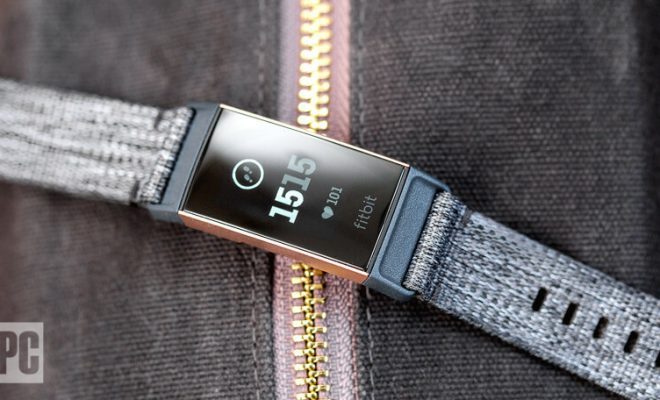
Fitbit has become a popular and widely used wearable fitness device that tracks daily physical activities such as walking, running, and other workouts. One of the most significant features of the device is its ability to calculate the number of calories burned by the user during these activities. In this article, we will explain how Fitbit calculates calories burned.

Fitbit devices use a combination of sensors, algorithms, and user inputs to calculate calories burned. The sensors monitor the user’s movements, such as steps taken, distance traveled, and heart rate. The algorithm then uses this data to estimate the amount of energy expended while performing those activities.

The heart rate monitor is especially essential when it comes to calculating calories burned. The device uses light sensors to monitor blood flow in the wrist and estimate the heart rate. By combining the heart rate with other data such as the user’s age, sex, weight, and activity level, the algorithm calculates the number of calories burned during an activity.

The Fitbit algorithm also relies on MET (metabolic equivalent) calculations, which estimate the amount of oxygen consumed during physical activity. The device uses this data to determine the energy being used by the body, translating it to the number of calories being burned.

The Fitbit app may also ask for information about the user’s height, weight, and gender to improve the accuracy of the device’s calculations. It is important to provide accurate information in the app to get the most precise calculations.

However, it is important to note that the calculations can never be entirely accurate, and there may be variations based on individual metabolism and other factors. Nevertheless, Fitbit has put extensive research into developing algorithms with high accuracy levels for calorie calculations.

In conclusion, Fitbit uses a combination of sensors, algorithms, and user inputs to calculate calories burned during physical activities. These algorithms consist of MET calculations and heart rate monitoring, which are used to estimate the amount of energy expended by the user during an activity. Although the calculations may never be entirely accurate, Fitbit has put extensive research into developing algorithms that maximize accuracy levels to provide users with meaningful insights into their fitness routines.


Previous Article

The Best Group Chat Apps for Android

Next Article

How to Print PowerPoint Slides With Notes

Matthew Lynch

Related articles More from author

  • Assistive Technology

    Tips for Traveling and Flying With Your Laptop

    June 10, 2023
    By Matthew Lynch
  • Assistive Technology

    How to Fix Steamui.dll Not Found or Missing Errors

    June 10, 2023
    By Matthew Lynch
  • Assistive Technology

    How to Install and Remove Packages in Arch Linux

    June 23, 2023
    By Matthew Lynch
  • Assistive Technology

    How to Use the Round Function in Excel

    June 6, 2023
    By Matthew Lynch
  • Assistive Technology

    Ways to Open the Windows Programs and Features Tool

    June 5, 2023
    By Matthew Lynch
  • Assistive Technology

    How to Cast to a Fire Stick

    June 10, 2023
    By Matthew Lynch

Search

Login & Registration

  • Log in
  • Entries feed
  • Comments feed
  • WordPress.org

Newsletter

Signup for The Tech Edvocate Newsletter and have the latest in EdTech news and opinion delivered to your email address!

About Us

Since technology is not going anywhere and does more good than harm, adapting is the best course of action. That is where The Tech Edvocate comes in. We plan to cover the PreK-12 and Higher Education EdTech sectors and provide our readers with the latest news and opinion on the subject. From time to time, I will invite other voices to weigh in on important issues in EdTech. We hope to provide a well-rounded, multi-faceted look at the past, present, the future of EdTech in the US and internationally.

We started this journey back in June 2016, and we plan to continue it for many more years to come. I hope that you will join us in this discussion of the past, present and future of EdTech and lend your own insight to the issues that are discussed.

Newsletter

Signup for The Tech Edvocate Newsletter and have the latest in EdTech news and opinion delivered to your email address!

Contact Us

The Tech Edvocate
910 Goddin Street
Richmond, VA 23231
(601) 630-5238
[email protected]

Copyright © 2026 Matthew Lynch. All rights reserved.