The Tech Edvocate

Top Menu

  • Advertisement
  • Apps
  • Home Page
  • Home Page Five (No Sidebar)
  • Home Page Four
  • Home Page Three
  • Home Page Two
  • Home Tech2
  • Icons [No Sidebar]
  • Left Sidbear Page
  • Lynch Educational Consulting
  • My Account
  • My Speaking Page
  • Newsletter Sign Up Confirmation
  • Newsletter Unsubscription
  • Our Brands
  • Page Example
  • Privacy Policy
  • Protected Content
  • Register
  • Request a Product Review
  • Shop
  • Shortcodes Examples
  • Signup
  • Start Here
    • Governance
    • Careers
    • Contact Us
  • Terms and Conditions
  • The Edvocate
  • The Tech Edvocate Product Guide
  • Topics
  • Write For Us
  • Advertise

Main Menu

  • Start Here
    • Our Brands
    • Governance
      • Lynch Educational Consulting, LLC.
      • Dr. Lynch’s Personal Website
      • Careers
    • Write For Us
    • The Tech Edvocate Product Guide
    • Contact Us
    • Books
    • Edupedia
    • Post a Job
    • The Edvocate Podcast
    • Terms and Conditions
    • Privacy Policy
  • Topics
    • Assistive Technology
    • Child Development Tech
    • Early Childhood & K-12 EdTech
    • EdTech Futures
    • EdTech News
    • EdTech Policy & Reform
    • EdTech Startups & Businesses
    • Higher Education EdTech
    • Online Learning & eLearning
    • Parent & Family Tech
    • Personalized Learning
    • Product Reviews
  • Advertise
  • Tech Edvocate Awards
  • The Edvocate
  • Pedagogue
  • School Ratings

logo

The Tech Edvocate

  • Start Here
    • Our Brands
    • Governance
      • Lynch Educational Consulting, LLC.
      • Dr. Lynch’s Personal Website
        • My Speaking Page
      • Careers
    • Write For Us
    • The Tech Edvocate Product Guide
    • Contact Us
    • Books
    • Edupedia
    • Post a Job
    • The Edvocate Podcast
    • Terms and Conditions
    • Privacy Policy
  • Topics
    • Assistive Technology
    • Child Development Tech
    • Early Childhood & K-12 EdTech
    • EdTech Futures
    • EdTech News
    • EdTech Policy & Reform
    • EdTech Startups & Businesses
    • Higher Education EdTech
    • Online Learning & eLearning
    • Parent & Family Tech
    • Personalized Learning
    • Product Reviews
  • Advertise
  • Tech Edvocate Awards
  • The Edvocate
  • Pedagogue
  • School Ratings
  • Where Casino Entertainment Meets Comfort, Pace, and Atmosphere

  • Toxic Pills: This Supplement Scandal Puts Millions at Risk

  • Urgent Dog Supplement Recall: This Stealthy Threat Could Be Hiding in Your Pantry!

  • Staggering: Climate Tech Fundraising Collapses — Is AI to Blame?

  • Global AI stocks tumble as industry’s biggest names sound alarm – The Straits Times

  • Sony’s Controversial Move: Why the Last of Us Part II Multiplayer Mod Got Axed

  • Trump’s Wild AI Claims: Is There a ‘Sick Conspiracy’ Against Tech?

  • This One Thing Is Turning Classrooms Into Culture War Battlegrounds

  • Your AI Detector Is Useless: Why Universities Are Scrapping ‘Catch & Ban’ for This

  • Terrifying: AI Is About to Break Cybersecurity – And No One Is Ready

Digital & Mobile Technology
Home›Digital & Mobile Technology›How Does a Camera Work?

How Does a Camera Work?
By Matthew Lynch
June 10, 2023
0
Spread the love

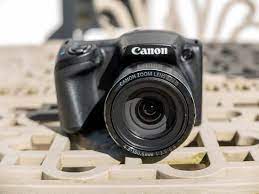
Cameras have come a long way since their invention in the early 19th century. From the earliest pinhole cameras to today’s sophisticated digital cameras, they continue to play an integral role in capturing the world around us. But have you ever wondered how a camera works? In this article, we’ll explore the basic workings of a camera and how it captures images.

The first thing to understand about a camera is that it works by capturing light. When you take a photo, the camera’s lens collects light from the scene in front of it and focuses it onto the camera’s sensor. For film cameras, the light is focused onto a piece of film that will later be developed. In digital cameras, the light is focused onto an image sensor that converts the light into a digital signal.

The amount of light that enters the camera is controlled by the camera’s aperture, which is a small opening in the lens that can be adjusted to allow more or less light in. The aperture is measured in f-stops, with a lower number indicating a larger opening (which lets in more light) and a higher number indicating a smaller opening (which lets in less light). This also affects the depth of field, or how much of the image is in focus – a larger aperture (lower f-number) gives a shallower depth of field, and a smaller aperture (higher f-number) gives a deeper depth of field.

The shutter is another important component of a camera. It’s basically a curtain that covers the camera’s sensor or film and opens briefly to allow light to enter when a photo is taken. The length of time the shutter is open (known as the shutter speed) determines how much light enters the camera and how much movement is captured. A fast shutter speed (like 1/1000th of a second) freezes movement and lets in less light, while a slow shutter speed (like 1/30th of a second) blurs movement and lets in more light.

The camera’s ISO is another key factor in how it captures light. ISO is a measure of the camera’s sensitivity to light – a higher ISO means the camera is more sensitive to light and can capture images in low light conditions, but it also results in more “noise” or graininess in the image. A lower ISO means the camera is less sensitive to light and produces cleaner images, but requires more light to create a properly exposed image.

Once the light is captured by the camera’s lens and focused onto the sensor or film, the camera’s processor takes over to turn that data into an image. The processor reads the data from the sensor or film, applies any settings or filters the photographer has selected, and creates a digital image that can be viewed and edited. The resulting image can then be saved to the camera’s memory card or transferred to a computer for further editing or printing.

In summary, a camera works by capturing light from the scene in front of it through its lens, controlling the amount of light that enters through the aperture and shutter, and converting that light into a digital signal. The resulting image is then processed by the camera’s internal processor and saved to memory or transferred to a computer. Understanding how a camera works can help you make better use of its features and capture more successful photos.


Previous Article

The Beatles Land on TikTok With 36 ...

Next Article

What Is an SOW (Statement of Work) ...

Matthew Lynch

Related articles More from author

  • Digital & Mobile Technology

    How to Check the Health of Your Windows 10/11 PC or Laptop

    June 23, 2023
    By Matthew Lynch
  • Digital & Mobile Technology

    How to Group Objects in Google Slides

    June 9, 2023
    By Matthew Lynch
  • Digital & Mobile Technology

    Windows 7 Drivers

    June 15, 2023
    By Matthew Lynch
  • Digital & Mobile Technology

    Apple Watch Battery Draining Fast? Try This Simple Fix

    August 3, 2023
    By Matthew Lynch
  • Digital & Mobile Technology

    What Is the MoUSO Core Worker Process? How to Fix Its High CPU and RAM Usage

    June 23, 2023
    By Matthew Lynch
  • Digital & Mobile Technology

    Can’t Drag And Drop Things in Windows 10? Here’s How to Fix That

    August 5, 2023
    By Matthew Lynch

Search

Login & Registration

  • Log in
  • Entries feed
  • Comments feed
  • WordPress.org

Newsletter

Signup for The Tech Edvocate Newsletter and have the latest in EdTech news and opinion delivered to your email address!

About Us

Since technology is not going anywhere and does more good than harm, adapting is the best course of action. That is where The Tech Edvocate comes in. We plan to cover the PreK-12 and Higher Education EdTech sectors and provide our readers with the latest news and opinion on the subject. From time to time, I will invite other voices to weigh in on important issues in EdTech. We hope to provide a well-rounded, multi-faceted look at the past, present, the future of EdTech in the US and internationally.

We started this journey back in June 2016, and we plan to continue it for many more years to come. I hope that you will join us in this discussion of the past, present and future of EdTech and lend your own insight to the issues that are discussed.

Newsletter

Signup for The Tech Edvocate Newsletter and have the latest in EdTech news and opinion delivered to your email address!

Contact Us

The Tech Edvocate
910 Goddin Street
Richmond, VA 23231
(601) 630-5238
[email protected]

Copyright © 2026 Matthew Lynch. All rights reserved.