Climate Change & FDI: Somalia’s Economic Future at Risk (2024)
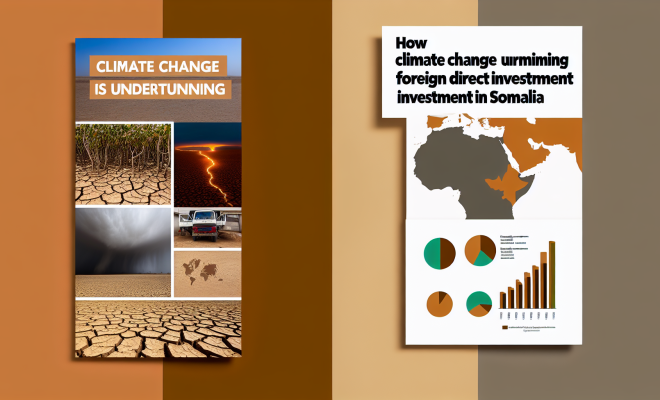
Foreign Direct Investment (FDI) plays a crucial role in the economic development of countries, serving as a key driver of growth, job creation, and infrastructure development. In fragile states like Somalia, the dynamics of FDI are particularly complex, influenced by a myriad of factors, including economic conditions and environmental challenges. A recent study published in Cogent Economics & Finance has delved into the intricate relationship between these variables, revealing how climate change impacts FDI inflows and, consequently, the economic recovery of Somalia.
The Context of Foreign Direct Investment in Somalia
Somalia’s geopolitical context is characterized by a prolonged period of instability, conflict, and economic fragility. Despite these challenges, the potential for foreign direct investment in Somalia remains significant due to its strategic location in the Horn of Africa, rich natural resources, and a youthful population. However, the same factors that contribute to its potential also present considerable risks for investors.
The Economic Landscape
Between 2004 and 2024, Somalia has experienced fluctuating levels of foreign direct investment, often reflecting broader economic trends and regional stability. The empirical investigation highlights that FDI in Somalia is heavily influenced by macroeconomic factors such as Gross Domestic Product (GDP) growth. As the country has made strides towards stabilizing its economy, the allure of investment has increased.
- GDP Growth: Positive GDP growth often correlates with increased investor confidence, leading to higher FDI inflows.
- Infrastructure Development: Improvements in infrastructure are critical to attracting foreign investments, as they facilitate business operations and market access.
- Regulatory Environment: A transparent and business-friendly regulatory environment is essential to instill confidence among potential investors.
Climate Variables and Their Impact on FDI
While economic conditions provide a foundation for FDI, the study reveals that climate variables play a detrimental role, significantly affecting investment decisions. The researchers found that climate shocks, such as severe droughts and temperature rises, can lead to a reduction of FDI inflows by as much as 15-20% in directly affected regions.
Understanding Climate Shocks
Climate shocks are sudden and extreme weather events that can disrupt local economies, agriculture, and overall societal stability. In the context of Somalia, the following climate factors are particularly impactful:
- Drought: Prolonged dry spells can devastate agricultural output, leading to food insecurity and economic distress.
- Temperature Increases: Rising temperatures can exacerbate existing water shortages, affecting both livelihoods and business operations.
- Flooding: Conversely, when rains do come, they can lead to flooding, further damaging infrastructure and economic prospects.
Data Analysis and Methodology
The findings of the study are grounded in a thorough analysis of data sourced from Google Trends and econometric models that span two decades. By correlating climate data with FDI statistics, researchers were able to illustrate the negative implications of climate variability on investment flows into Somalia.
The Global Shift in Foreign Direct Investment Trends
As the world grapples with the implications of climate change, there is an observable shift in foreign direct investment trends towards more resilient economies. Investors are increasingly cautious about where they place their capital, often favoring regions with lower exposure to climate-related risks.
Oslo’s Climate Strategies
In a global context, cities like Oslo are leading the charge with compelling climate strategies that prioritize sustainable investments. These approaches not only attract FDI but also create a ripple effect that encourages other nations to adopt similar policies. Somalia, however, finds itself in a unique position where the need for foreign investment competes with the rising fears of climate risks.
The Counterintuitive Insights
The study’s key revelations present a counterintuitive insight: while climate change generally signals a decline in investment attractiveness, it is often overlooked in discussions about economic recovery in fragile states like Somalia. The implications of this finding are profound and raise critical questions about investment strategies and priorities.
Investment Risks and Opportunities
With the interplay of climate change and economic factors, potential investors must navigate a landscape fraught with risk. The impact of climate shocks on FDI can deter investment overall, leading to a vicious cycle where lack of investment perpetuates economic fragility.
- Risk Assessment: Investors must conduct thorough risk assessments that incorporate climate variables alongside traditional economic indicators.
- Long-term Strategies: Sustainable investment strategies that address climate resilience can create opportunities for growth and stability.
Policy Implications
The findings of the study not only highlight the risks associated with climate change but also underline the need for robust policy responses. Policymakers in Somalia and similar fragile states must prioritize climate adaptation strategies to create a more favorable investment landscape.
Recommendations for Policymakers
In light of these insights, several key recommendations can be made to enhance the investment climate in Somalia:
- Enhance Climate Resilience: Invest in infrastructure that can withstand climate shocks, such as improved water management systems.
- Policy Frameworks: Implement regulatory frameworks that incentivize sustainable practices and encourage investment in climate-resilient projects.
- Engage with Investors: Actively engage with potential investors to communicate the country’s commitment to tackling climate change and fostering a stable investment environment.
Conclusion: The Future of Foreign Direct Investment in Somalia
The relationship between foreign direct investment and climate variables in Somalia presents a complex and evolving narrative. As the study indicates, climate change poses a significant challenge to economic recovery and investment attractiveness. By recognizing the impact of climate shocks and prioritizing resilience in policy and investment strategies, Somalia can work towards a more sustainable and stable economic future.
Ultimately, as the global conversation around climate change and investment evolves, Somalia must position itself not only as a destination for foreign direct investment but as a leader in addressing the associated challenges. In doing so, it can unlock the potential for economic growth and development that benefits not just investors but the Somali people as a whole.