House-Sized Asteroid 2023 HB4 to Pass Earth Safely in 2026
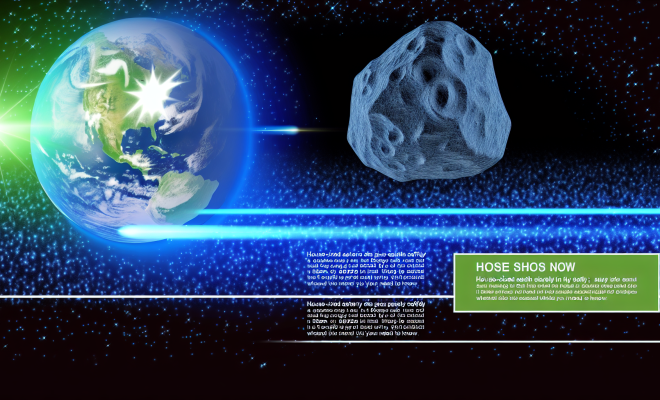
On April 12, 2026, a house-sized asteroid named (2023 HB4) is scheduled to make a close approach to Earth, according to NASA. This near-Earth object, measuring approximately 48 feet in diameter, will pass at a distance of around 4 million miles from our planet, posing no threat to life or infrastructure.
Understanding (2023 HB4)
The asteroid (2023 HB4) is part of a broader category known as near-Earth objects (NEOs), which includes both asteroids and comets that come within 1.3 astronomical units of the Earth-Sun distance. This space rock is sizable enough to generate interest among astronomers and scientists, offering a unique opportunity to study its characteristics and trajectory.
The Significance of Monitoring NEOs
The monitoring of NEOs like (2023 HB4) holds significant importance for several reasons:
- Planetary Defense: Tracking the paths of these celestial bodies helps scientists assess potential threats to Earth. While (2023 HB4) is not a danger, other larger asteroids have the potential to cause catastrophic damage.
- Scientific Research: Observing NEOs provides valuable data on the composition, structure, and behavior of these objects, which can inform our understanding of the solar system’s formation.
- Public Awareness: Events like the approach of (2023 HB4) raise awareness about space phenomena, encouraging public interest in astronomy and space exploration.
NASA’s Asteroid Monitoring Efforts
NASA has been at the forefront of monitoring near-Earth asteroids, employing advanced telescopes and space missions to track their paths. The agency operates programs like NEOWISE, which uses infrared technology to detect and characterize these objects. The data collected helps refine predictions about their orbits and assess any potential risks.
What Happens During Close Approaches?
During the approach of (2023 HB4), astronomers worldwide will observe the asteroid, gathering data that can enhance our understanding of its physical properties. This close encounter also provides a chance to test tracking systems and improve predictive models for future NEOs.
These observations can include:
- Optical Imaging: Ground-based telescopes will capture images to analyze the asteroid’s surface features.
- Spectroscopy: This technique will help determine the asteroid’s composition by studying how it reflects light.
- Radar Observations: Using radar systems, scientists can obtain detailed information about the asteroid’s size, shape, and rotation.
The Importance of Public Engagement
As the date approaches, NASA and other organizations will likely engage the public through educational campaigns and updates about (2023 HB4). Such efforts are crucial for fostering a better understanding of space and increasing interest in STEM (Science, Technology, Engineering, and Mathematics) fields.
Public engagement can take various forms, including:
- Live Streams: Observing the event through live broadcasts from telescopes and observatories.
- Social Media Updates: Regular posts providing information about the asteroid’s trajectory and characteristics.
- Community Events: Local observatories and science centers may host events to educate the public about asteroids and their significance.
Future of Near-Earth Object Research
The approach of (2023 HB4) is a reminder of the ongoing efforts in the field of planetary defense. As technology advances, our ability to identify and track NEOs will improve, enabling us to respond more effectively to potential threats.
Moreover, the study of asteroids is not limited to understanding threats. Many scientists believe that asteroids could serve as resources for future space exploration, providing materials that could be used in building infrastructure on other celestial bodies.
Conclusion
The upcoming close approach of asteroid (2023 HB4) on April 12, 2026, offers a unique opportunity for scientists and astronomers to gather valuable data while ensuring that Earth remains safe. As we continue to explore our solar system, monitoring these near-Earth objects will remain a priority for NASA and other space agencies worldwide. Awareness and education about these phenomena are essential steps toward fostering a society that is informed and prepared for the wonders and challenges of space exploration.