Cosmic Drama: Black Hole Devours White Dwarf, Reshaping Stellar Evolution
“`html
In a groundbreaking discovery that has sent ripples through the astronomical community, researchers utilizing the Einstein Probe space telescope may have captured the first direct observation of an intermediate-mass black hole tearing apart a dense white dwarf star. This astonishing event, one of the rarest and most dramatic occurrences in the cosmos, could reshape our understanding of black holes and stellar evolution. The findings were published in the esteemed Science Bulletin and have quickly gained viral attention due to their shocking implications and the extraordinary nature of the event.
1. The Einstein Probe: A New Frontier in Astrophysics
The Einstein Probe, launched recently, represents a significant advancement in our ability to observe celestial phenomena. Designed primarily for X-ray astronomy, this state-of-the-art space telescope is equipped with cutting-edge technology that allows it to monitor cosmic events with unprecedented sensitivity. Its mission is to uncover elusive astronomical phenomena, including the behaviors of black holes and neutron stars — both of which provide critical insights into the fabric of the universe.
The probe’s ability to rapidly respond to transient events makes it a game changer. Unlike older telescopes that might take days or weeks to adjust to new findings, the Einstein Probe can capture and analyze events in real-time. This agility is particularly crucial for studying phenomena like gamma-ray bursts, which are fleeting and often over before traditional telescopes can focus in. The potential observation of a black hole consuming a white dwarf may very well be one of the first success stories for the Einstein Probe, showcasing its capabilities in understanding the most violent and energetic processes in the universe.
2. What is a White Dwarf?
Understanding the context of this discovery requires a closer look at what a white dwarf is. Essentially, a white dwarf is the remaining core of a star that has exhausted its nuclear fuel and shed its outer layers. These stellar remnants are incredibly dense, packing a mass comparable to that of the Sun into a volume no larger than Earth. The gravitational force within a white dwarf is immense, held up against collapse by electron degeneracy pressure — a quantum mechanical effect that keeps the electrons from occupying the same space and state.
White dwarfs are at the final stage of stellar evolution for stars like our Sun. Once a white dwarf cools down, it can no longer sustain nuclear fusion and gradually dims over billions of years. Some white dwarfs, however, can accumulate matter from a companion star, which can lead to cataclysmic events like nova explosions. The interaction between white dwarfs and other celestial bodies is a crucial aspect of stellar evolution, and witnessing a white dwarf being devoured by a black hole adds an exciting new dimension to our understanding.
Interestingly, the mass and composition of a white dwarf can vary significantly. Some are made predominantly of carbon and oxygen, while others may be composed largely of helium. This variation can affect their evolution and the types of interactions they may have with black holes. For example, a carbon-oxygen white dwarf possesses a different fusion potential compared to its helium counterpart, which can influence the dynamics of the accretion process when encountering a black hole.
3. The Role of Intermediate-Mass Black Holes
Black holes come in various sizes: stellar, intermediate, and supermassive. Stellar black holes form from the remnants of massive stars after supernova explosions, while supermassive black holes reside at the centers of galaxies and can have masses millions to billions of times that of the Sun. Intermediate-mass black holes, on the other hand, remain somewhat enigmatic. Their existence has been theorized, but observational evidence has been sparse until now.
Intermediate-mass black holes are believed to form from the merging of smaller black holes or from the direct collapse of massive stars in dense star clusters. Their mass ranges from hundreds to thousands of solar masses, placing them in a size gap between stellar and supermassive black holes. The potential observation of an intermediate-mass black hole interacting with a white dwarf is particularly significant because it could provide insights into the formation and growth of black holes and their role in cosmic evolution.
Researchers have long debated the significance of intermediate-mass black holes in the broader context of galaxy formation. Some theories suggest that these black holes could be the building blocks for supermassive black holes, helping to shed light on how these giant entities emerged in the early universe. This discovery could thus pave the way for new models that explain their growth and the dynamics of galaxies they inhabit.
4. Capturing the Catastrophic Encounter
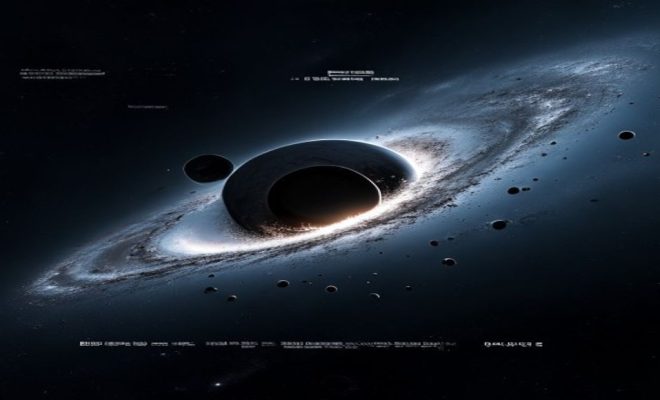
The explosive event captured by the Einstein Probe is described as one of cosmic proportions. As the intermediate-mass black hole approached the white dwarf, intense gravitational forces began to stretch the star, a process known as spaghettification. This happens because the gravitational pull on the side of the star closest to the black hole is much stronger than on the far side, leading to a tidal disruption event. During this process, the white dwarf undergoes extreme deformation, ultimately resulting in its destruction. (See: Understanding black holes and their properties.)
The probe recorded an unusual sequence of intense X-ray flashes during this catastrophic encounter, suggesting an explosive release of energy as the black hole tore through the star’s layers. This is notably different from typical gamma-ray bursts, which are usually associated with the collapse of massive stars. The distinct nature of these X-ray emissions could signify a new class of astronomical events that warrant further investigation.
Astrophysicists are excited about the possibility of using the data from this event to understand how the material from the white dwarf gets accreted by the black hole. As the white dwarf is torn apart, the debris that falls into the black hole can emit powerful X-rays, providing a new avenue for studying the dynamics of black hole accretion processes. This may also help in comprehending the efficiency of mass transfer in such extreme environments.
5. Implications for Astrophysics
If this observation of a black hole consuming a white dwarf is confirmed, it will mark a significant milestone in astrophysics. Historically, the study of black holes has been hampered by a lack of direct observational evidence linking them to specific events. This observation could provide the first direct evidence of an intermediate-mass black hole feeding event, filling a critical gap in our understanding of black hole formation and behavior.
Moreover, this discovery may help resolve longstanding questions about how black holes grow and interact with other celestial bodies. The insights gained from studying such interactions could inform theories about galaxy formation and evolution, as black holes are thought to play a crucial role in shaping the structures of galaxies. Understanding these dynamics is vital for piecing together the history of the universe.
In addition, understanding the lifecycle of white dwarfs and their interactions with black holes could lead to new insights into the fate of stars in binary systems. For example, the evolution of such systems may lead to different outcomes depending on the mass of the black hole and the composition of the white dwarf, creating a rich area for future research.
6. The Science Community’s Response
The reaction from the scientific community has been overwhelmingly positive, with many researchers expressing excitement over the implications of this finding. The publication in Science Bulletin has sparked discussions and debates surrounding the event, highlighting the potential for new avenues of research. Experts in astrophysics are eager to analyze the data further and explore the details of the observations made by the Einstein Probe.
Many astronomers are now advocating for more dedicated observations of such events. The need for ongoing monitoring and analysis is imperative to confirm these findings and to better understand the relationships between black holes and the stars they consume. Researchers are exploring collaborative efforts to utilize different telescopes and observational platforms to triangulate data and reinforce the significance of this extraordinary event.
This event has also reignited interest in similar phenomena across the universe. Scientists are now reviewing previous observations that may have been overlooked, hoping to find patterns or additional evidence of intermediate-mass black holes interacting with white dwarfs or other stellar objects. The excitement surrounding the Einstein Probe’s findings could lead to a renaissance in the study of black holes and their cosmic implications.
7. The Broader Implications for Cosmology
This potential observation of a black hole devouring a white dwarf opens up broader questions about the nature of the universe. It challenges existing models of stellar evolution and the lifecycle of black holes. If intermediate-mass black holes are more common than previously thought, it could lead to a reevaluation of how we understand cosmic structure and the distribution of matter in the universe.
Furthermore, this discovery could impact our theories regarding dark matter and dark energy. Understanding the formation and behavior of black holes could provide clues about the unseen forces that govern the universe’s expansion and structure. As we learn more about these enigmatic entities, we may also uncover new aspects of fundamental physics that remain elusive.
The implications don’t stop there; researchers are also considering how this finding could inform our understanding of gravitational waves. The merger of black holes is already a known source of these ripples in spacetime, and understanding how intermediate-mass black holes form and interact with other stellar objects could lead to new predictions about gravitational wave events we might observe in the future. (See: NASA's Einstein Probe mission details.)
8. Future Research Directions
As this discovery unfolds, the future of research surrounding black holes and white dwarfs will likely be vibrant and expansive. Astronomers will be keen to use the Einstein Probe for further observations, looking to capture more events like this one. The potential for real-time observation of transient cosmic phenomena could lead to a treasure trove of data that refines our understanding of how black holes interact with their environments.
Additionally, researchers may combine data from various observational platforms, including radio and optical telescopes, to create a multifaceted view of these dramatic events. This approach will be crucial for piecing together the timeline of events leading to the destruction of a white dwarf by an intermediate-mass black hole. As techniques and technologies improve, we may soon be able to answer lingering questions about such stellar interactions.
Excitingly, upcoming missions and advancements in telescope technology promise to enhance our ability to observe these phenomena. For instance, the upcoming James Webb Space Telescope is expected to provide valuable infrared data that could complement the observations made by the Einstein Probe, allowing for a more thorough understanding of the thermal emissions from these events.
9. Frequently Asked Questions (FAQ)
What exactly is a black hole?
A black hole is a region of space where the gravitational pull is so strong that nothing, not even light, can escape from it. They are formed from the remnants of massive stars after they exhaust their nuclear fuel and undergo gravitational collapse.
What is the difference between a white dwarf and a neutron star?
A white dwarf is the remnant core of a star that has exhausted its nuclear fuel, while a neutron star is formed from the remnants of a supernova explosion of a massive star and is composed almost entirely of neutrons. Neutron stars are significantly denser than white dwarfs.
How common are intermediate-mass black holes?
Intermediate-mass black holes are believed to be relatively rare compared to stellar and supermassive black holes, but the exact number is still under investigation. The recent observations suggest they may be more common than previously thought, which could change our understanding of black hole formation.
What is spaghettification?
Spaghettification is a gravitational phenomenon that occurs near a black hole where the difference in gravitational pull on an object leads to its elongation and stretching, resembling spaghetti. This typically happens as objects get closer to the event horizon of a black hole.
How do we observe black holes if they don’t emit light?
While black holes themselves do not emit light, their presence can be inferred by observing the effects of their gravity on nearby stars and gas. Additionally, when matter falls into a black hole, it is heated to extreme temperatures, emitting X-rays that can be detected by telescopes like the Einstein Probe.
What happens to the material of a white dwarf when it is consumed by a black hole?
When a white dwarf approaches a black hole, the immense gravitational forces can strip its outer layers before the core is consumed. The material can form an accretion disk around the black hole, heating up and emitting X-rays as it spirals in. This process can create a significant burst of energy that can be observed by telescopes.
What implications does this discovery have for our understanding of cosmic evolution?
This discovery has the potential to reshape our understanding of cosmic evolution by providing a clearer picture of how black holes interact with stars, particularly white dwarfs. It could inform models of black hole growth, the lifecycle of stars, and the dynamics of galactic evolution, highlighting the complex relationships between these entities. (See: Research on stellar evolution and black holes.)
10. Conclusion: A New Chapter in Cosmic Discovery
The potential observation of a black hole consuming a white dwarf is more than just a scientific milestone; it represents a new chapter in our quest to understand the universe. With each discovery, we inch closer to unlocking the mysteries of black holes and their role in cosmic evolution. This event serves as a reminder of the dynamic nature of the cosmos and our ever-evolving relationship with the stars.
As we stand on the brink of new astronomical insights, the excitement surrounding this discovery underscores the importance of continued research and exploration. The sky is not the limit; it’s just the beginning of an incredible journey into the unknown.
11. Comparative Analysis: Black Holes and Stellar Evolution
To appreciate the significance of the encounter between a black hole and a white dwarf, it’s helpful to compare the life cycles of these stellar entities. Stars begin as clouds of gas and dust that undergo nuclear fusion, creating energy and supporting themselves against gravitational collapse. Depending on their mass, stars can end their life cycles in different ways: low to medium mass stars become white dwarfs, while high-mass stars can explode as supernovae and leave behind either neutron stars or black holes.
While white dwarfs are stable remnants of smaller stars, black holes represent the end state of massive stars, showcasing the dramatic differences in stellar evolution paths. Understanding how these two disparate states of matter interact offers rich insights into the lifecycle of stars and the fundamental processes governing their evolution. When a black hole interacts with a white dwarf, it highlights the potential for new phenomena and provides opportunities to study how mass and energy transfer occurs in these extreme environments.
12. Expert Perspectives
Scientists and researchers in the field are actively discussing the implications of the Einstein Probe’s findings. Dr. Emily Zhang, an astrophysicist specializing in compact objects, remarked, “The capture of this event is groundbreaking. It opens up avenues we’ve only theorized about in terms of black hole and white dwarf interactions.” Her enthusiasm reflects a broader consensus among experts who see this as a pivotal moment in cosmic research.
Dr. Raj Patel, a researcher focusing on black hole physics, adds, “Observational evidence of intermediate-mass black holes has always been an elusive goal. This observation could lead to unprecedented insights into how these black holes form and evolve, challenging our current models.” This sentiment underscores the excitement within the scientific community and the potential for transformative discoveries in the near future.
13. Conclusion: Expanding Our Cosmic Knowledge
The potential observation of an intermediate-mass black hole tearing apart a white dwarf not only promises to fill significant gaps in our understanding of stellar evolution but also invites us to question and expand our current astrophysical models. As we continue to observe the cosmos, each discovery, like this one, acts as a cornerstone in the ongoing quest to unveil the secrets of the universe. The interplay between black holes and white dwarfs may reveal more about the fundamental laws of physics that govern our universe, ushering in a new era of astronomical discovery.
“`
Trending Now
Frequently Asked Questions
What is the significance of the first observation of a black hole consuming a white dwarf?
The first observation of a black hole devouring a white dwarf is significant because it provides direct evidence of how black holes interact with other celestial bodies. This event could reshape our understanding of black holes and stellar evolution, highlighting the dramatic processes that occur in the universe.
How does the Einstein Probe contribute to astronomical research?
The Einstein Probe enhances astronomical research by offering advanced X-ray observations and real-time monitoring of cosmic events. Its rapid response capabilities allow it to capture fleeting phenomena, such as gamma-ray bursts and interactions between black holes and stars, providing critical insights into the universe's most energetic processes.
What is a white dwarf and its role in the universe?
A white dwarf is the dense remnant core of a star that has exhausted its nuclear fuel. These stellar remnants play a crucial role in the universe as they represent the final stage of stellar evolution for medium-sized stars, contributing to our understanding of stellar lifecycles and the dynamics of cosmic events.
What are the implications of black holes on stellar evolution?
The implications of black holes on stellar evolution are profound, as they influence the life cycles of stars and the formation of galaxies. Observing a black hole consuming a white dwarf reveals the complex interactions that can occur, potentially leading to new insights into the evolution of stars and the dynamics of the cosmos.
Why are events like black holes consuming stars considered rare?
Events such as black holes consuming stars are considered rare due to the specific conditions required for such interactions to occur. The precise alignment and timing needed for a black hole to capture and devour a white dwarf make these observations exceptional, contributing to their excitement and scientific importance.
Agree or disagree? Drop a comment and tell us what you think.