The Tech Edvocate

Top Menu

  • Advertisement
  • Apps
  • Home Page
  • Home Page Five (No Sidebar)
  • Home Page Four
  • Home Page Three
  • Home Page Two
  • Home Tech2
  • Icons [No Sidebar]
  • Left Sidbear Page
  • Lynch Educational Consulting
  • My Account
  • My Speaking Page
  • Newsletter Sign Up Confirmation
  • Newsletter Unsubscription
  • Our Brands
  • Page Example
  • Privacy Policy
  • Protected Content
  • Register
  • Request a Product Review
  • Shop
  • Shortcodes Examples
  • Signup
  • Start Here
    • Governance
    • Careers
    • Contact Us
  • Terms and Conditions
  • The Edvocate
  • The Tech Edvocate Product Guide
  • Topics
  • Write For Us
  • Advertise

Main Menu

  • Start Here
    • Our Brands
    • Governance
      • Lynch Educational Consulting, LLC.
      • Dr. Lynch’s Personal Website
      • Careers
    • Write For Us
    • The Tech Edvocate Product Guide
    • Contact Us
    • Books
    • Edupedia
    • Post a Job
    • The Edvocate Podcast
    • Terms and Conditions
    • Privacy Policy
  • Topics
    • Assistive Technology
    • Child Development Tech
    • Early Childhood & K-12 EdTech
    • EdTech Futures
    • EdTech News
    • EdTech Policy & Reform
    • EdTech Startups & Businesses
    • Higher Education EdTech
    • Online Learning & eLearning
    • Parent & Family Tech
    • Personalized Learning
    • Product Reviews
  • Advertise
  • Tech Edvocate Awards
  • The Edvocate
  • Pedagogue
  • School Ratings

logo

The Tech Edvocate

  • Start Here
    • Our Brands
    • Governance
      • Lynch Educational Consulting, LLC.
      • Dr. Lynch’s Personal Website
        • My Speaking Page
      • Careers
    • Write For Us
    • The Tech Edvocate Product Guide
    • Contact Us
    • Books
    • Edupedia
    • Post a Job
    • The Edvocate Podcast
    • Terms and Conditions
    • Privacy Policy
  • Topics
    • Assistive Technology
    • Child Development Tech
    • Early Childhood & K-12 EdTech
    • EdTech Futures
    • EdTech News
    • EdTech Policy & Reform
    • EdTech Startups & Businesses
    • Higher Education EdTech
    • Online Learning & eLearning
    • Parent & Family Tech
    • Personalized Learning
    • Product Reviews
  • Advertise
  • Tech Edvocate Awards
  • The Edvocate
  • Pedagogue
  • School Ratings
  • Trader Joe’s March 2026 Arrivals: Affordable Gems and Customer Favorites

  • Mark Sprague Takes the Helm as Director of St. Pete-Clearwater International Airport

  • Consumer Attitudes Toward Editing Claim Images: A Growing Concern for Insurers

  • ProstaVive: A Comprehensive Review of the Prostate Health Supplement in 2026

  • Discover Trader Joe’s Top Picks for 2026: Customer Choice Awards Highlights

  • U.S. Stock Market Faces Uncertainty Amid Rising Oil Prices and Geopolitical Tensions

  • Asian Markets Show Mixed Results Amid Rising Oil Prices and U.S. Futures Decline

  • Stability in Fuel Prices Amidst Global Crude Market Turmoil: An Analysis

  • Crude Oil Prices Surge Amid Tensions in the Strait of Hormuz

  • Indian Stock Market Opens Flat Amid Geopolitical Tensions and Oil Price Fluctuations

Digital & Mobile Technology
Home›Digital & Mobile Technology›Exploring the Different Types of Arduino Microcontroller

Exploring the Different Types of Arduino Microcontroller
By Matthew Lynch
June 23, 2023
0
Spread the love

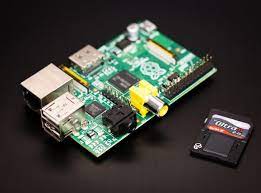
Arduino boards have revolutionized the world of electronics and programming. These boards have significantly simplified the process of creating projects and prototypes, making them accessible to everyone. Additionally, the vast community of Arduino enthusiasts has paved the way for a world of possibilities. The Arduino microcontroller is the brain behind these boards, and there are various types tailored to different needs. In this article, we’ll explore the different types of Arduino microcontrollers.

1. Arduino Uno

The Arduino Uno is one of the most popular microcontrollers and is famous for its ease of use and versatility. This board features an ATmega328P microcontroller, 14 digital input/output pins, six analog inputs, and a USB interface for easy programming. It comes with an Arduino IDE, making the coding process simple and accessible.

2. Arduino Mega

The Arduino Mega is a bigger version of the Uno board, packed with more pins for larger projects. This board features an ATmega2560 microcontroller, 54 digital input/output pins, 16 analog inputs, and larger memory. The increased number of pins and memory allows for more significant projects with more complicated functionalities.

3. Arduino Leonardo

The Arduino Leonardo is a microcontroller that features an ATmega32u4 microcontroller and USB connection. It comes with 20 digital input/output pins, 12 analog inputs, and a 16MHz crystal oscillator. The most significant advantage of the Leonardo board is that it can act as a keyboard or mouse, making it perfect for projects that require human interaction.

4. Arduino Nano

The Arduino Nano is a compact version of the Uno board and is perfect for projects that require a small form factor. It features an ATmega328P microcontroller, 14 digital input/output pins, 8 analog inputs, and a mini-USB interface for programming. The small size of the Nano board makes it ideal for projects that require portability, such as wearables and small robots.

5. Arduino Due

The Arduino Due is the most powerful board in the Arduino lineup and features an ARM-based microcontroller, the Atmel SAM3X8E. This board comes with 54 digital input/output pins, 12 analog inputs, 4 UARTs, and 2 DACs. The Due is ideal for projects that need more processing power, such as 3D printing, robotics, and automation.

6. Arduino Uno WiFi Rev2

The Arduino Uno WiFi Rev2 is an upgraded version of the Uno board and features the ATmega4809 microcontroller. This board comes with 14 digital input/output pins, six analog inputs, and onboard WiFi connectivity. The WiFi capability opens up a world of possibilities in remote monitoring and control.

In conclusion, Arduino boards have transformed the world of programming and electronics, making it easier for enthusiasts to create projects and prototypes. The different types of Arduino microcontrollers offer a wide range of specifications, making them ideal for different projects. Whether you’re a beginner or an experienced developer, there’s an Arduino board suited for your needs.

Previous Article

How to Resize and Crop an Image ...

Next Article

Open-Source Python IDEs to Program Like a ...

Matthew Lynch

Related articles More from author

  • Digital & Mobile Technology

    Online Strengths Tests You Can Take to Identify Your Strengths

    June 6, 2023
    By Matthew Lynch
  • Digital & Mobile Technology

    How to Fix the “Forbidden: You Don’t Have Permission to Access / On This Server” Error on Windows

    June 8, 2023
    By Matthew Lynch
  • Digital & Mobile Technology

    How to Use Boolean Values (Logical Values) in Excel

    June 4, 2023
    By Matthew Lynch
  • Digital & Mobile Technology

    How to Find Out What Cell Phone Service Someone Has

    May 28, 2023
    By Matthew Lynch
  • Digital & Mobile Technology

    How to Fix OneDrive’s “The Tag Present in the Reparse Point Buffer Is Invalid” Error on Windows

    August 4, 2023
    By Matthew Lynch
  • Digital & Mobile Technology

    How to Move Apps From the App Library to the Home Screen on Your iPhone

    September 8, 2023
    By Matthew Lynch

Search

Login & Registration

  • Register
  • Log in
  • Entries feed
  • Comments feed
  • WordPress.org

Newsletter

Signup for The Tech Edvocate Newsletter and have the latest in EdTech news and opinion delivered to your email address!

About Us

Since technology is not going anywhere and does more good than harm, adapting is the best course of action. That is where The Tech Edvocate comes in. We plan to cover the PreK-12 and Higher Education EdTech sectors and provide our readers with the latest news and opinion on the subject. From time to time, I will invite other voices to weigh in on important issues in EdTech. We hope to provide a well-rounded, multi-faceted look at the past, present, the future of EdTech in the US and internationally.

We started this journey back in June 2016, and we plan to continue it for many more years to come. I hope that you will join us in this discussion of the past, present and future of EdTech and lend your own insight to the issues that are discussed.

Newsletter

Signup for The Tech Edvocate Newsletter and have the latest in EdTech news and opinion delivered to your email address!

Contact Us

The Tech Edvocate
910 Goddin Street
Richmond, VA 23231
(601) 630-5238
[email protected]

Copyright © 2025 Matthew Lynch. All rights reserved.