The Tech Edvocate

Top Menu

  • Advertisement
  • Apps
  • Home Page
  • Home Page Five (No Sidebar)
  • Home Page Four
  • Home Page Three
  • Home Page Two
  • Home Tech2
  • Icons [No Sidebar]
  • Left Sidbear Page
  • Lynch Educational Consulting
  • My Account
  • My Speaking Page
  • Newsletter Sign Up Confirmation
  • Newsletter Unsubscription
  • Our Brands
  • Page Example
  • Privacy Policy
  • Protected Content
  • Register
  • Request a Product Review
  • Shop
  • Shortcodes Examples
  • Signup
  • Start Here
    • Governance
    • Careers
    • Contact Us
  • Terms and Conditions
  • The Edvocate
  • The Tech Edvocate Product Guide
  • Topics
  • Write For Us
  • Advertise

Main Menu

  • Start Here
    • Our Brands
    • Governance
      • Lynch Educational Consulting, LLC.
      • Dr. Lynch’s Personal Website
      • Careers
    • Write For Us
    • The Tech Edvocate Product Guide
    • Contact Us
    • Books
    • Edupedia
    • Post a Job
    • The Edvocate Podcast
    • Terms and Conditions
    • Privacy Policy
  • Topics
    • Assistive Technology
    • Child Development Tech
    • Early Childhood & K-12 EdTech
    • EdTech Futures
    • EdTech News
    • EdTech Policy & Reform
    • EdTech Startups & Businesses
    • Higher Education EdTech
    • Online Learning & eLearning
    • Parent & Family Tech
    • Personalized Learning
    • Product Reviews
  • Advertise
  • Tech Edvocate Awards
  • The Edvocate
  • Pedagogue
  • School Ratings

logo

The Tech Edvocate

  • Start Here
    • Our Brands
    • Governance
      • Lynch Educational Consulting, LLC.
      • Dr. Lynch’s Personal Website
        • My Speaking Page
      • Careers
    • Write For Us
    • The Tech Edvocate Product Guide
    • Contact Us
    • Books
    • Edupedia
    • Post a Job
    • The Edvocate Podcast
    • Terms and Conditions
    • Privacy Policy
  • Topics
    • Assistive Technology
    • Child Development Tech
    • Early Childhood & K-12 EdTech
    • EdTech Futures
    • EdTech News
    • EdTech Policy & Reform
    • EdTech Startups & Businesses
    • Higher Education EdTech
    • Online Learning & eLearning
    • Parent & Family Tech
    • Personalized Learning
    • Product Reviews
  • Advertise
  • Tech Edvocate Awards
  • The Edvocate
  • Pedagogue
  • School Ratings
  • US Battery as a Service Market Shifts Toward Fleet-Based Energy

  • The Startling Truth: Why Americans Distrust AI with Their Health

  • This Crucial Deadline for Banks Is Closer Than You Think

  • Baffling: CrowdStrike’s $500 Million AI Bet Reshapes Cybersecurity

  • This Crucial Autonomous Driving Rule Could Cost You Everything

  • Baffling: Microsoft AI CEO Demands Halt to Conscious AI Development

  • O seară în ritmul tău: atmosfera divertismentului de cazinou pe internet

  • Outrageous: AppLovin Hit With Lawsuit Over AI Claims — What Investors Need to Know

  • 9 Critical Ways AI Investment Fraud Is Quietly Draining Your Bank Account

  • Is the AI Bubble Bursting? OpenAI’s Funding Woes Revealed

Digital & Mobile Technology
Home›Digital & Mobile Technology›Ethernet Cables Explained

Ethernet Cables Explained
By Matthew Lynch
June 8, 2023
0
Spread the love

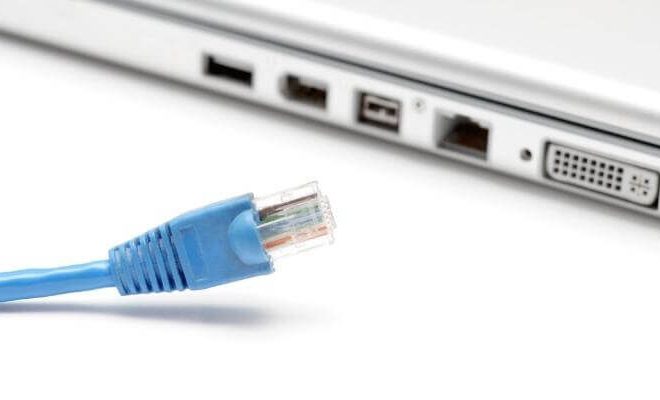
Ethernet cables are one of the most important components of any computer network, used to connect devices with one another and to transmit data over the internet. These cables come in a variety of sizes and types, each with its own unique features and applications. Here, we explore the different types of Ethernet cables available in the market and their functionalities.

Twisted Pair Cable: This is the standard Ethernet cable that is used in most networks. It comes in two varieties- the unshielded twisted pair (UTP) and shielded twisted pair (STP). The UTP is more common, with a plastic coating and four pairs of wires internally twisted to minimize interference. The STP, on the other hand, has a shielded layer that covers the wiring, making it less susceptible to electronic noise.

Coaxial Cable: The Coaxial cable is an older type of Ethernet cable, predominantly used in cable TV and internet services. It is made using a single copper conductor that transmits the signal over a central core, surrounded by a shielded outer layer. Due to the large size of coaxial cables, they are not used in most modern-day networks.

Fibre Optic Cable: The fibre optic cable is the latest entrant in the Ethernet cable market. It uses light to transmit data, rather than electrical signals in other cables. Optic fibres are made of glass or plastic, and the cables made with them are thin, lightweight, and capable of transmitting data over long distances at high speeds. Fibre optic cables are, therefore, the preferred choice for businesses and data centres, where high-speed data transfer is essential.

There are four primary types of Ethernet Cables based on transmission speed: Category 5 (Cat5), Category 5e (Cat5e), Category 6 (Cat6) and Category 7 (Cat7).

Cat5: These Ethernet cables were introduced in 1995 and were the first to be standardized. They have a maximum data transfer rate of 100Mbps and can transmit data up to 100m. Though you won’t find many of these cables used today, they are affordable and can still serve some purposes.

Cat5e: These cables are similar to Cat5, but with upgraded capabilities. The “e” in the name stands for enhanced. Like their predecessor, Cat5e cables can transfer data up to 100m, but they support faster data transmission rates of up to 1000Mbps.

Cat6: Cat6 cables have better insulation and shielding, which allows for more rigorous data transmission. They support data transfer rates of up to 10Gbps and have a maximum length of 100m.

Cat7: Cat7 Cables are top of the line in terms of Ethernet cable technology, designed for professional-grade networks. They have a shielding layer around every pair of wires, making them less susceptible to external interference. They are capable of data transfer rates up to 100Gbps and have a maximum range of 100m.

Conclusion:

Ethernet Cables have revolutionized the way we connect our devices, and there is a wide variety to choose from depending on your needs. Different cables have different specifications and may not be compatible with every device you use. Therefore, it is important to understand the different types and choose the one that best meets your requirements. With the right Ethernet Cable, you can ensure seamless data transfers and connections within your network.


Previous Article

HDCP Error: What It Is and How ...

Next Article

How to Resend an Email in Outlook

Matthew Lynch

Related articles More from author

  • Digital & Mobile Technology

    The Best Apps for Finance and Investing News

    June 12, 2023
    By Matthew Lynch
  • Digital & Mobile Technology

    The Best Sites for Finding Vintage Jewelry

    June 12, 2023
    By Matthew Lynch
  • Digital & Mobile Technology

    How to Turn Disney+ Subtitles On or Off

    June 8, 2023
    By Matthew Lynch
  • Digital & Mobile Technology

    The 5 Best Free Music Players for Windows

    June 6, 2023
    By Matthew Lynch
  • Digital & Mobile Technology

    Player Movement in Unity Explained: Rigidbody and Collider

    June 23, 2023
    By Matthew Lynch
  • Digital & Mobile Technology

    How to Use the IF-THEN Function in Excel

    May 30, 2023
    By Matthew Lynch

Search

Login & Registration

  • Log in
  • Entries feed
  • Comments feed
  • WordPress.org

Newsletter

Signup for The Tech Edvocate Newsletter and have the latest in EdTech news and opinion delivered to your email address!

About Us

Since technology is not going anywhere and does more good than harm, adapting is the best course of action. That is where The Tech Edvocate comes in. We plan to cover the PreK-12 and Higher Education EdTech sectors and provide our readers with the latest news and opinion on the subject. From time to time, I will invite other voices to weigh in on important issues in EdTech. We hope to provide a well-rounded, multi-faceted look at the past, present, the future of EdTech in the US and internationally.

We started this journey back in June 2016, and we plan to continue it for many more years to come. I hope that you will join us in this discussion of the past, present and future of EdTech and lend your own insight to the issues that are discussed.

Newsletter

Signup for The Tech Edvocate Newsletter and have the latest in EdTech news and opinion delivered to your email address!

Contact Us

The Tech Edvocate
910 Goddin Street
Richmond, VA 23231
(601) 630-5238
[email protected]

Copyright © 2026 Matthew Lynch. All rights reserved.