Elon Musk’s Bold SpaceX Starship Launch Increase: What It Means for Texas and the Planet
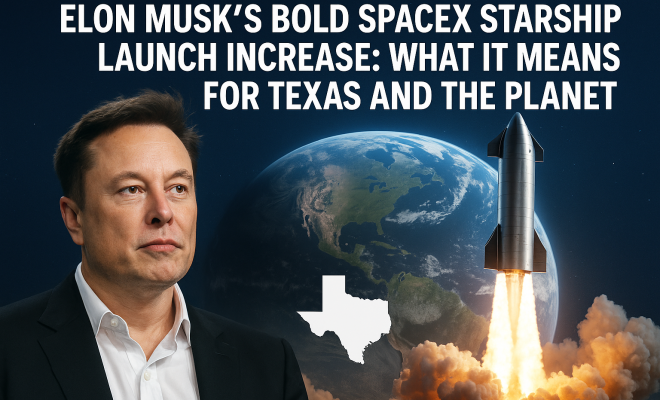
Elon Musk’s SpaceX has never been one to shy away from ambitious goals. From reusable rockets to a Mars colony, their vision often feels plucked straight from science fiction. But a recent request made to the U.S. Federal Aviation Administration (FAA) reveals a truly staggering ambition for their Starbase facility in South Texas: a proposal to launch their colossal Starship rocket up to 456 times per year. Let that sink in for a moment. Four hundred and fifty-six launches. That’s more than one launch per day, every day, from a single site. This isn’t just a slight ramp-up; it’s a monumental, almost dizzying, SpaceX Starship launch increase that promises to reshape not only the aerospace industry but also the delicate ecosystem and community surrounding Boca Chica Beach.
To put this into perspective, the current operational limit, established after extensive environmental reviews, is a mere 25 launches annually. So, SpaceX is asking for an eighteen-fold increase. This isn’t just about sending satellites into orbit; it’s about pushing humanity’s reach further and faster than ever before. But as with all grand visions, particularly those impacting sensitive environments, this proposal comes with significant questions and, predictably, a wave of opposition. The FAA, recognizing the sheer scale of this request and its potential ramifications, has initiated a Programmatic Environmental Impact Statement (PEIS). This isn’t a quick rubber stamp; it’s a deep dive into the broader environmental and social impacts, a process designed to scrutinize every angle of this unprecedented plan.
The controversy is already reaching a fever pitch, fueled by the high-profile nature of SpaceX and its charismatic, often polarizing, leader, Elon Musk. It’s a classic clash between the relentless march of technological progress and the imperative to protect our planet and its communities. For many, the idea of nearly daily Starship launches from a coastal wildlife refuge is a terrifying prospect. For others, it’s the necessary, albeit noisy, price of accelerating humanity’s future in space. This debate isn’t just playing out in regulatory offices; it’s becoming a viral sensation, a touchstone issue that encapsulates the complex challenges of balancing innovation with responsibility.
The Staggering Scale of SpaceX’s Proposal: 456 Flights Annually
Imagine the sky above South Texas not just occasionally rumbling with a rocket launch, but potentially doing so almost every single day. That’s the future SpaceX envisions with its request for 456 Starship launches per year from its Starbase facility. This isn’t a typo; it’s the astonishing number that has sent shockwaves through environmental circles and local communities alike. To fully grasp the magnitude, consider that the current authorization allows for just 25 launches per year. We’re talking about an increase that isn’t incremental; it’s exponential, an 18-fold jump that would transform the sleepy coastal region into one of the busiest spaceports on Earth.
This proposed SpaceX Starship launch increase isn’t just about boosting the frequency of rockets taking off. It implies a massive expansion of ground operations, propellant production, transport, and a constant hive of activity around the launch site. Each launch isn’t a singular event; it’s the culmination of weeks or months of preparation, testing, and logistical orchestration. Multiply that by 456, and you begin to understand the sheer industrial scale being proposed. The current Starbase facility, while impressive, was designed for a far lower tempo. This kind of operational tempo would necessitate significant infrastructure upgrades, more personnel, and an almost continuous cycle of preparation and recovery, fundamentally altering the character of the entire area.
What drives such an aggressive expansion plan? The answer lies in Starship’s ambitious mission profile. Starship isn’t just another rocket; it’s designed to be a fully reusable, multi-purpose vehicle capable of everything from satellite deployment to lunar and Martian missions, and even point-to-point travel on Earth. To make space travel truly routine and affordable, as Musk frequently advocates, the cost per launch needs to plummet, and that requires a high flight rate. SpaceX believes that only through this kind of rapid iteration and frequent launch schedule can they truly achieve their long-term goals of making humanity a multi-planetary species. It’s a vision that demands an almost factory-like production and launch tempo, pushing the boundaries of what’s currently considered feasible.
The FAA’s PEIS: A Deep Dive into Environmental Scrutiny
When SpaceX submitted its audacious request for a massive SpaceX Starship launch increase, the U.S. Federal Aviation Administration (FAA) had no choice but to initiate a thorough and comprehensive review. This isn’t just a permit application; it’s a proposal with far-reaching implications, and the FAA’s response is the initiation of a Programmatic Environmental Impact Statement (PEIS). Think of a PEIS not as a simple checklist, but as a forensic investigation into every conceivable impact this level of activity could have. It’s a process mandated by the National Environmental Policy Act (NEPA), designed to ensure that federal agencies consider the environmental consequences of their actions before making decisions.
The PEIS will cast a wide net, looking beyond the immediate launchpad to assess cumulative effects. This includes analyzing everything from air quality impacts from exhaust plumes and increased vehicle traffic, to water quality implications from potential spills or runoff, and the effects on soil and vegetation. Noise pollution, a significant concern for nearby residents, will be meticulously modeled and assessed, as will the potential for structural vibrations to affect nearby buildings or infrastructure. Crucially, the PEIS will also delve into socio-economic factors, considering how this massive increase in activity might affect local communities, infrastructure, public services, and even the local economy, both positively and negatively. (See: FAA Programmatic Environmental Impact Statement.)
A critical component of this PEIS is the public scoping process, which the FAA has already begun. This is where the public, environmental groups, and other stakeholders get to voice their concerns, provide data, and identify issues they believe the FAA must address. These public meetings aren’t just formalities; they are crucial opportunities for local residents, who live with the day-to-day realities of Starbase, to share their experiences and fears directly with the regulators. Their input helps shape the scope and depth of the environmental study, ensuring that all relevant concerns are on the table. This is where the human element of environmental regulation truly comes to the forefront, as personal anecdotes and community anxieties meet scientific assessment and regulatory frameworks.
Coastal Texas: A Hotbed of Biodiversity Under Threat
The Starbase facility isn’t just any piece of land; it’s situated in a remarkably sensitive and biodiverse region of South Texas, right on the Gulf Coast. This area, particularly the Boca Chica Beach and Laguna Madre regions, is a critical habitat for a vast array of wildlife, including several endangered and threatened species. The proposed SpaceX Starship launch increase, with its nearly daily cadence of rocket firings, poses an existential threat to this delicate ecological balance, turning an already tense situation into a potential ecological crisis. Environmental groups and local conservationists are sounding the alarm, and for good reason. For more context, see ambitious goals in technology investments.
Consider the wildlife. The Laguna Madre is one of only five hypersaline lagoons in the world, a unique ecosystem teeming with life. It’s a vital migratory bird flyway, with millions of birds, including federally protected species like the Piping Plover and Red Knot, relying on its pristine shores and wetlands for feeding and nesting. Sea turtles, particularly the critically endangered Kemp’s Ridley sea turtle, nest on Boca Chica Beach. Launch noise, bright lights, and increased human activity can disorient hatchlings, disrupt nesting patterns, and cause severe stress to adult turtles. Beyond the immediate impact, the constant sonic booms and vibrations from launches can reverberate through the water and land, affecting marine life, fish populations, and even the burrowing invertebrates that form the base of the food chain.
The concerns extend beyond just direct disturbance. There’s the ever-present risk of debris dispersal. While SpaceX aims for controlled landings, accidents happen, and the sheer volume of proposed launches inevitably increases the probability of an anomaly. Debris, whether from failed tests or unexpected events, could scatter across protected wetlands, contaminate sensitive habitats with hazardous materials, or physically injure wildlife. Then there’s the question of air and water quality. Rocket exhaust contains various chemicals, and while individual launches might have localized effects, 456 launches per year could lead to cumulative atmospheric impacts. Increased boat traffic for recovery operations and potential spills also threaten the fragile aquatic environment. Protecting this unique coastal environment is not just a local issue; it has national and international implications for biodiversity conservation.
The Noise and Vibration: A Daily Reality for Residents
For the residents living near Starbase, the proposed SpaceX Starship launch increase isn’t an abstract concept; it’s a looming alteration to their daily lives. The primary, most immediate concern is the sheer noise and structural vibrations that would accompany nearly daily rocket launches. Current launches, even at a lower frequency, are already incredibly loud, often described as a concussive force that rattles windows, shakes foundations, and makes conversations impossible. Imagine that, not just a few times a year, but potentially every single day. The quality of life for those in Boca Chica Village and surrounding areas would fundamentally change, transforming their homes into front-row seats for an industrial operation of unprecedented scale.
Rocket launches generate a unique type of sound and vibration. It’s not just loud; it’s a deep, resonant rumble that penetrates homes and bodies. Sonic booms, created as the rockets break the sound barrier, can be felt miles away, startling people and animals. The cumulative effect of this constant assault on the senses is a major worry. Chronic exposure to high levels of noise can lead to stress, sleep disturbances, and even health problems. For a community that chose to live in a relatively quiet, remote area, this proposed shift represents an egregious intrusion and a complete disregard for their peaceful existence. Property values, too, are a significant concern, as few people would willingly buy a home in an area subjected to daily rocket noise and vibrations.
Beyond the noise, there’s the very real threat of structural damage. Residents have already reported cracks in walls and foundations following previous, less frequent launches. The sheer power generated by Starship’s Raptor engines is immense. A daily cadence of these powerful launches increases the likelihood of cumulative damage to homes and infrastructure, potentially rendering properties uninhabitable over time. Who would be responsible for these damages? What recourse would homeowners have? These are complex questions that the PEIS and subsequent legal battles will undoubtedly have to address. The human cost of this ambitious expansion, in terms of peace, property, and well-being, is a central, unavoidable part of the debate.
Legal Battle Lines: Environmental Groups and Local Communities Gear Up
It’s no surprise that a proposal of this magnitude, impacting a sensitive environmental area and residential communities, is setting the stage for protracted legal battles. Environmental groups and local residents are not sitting idly by; they are actively organizing, gathering evidence, and preparing for what promises to be a complex and lengthy fight against the proposed SpaceX Starship launch increase. The legal landscape here is multi-faceted, involving environmental law, property rights, and regulatory compliance, with both sides undoubtedly marshalling significant resources.
On one side, organizations like the Sierra Club, the Center for Biological Diversity, and local conservation groups are poised to challenge the FAA’s eventual decision, particularly if they believe the PEIS does not adequately address environmental concerns or if the mitigation measures are insufficient. Their arguments will likely center on violations of the Endangered Species Act, the National Environmental Policy Act (NEPA), and other federal and state environmental regulations. They will highlight the unique biodiversity of the Laguna Madre and Boca Chica Beach, presenting scientific data on the adverse effects of noise, light, debris, and habitat disturbance on protected species and ecosystems. They’ll also scrutinize the FAA’s process itself, ensuring that all public input is genuinely considered and that the environmental analysis is robust and unbiased. (See: NASA's partnership with SpaceX.)
On the other side, local residents, potentially forming community action groups, will likely focus on property rights, public nuisance claims, and the detrimental impact on their quality of life. They will document noise levels, structural damage to homes, and the psychological toll of living under constant threat of daily rocket launches. Their legal strategy could involve seeking injunctions, demanding compensation for property devaluation, or challenging the permits on grounds of insufficient public health and safety considerations. This isn’t just about abstract legal principles; it’s about people’s homes, their investments, and their peace of mind. The stakes are incredibly high for everyone involved, and the precedent set here could have implications for other spaceport developments across the nation.
The Economic Ripple Effect: Boom or Bust for Local Real Estate?
The proposed SpaceX Starship launch increase presents a fascinating, albeit complex, economic dilemma for the South Texas region, particularly for the local real estate market. On the one hand, a major industrial expansion like this typically brings jobs, investment, and a boost to local businesses. On the other hand, the specific nature of this industry – noisy, impactful rocket launches – could have a profoundly negative effect on residential property values and the desirability of living in the immediate vicinity of Starbase. For more context, see the future of AI and its impact on industries.
For commercial real estate, there might be a boom. Increased activity at Starbase could drive demand for industrial space, warehouses, and logistics facilities to support the increased launch tempo. There could be an influx of SpaceX employees and contractors, boosting demand for rentals and potentially new housing developments further afield from the launch site. Local service industries, from restaurants to retail, could see increased patronage. This is the classic economic argument for industrial development: jobs, growth, and prosperity.
However, the residential real estate market around Boca Chica and other nearby coastal communities faces a far bleaker outlook. Who wants to buy a home that shakes daily from rocket launches? The constant noise, vibrations, and potential for structural damage are significant deterrents. Existing homeowners might find their property values plummet, making it difficult or impossible to sell. This could create a pocket of undesirable real estate, trapping residents who cannot afford to move or cannot find buyers. The economic ripple effect, therefore, isn’t uniformly positive. It’s a tale of two markets: potential growth for commercial and industrial segments, but a significant risk of depreciation and hardship for residential property owners. This dichotomy will be a key point of contention in public hearings and legal proceedings, as communities weigh economic benefits against quality of life and property rights.
Investing in the Future: Assessing Regulatory Risks for SpaceX
For investors eyeing SpaceX, this massive SpaceX Starship launch increase proposal, and the ensuing regulatory and environmental challenges, introduces a significant layer of risk. While SpaceX is a private company, its valuation and future prospects are intrinsically linked to its ability to operate and expand. The current controversy highlights the critical importance of regulatory compliance and the potential for legal battles to slow down or even derail ambitious plans. Smart investors and financial analysts will be closely scrutinizing the FAA’s PEIS process and the unfolding legal landscape.
Protracted legal battles, injunctions, or even unfavorable rulings could significantly impact SpaceX’s operational timeline and financial projections. Delays in achieving the desired launch cadence mean delays in deploying Starlink satellites, delays in lunar missions, and ultimately, delays in generating revenue from Starship operations. Each delay costs money, ties up resources, and potentially allows competitors to catch up. Furthermore, if the FAA imposes stricter environmental mitigation requirements, these could add substantial costs to Starship operations, impacting profitability.
On the flip side, if SpaceX successfully navigates these hurdles and secures approval for a high launch rate, it could solidify its position as a dominant force in space launch, potentially unlocking unprecedented revenue streams. Investors will be looking for clear signals from the FAA and the courts. This situation underscores the fact that even the most innovative and technologically advanced companies are still subject to the laws and regulations of the land. For those investing in the space sector, understanding these regulatory risks, and how they might impact a company’s ability to execute its vision, is just as crucial as assessing its technological prowess. It’s a reminder that the future of space isn’t just about rockets; it’s about permits, environmental reviews, and legal battles on the ground.
The Public Debate: Technology vs. Environment
At its core, the SpaceX Starship launch increase controversy is a microcosm of a much larger, global debate: the tension between relentless technological advancement and the imperative of environmental preservation. It’s a deeply emotional and often polarizing discussion, with passionate advocates on both sides. On one hand, proponents of SpaceX’s vision argue that a high launch cadence is essential for humanity’s progress. They see Starship as the key to making space truly accessible, enabling everything from advanced scientific research and climate monitoring satellites to the ultimate goal of establishing human colonies on other planets. For them, the future of humanity depends on pushing these boundaries, and some environmental impacts are an acceptable, even necessary, trade-off. (See: New York Times coverage of SpaceX launches.)
This perspective often emphasizes the long-term benefits of space exploration, arguing that the knowledge and resources gained from space could ultimately help address environmental challenges on Earth. They might point to the economic benefits, the inspiration for future generations, and the sheer audacity of human ingenuity. They believe that innovation can, and will, find solutions to any environmental problems created, perhaps through better rocket fuels, quieter engines, or advanced mitigation techniques. To slow down this progress, they argue, is to betray humanity’s potential.
Conversely, environmentalists and local residents argue that no amount of technological promise justifies the destruction of irreplaceable natural habitats or the severe disruption of human communities. They contend that unchecked progress, without proper environmental stewardship, is short-sighted and ultimately unsustainable. Their arguments often highlight the intrinsic value of biodiversity, the rights of communities to live in peace, and the long-term consequences of sacrificing local ecosystems for distant dreams. They emphasize that there’s only one Earth, and its protection must take precedence, especially when viable alternatives or more responsible approaches might exist. This isn’t just about a rocket; it’s about our values, our priorities, and the kind of future we want to build – one that either balances ambition with responsibility or risks leaving a trail of environmental damage in its wake.
What Happens Next: Navigating the Regulatory Labyrinth
So, what’s the immediate future for this colossal SpaceX Starship launch increase proposal? The ball is currently firmly in the FAA’s court, as they meticulously work through the Programmatic Environmental Impact Statement (PEIS). This isn’t a swift process. A PEIS, by its very nature, is designed to be comprehensive, involving extensive data collection, scientific modeling, and public consultation. We are likely looking at many months, if not years, before a final decision is rendered.
Following the public scoping meetings, the FAA will analyze all the input received and use it to refine the scope of its environmental assessment. They will then draft the PEIS, which will detail their findings on the environmental and social impacts of the proposed launch increase, as well as consider various alternatives, including a lower launch rate or different mitigation strategies. This draft PEIS will then be released for another round of public comment, providing yet another opportunity for stakeholders to review the findings and voice their concerns or support. This iterative process ensures thoroughness, but it also means significant delays.
Once the final PEIS is completed, the FAA will issue a Record of Decision (ROD). This ROD will outline whether SpaceX is granted permission for the increased launches, what conditions or mitigation measures might be required, or if the request is denied. However, even a favorable ROD for SpaceX is unlikely to be the final word. Given the strong opposition from environmental groups and local residents, it’s almost certain that any approval will be challenged in court. These legal battles could further delay implementation, potentially for years, as injunctions are sought and appeals are heard. SpaceX, for all its ambition, will have to navigate this complex regulatory and legal labyrinth, a journey that demands patience, significant resources, and a willingness to engage with, and hopefully address, the very real concerns of those most directly affected by its grand vision.
Trending Now
- our breakdown of ramp’s staggering $60 billion valuation: 8 reasons why investors are piling in
- this guide on uncovering the cost: why this ai startup’s collapse is a troubling sign for tech
- The Silent Crisis: Why Your Next Console Will Cost a Fortune
- Advisers urged to steer clear of ‘hyperscale’ AI models
- this guide on the quiet crisis: is ai in education creating an ‘illusion of learning’?
Frequently Asked Questions
How many times does SpaceX plan to launch the Starship each year?
SpaceX has proposed to launch its Starship rocket up to 456 times per year from its Starbase facility in South Texas. This ambitious goal represents an eighteen-fold increase from the current operational limit of 25 launches annually.
What are the environmental concerns regarding SpaceX's Starship launches?
The proposed increase in SpaceX Starship launches raises significant environmental concerns, particularly regarding the impact on the delicate ecosystem and community surrounding Boca Chica Beach. The FAA has initiated a Programmatic Environmental Impact Statement (PEIS) to thoroughly assess these potential ramifications.
What is the current launch limit for SpaceX's Starship?
Currently, SpaceX is limited to 25 launches annually, a cap established following extensive environmental reviews. The proposed increase to 456 launches represents a dramatic shift in operations at the Starbase facility.
Why is Elon Musk's SpaceX controversial?
Elon Musk's SpaceX is often viewed as controversial due to its ambitious goals, high-profile nature, and the polarizing personality of Musk himself. The proposed increase in Starship launches has ignited debates about balancing technological advancement with environmental protection.
What is a Programmatic Environmental Impact Statement (PEIS)?
A Programmatic Environmental Impact Statement (PEIS) is a comprehensive review process initiated by the FAA to evaluate the broader environmental and social impacts of significant proposals, such as SpaceX's request for an increased number of Starship launches. It aims to scrutinize all potential effects thoroughly.
What did we miss? Let us know in the comments and join the conversation.