Devastating: Hackers Now Physically Threaten CEOs – How to Protect Executives From Ransomware
“`html
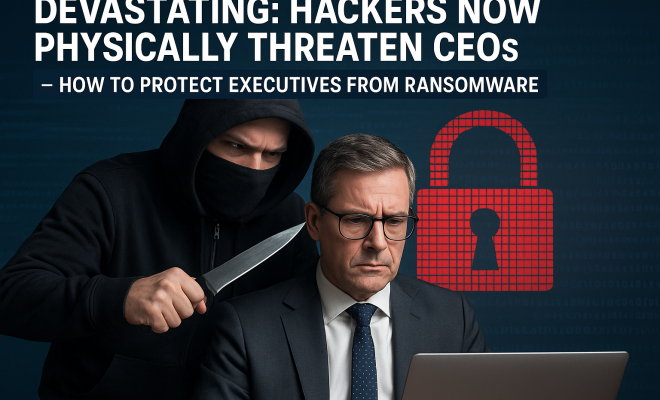
Ransomware isn’t just a digital headache anymore. It’s evolved into something far more insidious, pushing the boundaries of corporate risk beyond the firewall and into the physical world. We’re no longer talking about mere data breaches or system shutdowns; a recent report from Semperis paints a truly disturbing picture: hackers are increasingly weaponizing artificial intelligence to not only execute devastating digital attacks but also to orchestrate physical threats against executives and their families. Yes, you read that right. Your CEO’s personal safety, and that of their loved ones, could be on the line.
The 2026 Ransomware Risk Report, based on a survey of 1,200 IT and security professionals, reveals a chilling statistic: 87% of ransomware attacks now leverage AI. But the truly alarming part is the significant rise in physical threats designed to extort payments. More than half the time, these threats aren’t just empty words; hackers are following through. This isn’t just about financial loss; it’s about a direct assault on the well-being of the people leading our organizations. So, what can companies do? It’s time to rethink our security strategies and learn how to protect executives from ransomware threats, both digital and physical.
1. Understand the Evolving Threat Landscape: Ransomware’s New Brutality
The days of ransomware being a purely IT department problem are long gone. What started as a digital extortion scheme has morphed into a sophisticated, multi-faceted attack vector that now includes a terrifying physical dimension. The Semperis report serves as a stark wake-up call, indicating that AI isn’t just making attacks more efficient; it’s making them more personal and more dangerous. Imagine a scenario where a company’s critical systems are locked down, sensitive data is exfiltrated, and then, as if that weren’t enough, the CEO receives an anonymous message detailing their child’s school schedule or a spouse’s daily commute. This isn’t a plot from a Hollywood thriller; it’s the grim reality facing businesses today.
The shift towards physical threats is a calculated escalation by cybercriminals. They understand that for many organizations, the financial cost of a ransom pales in comparison to the potential harm to human life. This psychological leverage is incredibly powerful, putting immense pressure on leadership to comply. Companies need to grasp that ransomware is no longer just about data integrity or operational continuity; it’s about personal safety and the profound ethical dilemmas that arise when human lives become bargaining chips. Understanding this brutal evolution is the first step in formulating an effective defense.
2. Fortify Identity Systems (Especially Active Directory): The Primary Digital Entry Point
Despite the frightening new physical dimension, the digital foundation of these attacks remains critical. The Semperis report clearly states that identity systems, particularly Active Directory (AD), are prime targets, with a staggering 87% of attacks exploiting them. This isn’t surprising when you consider that AD is often the central nervous system of an organization’s IT infrastructure, controlling access to virtually everything. Compromise AD, and you effectively own the network.
Yet, here’s the kicker: only about half of companies have adequate identity recovery solutions in place. This is a gaping vulnerability. Protecting AD isn’t just about preventing initial access; it’s about having robust, immutable backups and rapid recovery capabilities that can withstand a sophisticated attack. Think about it: if your identity system is compromised, attackers can impersonate legitimate users, escalate privileges, deploy ransomware, and exfiltrate data undetected. Investing in dedicated AD security, continuous monitoring, and proven recovery strategies is no longer optional; it’s absolutely essential to how to protect executives from ransomware threats, by cutting off the digital head of the snake.
3. Implement Executive Protection Protocols: Beyond the Boardroom
Given the rise of physical threats, traditional corporate security measures are no longer sufficient for executives. Companies must implement dedicated executive protection protocols that extend beyond the office walls. This isn’t about having a bodyguard accompany the CEO to every meeting; it’s about a comprehensive, intelligence-driven approach to personal security. This could involve residential security assessments, secure transportation, and even discreet personal security details for high-risk individuals or during periods of heightened threat.
These protocols should be developed in conjunction with experienced security consultants who specialize in executive protection. They need to be dynamic, adapting to threat intelligence and the specific risk profile of each executive. Furthermore, it’s crucial to educate executives and their families on personal security best practices, such as being aware of their surroundings, recognizing suspicious activity, and understanding communication protocols in an emergency. The goal is to create a layered defense that protects them both at work and at home.
4. Develop a Robust Incident Response Plan with a Physical Threat Component: Preparing for the Worst
Every organization should have a comprehensive incident response plan for cyberattacks. However, in light of these new physical threats, that plan needs a significant update. It must now include specific protocols for responding to threats against executives and their families. This means clearly defined escalation paths, communication strategies, and coordination with law enforcement agencies.
Imagine a scenario where a hacker threatens to harm an executive’s child unless a ransom is paid. Who do you call first? What information do you share? How do you coordinate with local police or the FBI? These are questions that need to be answered *before* an incident occurs. The plan should outline roles and responsibilities, establish secure communication channels, and include clear procedures for information sharing, evidence preservation, and psychological support for affected individuals. A well-rehearsed plan can make all the difference in a high-stress situation, offering a clear roadmap for how to protect executives from ransomware threats when they turn physical. (See: CDC on ransomware threats.)
5. Enhance Digital Footprint Management for Executives: Minimizing Exposure
In our hyper-connected world, executives often have a significant digital footprint, from public social media profiles to news articles and online directories. This information, seemingly innocuous, can be a goldmine for cybercriminals looking to identify targets, gather personal details, and craft convincing phishing attacks or physical threats. Hackers can piece together astonishingly detailed profiles from publicly available data, revealing everything from home addresses to family members’ names and hobbies.
Organizations must proactively manage the digital footprints of their executives. This involves reviewing public profiles, identifying sensitive information that could be weaponized, and implementing strategies to minimize exposure. This could mean adjusting privacy settings on social media, requesting removal from certain online directories, or even using reputation management services to scrub undesirable information. The less personal information available online, the harder it is for attackers to craft credible threats. For more context, see 84% of Ransomware Attacks Use AI.
6. Invest in Advanced AI-Powered Threat Detection and Prevention: Fighting Fire with Fire
Since 87% of ransomware attacks are now weaponizing AI, it only makes sense to fight fire with fire. Traditional, signature-based security tools are increasingly ineffective against sophisticated, AI-driven threats that can rapidly evolve and evade detection. Organizations need to invest in advanced AI-powered threat detection and prevention solutions that can identify anomalous behavior, predict attack patterns, and respond in real-time.
These solutions go beyond simply blocking known malware; they analyze network traffic, user behavior, and system logs for subtle indicators of compromise that might signal an impending attack. They can detect polymorphic malware, zero-day exploits, and sophisticated phishing attempts that might otherwise slip through the cracks. Leveraging AI in your defense strategy is crucial for staying ahead of threat actors who are already employing it against you, offering a critical layer in how to protect executives from ransomware threats from a technical standpoint.
7. Foster a Culture of Security Awareness, Especially at the Top: The Human Firewall
Technology alone is never enough. The human element remains the weakest link in many security chains, and executives are no exception. In fact, due to their high-profile nature and access to critical information, they are often prime targets for social engineering attacks, such as phishing, whaling, and vishing. A single click on a malicious link or a seemingly innocent conversation can open the door for a devastating ransomware attack.
Therefore, fostering a robust culture of security awareness is paramount, and it must start at the top. Regular, targeted security training for executives and their support staff is essential. This training should cover the latest threat vectors, demonstrate real-world examples of attacks, and emphasize the personal risks involved. It’s not just about compliance; it’s about instilling a mindset where security is a shared responsibility and a constant priority. When executives understand the gravity of the threat, they are more likely to champion and adhere to robust security practices.
8. Evaluate and Secure Third-Party Risks: Your Supply Chain is Their Entry Point
It’s a common story: a major organization gets breached not directly, but through a vulnerable third-party vendor. The supply chain has become a lucrative entry point for cybercriminals, and ransomware attackers are no different. If an executive’s data or access is managed by a third-party service – whether it’s an HR platform, a travel booking site, or even a personal assistant service – that vendor’s security posture directly impacts the executive’s safety.
Organizations must conduct rigorous due diligence on all third-party vendors, especially those with access to sensitive executive information or direct connections to the corporate network. This includes reviewing their security certifications, incident response plans, and data protection policies. Regular audits and continuous monitoring of vendor security are also crucial. Remember, you can have the most robust internal security, but if your partners have weak links, you’re still exposed. Securing the entire ecosystem is a vital part of how to protect executives from ransomware threats.
9. Secure Cyber Insurance with Physical Threat Coverage: A Safety Net for the Unthinkable
While prevention is always the best strategy, the reality is that no organization can be 100% immune to a sophisticated, AI-driven ransomware attack that also includes physical threats. This is where cyber insurance plays a critical role, but not just any policy will do. Companies need to carefully evaluate their cyber insurance coverage to ensure it explicitly addresses the costs associated with physical threats against executives and their families.
This might include coverage for executive protection services, crisis management, psychological counseling, and even relocation expenses if necessary. Many standard cyber policies focus solely on data breach response and business interruption. Given the evolving threat landscape, it’s crucial to consult with insurance brokers who specialize in cybersecurity and understand the nuances of these expanded risks. A comprehensive policy can provide a much-needed safety net, helping organizations navigate the unthinkable consequences of a successful attack and providing resources to mitigate harm when all other defenses fail.
10. The Ethical Dilemma of Ransomware: When Lives are on the Line
The rise of physical threats pushes companies into an agonizing ethical quandary. Historically, the debate around paying a ransom centered on financial costs, the precedent it sets, and potential regulatory fines. Now, when an executive’s family is threatened, the stakes become immeasurably higher. It’s no longer just a business decision; it’s a moral one, pitting corporate policy against human life. This is a burden no leader should have to face unprepared. (See: New York Times on ransomware attacks.)
Companies need to establish clear ethical frameworks and decision-making protocols *before* such an event occurs. This involves consulting with legal experts, ethicists, and crisis management specialists. What is the company’s stance on paying a ransom when physical safety is at risk? How will the board support an executive who faces such a threat? Transparency and support for affected individuals must be paramount. This isn’t just about financial recovery; it’s about the psychological and emotional toll on individuals and the entire organization. A proactive discussion about these difficult ethical considerations is a non-negotiable step in how to protect executives from ransomware threats that now carry a human cost.
11. Proactive Threat Intelligence and Dark Web Monitoring: Staying Ahead of the Curve
To effectively protect executives, organizations can’t just react; they must anticipate. This means investing in proactive threat intelligence capabilities that go beyond standard cybersecurity feeds. Specialized services can monitor the dark web, underground forums, and even social media for mentions of your company, your executives, or indicators of potential targeting. For more context, see Chilling Ransom: 38 Maritime Giants Held Hostage By Cyber Crooks.
These intelligence efforts can uncover early warnings of planned attacks, identify specific threat actors, and even reveal personal information about executives that has been compromised or is being discussed for exploitation. Think of it as an early warning system. Knowing that an executive’s home address or a child’s school has appeared on a dark web forum, for example, allows security teams to implement immediate protective measures, such as increased surveillance or direct engagement with law enforcement, well before a direct threat is made. This kind of intelligence is a game-changer for how to protect executives from ransomware threats that leverage personal information.
12. Secure Communications and Personal Devices: Closing the Backdoors
Executives, by nature, are highly connected. They use personal phones, tablets, and home networks, often blurring the lines between personal and corporate devices. Each of these can be a potential backdoor for attackers. A compromised personal device, even one not directly connected to the corporate network, can provide a wealth of personal information that aids in crafting physical threats or sophisticated social engineering attacks.
Organizations need to provide executives with secure communication tools and guidance on securing their personal devices and home networks. This might involve issuing hardened corporate devices for all work-related communications, implementing mobile device management (MDM) solutions, and offering VPNs for home network access. Crucially, it also means educating executives on the risks associated with public Wi-Fi, unsecured personal apps, and even smart home devices that could inadvertently expose personal routines. Closing these “personal backdoors” is a critical, often overlooked, aspect of how to protect executives from ransomware threats.
13. Regular Security Audits and Penetration Testing with Executive Focus: Testing Your Defenses
You wouldn’t build a fortress without testing its walls, and cybersecurity should be no different. Regular, comprehensive security audits and penetration testing are essential to identify vulnerabilities before attackers do. When it comes to executive protection, these tests need to have a specific focus on the attack vectors most likely to be used against high-profile individuals.
This could include “red teaming” exercises that simulate a real-world attack, attempting to gain access to executive data or even physical locations using social engineering techniques, digital exploits, and open-source intelligence. These tests should specifically target executive-level accounts, personal devices, and even third-party services they use. The goal isn’t just to find technical flaws, but to identify weaknesses in processes, human behavior, and the overall security posture that could lead to a physical threat. Learning from these simulated attacks is invaluable for continuously improving your strategy on how to protect executives from ransomware threats.
Frequently Asked Questions (FAQ) on Protecting Executives from Ransomware Threats
Q1: What’s the primary difference between traditional ransomware and the current threat against executives?
A1: The biggest difference is the shift from purely digital extortion (locking systems, stealing data) to incorporating physical threats against executives and their families. While financial demands remain, the new element of personal safety makes the stakes incredibly higher and introduces complex ethical dilemmas for organizations.
Q2: Why are Active Directory and other identity systems so critical in ransomware defense?
A2: Active Directory (AD) is often the central control system for an organization’s network, managing user identities, permissions, and access to critical resources. If attackers compromise AD, they gain keys to the kingdom, allowing them to move freely, escalate privileges, and deploy ransomware across the entire infrastructure. Securing it is foundational to preventing ransomware’s spread. (See: Nature article on cybersecurity risks.)
Q3: What specific measures should be included in an executive protection protocol?
A3: Executive protection protocols should be comprehensive. They can include residential security assessments, secure transportation, discreet personal security details during high-risk periods, travel security planning, and education for executives and their families on personal safety best practices, situational awareness, and emergency communication procedures.
Q4: How can AI be used to defend against AI-powered ransomware attacks?
A4: AI-powered defense solutions analyze vast amounts of data to detect anomalous behavior, predict attack patterns, and identify sophisticated threats that traditional tools miss. They can spot polymorphic malware, zero-day exploits, and advanced phishing attempts by looking for deviations from normal activity, helping organizations respond in real-time and stay ahead of AI-driven attackers.
Q5: What role does cyber insurance play, especially with physical threats involved?
A5: Cyber insurance acts as a critical safety net. Beyond covering data breach costs and business interruption, specialized policies can now cover expenses related to physical threats against executives, such as executive protection services, crisis management, psychological support, and even relocation costs. It’s essential to ensure your policy specifically addresses these expanded risks.
Q6: Is it ever advisable to pay a ransom when physical threats are made?
A6: This is one of the most challenging ethical questions. While law enforcement generally advises against paying ransoms to avoid encouraging future attacks, the presence of physical threats to human life fundamentally alters the decision-making process. Organizations must have a pre-defined ethical framework, legal counsel, and crisis management plan in place to navigate such a decision, weighing all factors, including human safety, legal implications, and long-term organizational impact.
Q7: How can executives minimize their digital footprint to reduce risk?
A7: Executives can minimize their digital footprint by reviewing and adjusting privacy settings on all social media platforms, requesting removal of personal information from public online directories, being cautious about what they share online, and using reputation management services. The goal is to limit publicly available information that could be used by attackers to craft personalized threats.
Q8: What’s the biggest mistake companies make when trying to protect executives from these new threats?
A8: The biggest mistake is often a failure to integrate physical security with cybersecurity. Treating them as separate silos leaves gaping vulnerabilities. A truly effective strategy requires a holistic, intelligence-driven approach that recognizes the convergence of digital and physical threats, ensuring both technical defenses and personal safety protocols are coordinated and comprehensive.
The convergence of AI-driven cyberattacks and physical threats against executives marks a truly terrifying new chapter in corporate security. The Semperis report highlights a reality that can no longer be ignored: the digital battlefield has spilled over into the real world. Protecting your leadership isn’t just about firewalls and antivirus anymore; it’s about comprehensive, multi-layered strategies that address both the virtual and physical dimensions of risk. Ignoring this shift would be a catastrophic mistake, leaving your most valuable assets, and their families, dangerously exposed.
“`
Trending Now
- the complete explanation
- the complete explanation
- our breakdown of the silent crisis: why your next console will cost a fortune
- our breakdown of advisers urged to steer clear of ‘hyperscale’ ai models
- this guide on the quiet crisis: is ai in education creating an ‘illusion of learning’?
Frequently Asked Questions
How are hackers threatening CEOs physically?
Hackers are increasingly using artificial intelligence to not only execute ransomware attacks but also to orchestrate physical threats against CEOs and their families. This evolution in tactics includes personal intimidation tactics, where hackers may gather sensitive information about executives to instill fear and extort payments.
What is the impact of ransomware on corporate executives?
The impact of ransomware on corporate executives extends beyond financial loss; it now includes direct threats to their personal safety and that of their families. With over half of these threats being acted upon, executives face unprecedented risks that require immediate attention and enhanced security measures.
What percentage of ransomware attacks use AI?
According to the 2026 Ransomware Risk Report, a staggering 87% of ransomware attacks now leverage artificial intelligence. This trend highlights the increasing sophistication of cyber threats, making them not only more efficient but also more dangerous for targeted individuals.
How can companies protect executives from ransomware threats?
Companies can protect executives from ransomware threats by rethinking their security strategies. This includes implementing advanced cybersecurity measures, employee training on recognizing threats, and developing protocols for responding to potential physical threats, ensuring both digital and personal safety.
What should executives do if they receive a threat from hackers?
If executives receive a threat from hackers, they should remain calm and immediately report the incident to their company's security team and local law enforcement. It's crucial to document the threat, avoid engaging with the attackers, and follow established security protocols to ensure personal and organizational safety.
What's your take on this? Share your thoughts in the comments below — we read every one.