Curiosity Rover Unveils New Organic Molecules on Mars: A Leap in the Search for Life
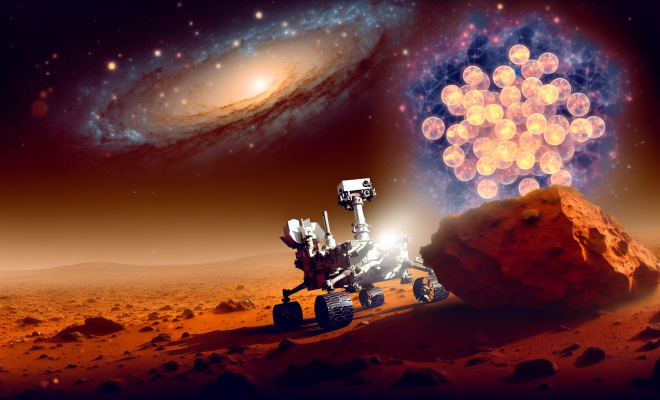
The quest to understand whether life ever existed on Mars has taken a monumental leap forward with NASA’s Curiosity rover making a groundbreaking discovery. On April 22, 2026, the rover detected seven previously unseen organic molecules on the surface of the Red Planet, a finding that not only enhances our knowledge of Martian organic chemistry but also ignites renewed hopes in the search for signs of past life.
The Significance of Organic Molecules
Organic molecules are essential building blocks of life as we understand it. Their presence in extraterrestrial environments is a crucial indicator in the search for life beyond Earth. The detection of these molecules on Mars suggests that the planet may have had the necessary ingredients to support life. This discovery raises fundamental questions about the planet’s history, environment, and the potential for life forms, either past or present.
Curiosity Rover: A Brief Overview
The Curiosity rover, which landed on Mars in August 2012, is equipped with an array of scientific instruments designed to analyze the Martian environment. Its primary mission is to assess whether Mars has ever had conditions favorable for microbial life. Over the years, Curiosity has made significant discoveries, including evidence of ancient riverbeds and organic compounds. However, the detection of seven new organic molecules marks a significant milestone in its ongoing mission.
Curiosity’s Scientific Instruments
Curiosity is equipped with several advanced instruments that allow it to conduct in-depth analyses of Martian soil and rock samples. Key instruments include:
- Sample Analysis at Mars (SAM): This suite of instruments analyzes the composition of organic and inorganic compounds in Martian samples.
- Rover Environmental Monitoring Station (REMS): Designed to monitor Martian weather and environmental conditions.
- Chemistry and Camera (ChemCam): This instrument uses a laser to analyze the composition of rocks and soil from a distance.
- Alpha Particle X-Ray Spectrometer (APXS): It provides elemental analysis of Martian materials.
These instruments work in tandem, allowing scientists to gather a comprehensive understanding of Mars’ geological and chemical makeup.
Details of the Discovery
The recent findings were reported at 10:01 am IST on April 22, 2026, and have since been the subject of extensive analysis and discussion among scientists and researchers. The presence of these seven organic molecules has not been previously documented in Martian soil or atmosphere, highlighting the significance of this discovery.
Understanding the Implications
The discovery of these organic molecules brings several implications for ongoing research and exploration efforts:
- Potential Habitability: The presence of organic molecules raises the possibility that Mars could have supported microbial life in its past, particularly during periods when liquid water was present.
- Organic Chemistry of Mars: Understanding the types and structures of these molecules can shed light on the chemical processes that have occurred on Mars over billions of years.
- Future Missions: The findings may inform the objectives of future Mars missions, including the upcoming Mars Sample Return mission, which aims to bring Martian soil samples back to Earth for detailed analysis.
Scientific Community Reaction
The scientific community has responded with enthusiasm to the announcement of these new organic molecules. Researchers are eager to further investigate the molecular structures and determine their origins. While the discovery does not confirm the existence of life on Mars, it does provide critical evidence that the planet has the essential components needed for life as we know it.
Challenges in Mars Exploration
Despite the excitement surrounding this discovery, exploring Mars is fraught with challenges. The harsh environment, including extreme temperatures, dust storms, and radiation, complicates the collection and analysis of samples. Furthermore, the distance between Earth and Mars presents logistical challenges for data transmission and mission planning.
The Future of Mars Exploration
This breakthrough discovery has invigorated interest in Mars exploration and the search for extraterrestrial life. Future missions are likely to focus on:
- Sample Collection: Missions that aim to collect and return Martian soil and rock samples to Earth for comprehensive analysis.
- Advanced Rover Technology: Developing more sophisticated rovers equipped with improved scientific instruments to analyze the Martian environment.
- Collaboration with International Space Agencies: Working with other space agencies can enhance the scope and scale of Mars exploration efforts.
Conclusion
Nasa’s Curiosity rover’s detection of seven new organic molecules on Mars represents a pivotal moment in our understanding of the planet’s potential for habitability. As scientists continue to analyze these findings, the implications for future exploration and our quest to answer the age-old question of whether life exists beyond Earth will unfold. The journey of discovery continues, with Mars holding secrets waiting to be uncovered.
The ongoing exploration of Mars, powered by innovative technology and international collaboration, promises to deepen our understanding of the universe and our place within it. As we look to the stars, the discoveries made on the Red Planet will undoubtedly shape the future of space exploration and our quest for life beyond our home planet.