China’s Chang’e-7 Lunar Mission: A Game-Changer for Off-World Resource Mining
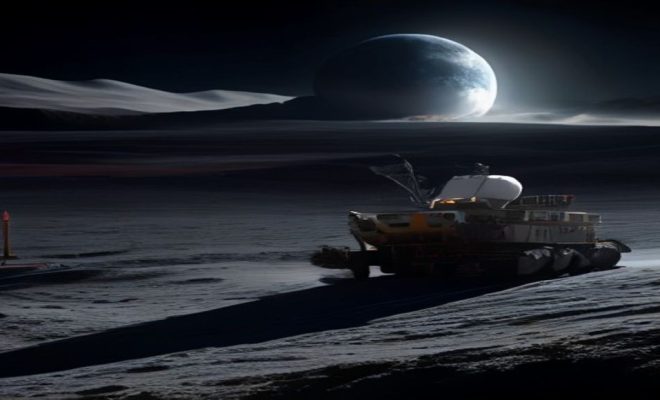
When we gaze at the Moon, most of us see a serene, silver orb, a timeless companion in our night sky. But for a growing number of nations and private enterprises, the Moon isn’t just a celestial body; it’s a treasure trove, a frontier brimming with untapped potential. And at the forefront of this new lunar gold rush is China, with its ambitious Chang’e-7 mission, set to launch around August 24, 2026. This isn’t just another scientific expedition; it’s a pivotal moment that could fundamentally alter the trajectory of human space exploration, especially when it comes to the complex and critical field of China Chang’e-7 lunar mission resource mining.
Think about it: for decades, space missions have been constrained by the astronomical cost and logistical nightmare of launching everything we need from Earth. Every gram of water, every ounce of fuel, every spare part has to be meticulously packed, weighed, and propelled through our planet’s formidable gravity well. But what if we could source these essential materials directly from the Moon? That’s the revolutionary promise of lunar resource extraction, and Chang’e-7 is engineered to be a crucial step in turning that promise into reality. This mission isn’t just about discovery; it’s about proving viability, understanding the ‘how’ behind living off-world, and securing a future beyond Earth.
The Lunar South Pole: A Geopolitical Hotspot and Resource Hub
Why the South Pole? For anyone following space news, it’s become clear that this region of our Moon is rapidly becoming the most coveted piece of real estate beyond Earth. It’s not just a beautiful vista; it’s a unique geological environment. The Moon’s axial tilt is incredibly small, meaning certain areas at its poles are bathed in near-perpetual sunlight, while others are plunged into eternal shadow. These permanently shadowed regions (PSRs) are like cosmic cold traps, preserving volatiles — particularly water ice — for billions of years. Imagine craters so deep and steep that sunlight has never touched their floors, creating conditions colder than anything found on Earth.
It’s this water ice that has everyone buzzing. Water isn’t just for drinking; it’s a fundamental ingredient for life support, and crucially, it can be broken down through electrolysis into hydrogen and oxygen. Hydrogen can be used as rocket fuel, and oxygen for breathing and as an oxidizer for that fuel. This means lunar water isn’t just a commodity; it’s the key to self-sufficiency, enabling future missions to refuel directly from the Moon, significantly reducing launch costs and expanding mission capabilities across the solar system. The South Pole, with its abundant PSRs, represents a strategic high ground, and China’s focus on this region for China Chang’e-7 lunar mission resource mining highlights its long-term vision.
Chang’e-7’s Multi-Component Arsenal: A Symphony of Exploration
What makes Chang’e-7 so much more than a simple lander or rover? It’s the sheer complexity and integration of its various components, designed to work in concert to achieve unprecedented scientific and technological goals. This isn’t a single instrument making a single measurement; it’s an orchestra of advanced hardware, each playing a vital role in the overall mission. We’re talking about a multi-faceted approach that maximizes data collection and operational flexibility, a testament to China’s engineering prowess.
The mission architecture includes an orbiter, a lander, a rover, and a mini-hopping probe. Each element has its specific tasks, but their combined efforts are what truly sets Chang’e-7 apart. The orbiter will provide crucial overhead reconnaissance, mapping potential water ice deposits and identifying safe landing zones. The lander will serve as a stationary research platform and a deployment hub. The rover will extend the exploration range across the lunar surface, and that mini-hopping probe? That’s where things get really interesting, allowing direct access to those previously inaccessible, permanently shadowed craters. This layered approach is precisely what’s needed for effective China Chang’e-7 lunar mission resource mining.
The Orbiter: Eyes in the Sky
The Chang’e-7 orbiter isn’t just a relay station; it’s a sophisticated scientific instrument in its own right. Circling the Moon, it will carry a suite of sensors designed to remotely detect water ice and other volatiles. Think of it as a scout, performing wide-area surveys of the South Pole, identifying promising sites for more detailed investigation by the surface assets. It will map surface temperatures, analyze compositional data, and provide high-resolution imagery, all critical for understanding the distribution and concentration of resources. This initial reconnaissance is paramount, guiding the lander and rover to the most promising spots, maximizing the efficiency of the entire mission.
The Lander: A Lunar Base in Miniature
Once the orbiter has identified a prime location, likely near the edge of a permanently shadowed region or within a sunlit rim of a crater like Shackleton, the lander will descend. This isn’t just a landing platform; it’s a small, self-contained lunar station. It will carry instruments for in-situ analysis, digging into the lunar regolith to confirm the presence of water ice and other volatiles directly. The lander will also be equipped to assess the physical properties of the lunar soil, crucial information for designing future habitats and infrastructure. Its stable platform will be vital for long-term measurements and for deploying the other surface elements, making it the operational heart of the surface mission. (See: Chang'e 7 mission details.)
The Rover: Roaming the Resource Frontier
The Chang’e-7 rover will be the workhorse of surface exploration, designed to traverse the challenging lunar terrain around the landing site. Unlike its predecessors, this rover will be specifically outfitted for resource prospecting. It will have ground-penetrating radar to look for subsurface ice, spectrometers to analyze soil composition, and potentially drills to extract core samples. Its mobility allows it to investigate multiple sites within its operational range, providing a broader picture of resource distribution and variability. This kind of detailed, localized data is absolutely essential for proving the feasibility of China Chang’e-7 lunar mission resource mining at scale. For more context, see the future of space exploration.
The Mini-Hopping Probe: Unveiling the Shadows
Now, this is truly innovative. The mini-hopping probe is perhaps the most exciting and critical component for directly addressing the challenge of exploring PSRs. These permanently shadowed regions are incredibly cold, dark, and difficult to navigate. A traditional wheeled rover would struggle with traction, power, and thermal management in such extreme conditions. The hopping probe, however, can descend into these craters, make short, targeted ‘hops’ to different locations, and conduct direct measurements of water ice and other volatiles that have been preserved there. It’s a nimble explorer, uniquely suited to delve into the Moon’s darkest secrets, providing direct evidence of resource potential that remote sensing can only infer. This capability is a significant leap forward in lunar exploration technology.
The Hunt for Water Ice: More Than Just a Drink
Let’s talk more about water ice. It’s the holy grail of lunar resources for a reason. As mentioned, it’s not just about quenching thirst; it’s about sustainability. Imagine a future where astronauts don’t have to ration every drop of water, where they can grow plants in lunar greenhouses, and where they can produce their own rocket fuel. This vision hinges entirely on accessible water ice. The Chang’e-7 mission aims to map the precise locations, concentrations, and depths of these ice deposits with unprecedented accuracy. This data will be instrumental for future missions, informing where to establish long-term lunar bases and how to design the extraction infrastructure.
The presence of water ice in significant quantities would fundamentally change the economics of space exploration. Instead of hauling everything from Earth, we could ‘live off the land’ on the Moon. This concept, known as In-Situ Resource Utilization (ISRU), is the cornerstone of sustainable human presence beyond Earth. If Chang’e-7 can confirm substantial, extractable reserves, it will validate the entire ISRU paradigm, opening the floodgates for investment and technological development in lunar resource extraction. It’s the missing piece of the puzzle for deep space exploration, enabling missions to Mars and beyond without the crippling cost of Earth-launched fuel.
Beyond Water: Other Volatiles and Materials
While water ice is the star of the show, Chang’e-7 will also be on the lookout for other valuable volatiles and materials. The Moon’s surface is rich in regolith, a fine, powdery material that covers its entirety. This regolith contains valuable elements like helium-3, a rare isotope on Earth that has been touted as a potential fuel for future fusion reactors, though its viability is still a subject of intense debate. It also contains elements like titanium, aluminum, and iron, which could potentially be used for construction or manufacturing on the Moon itself. Think 3D printing lunar habitats or tools using locally sourced materials.
The mission will also be looking for other trapped gases and compounds that have accumulated in the cold traps of the PSRs. These could include carbon dioxide, methane, and ammonia, all of which have industrial applications in space. Carbon dioxide, for instance, could be used for growing plants or as a propellant. Methane could also serve as a fuel. Identifying and characterizing these additional resources will provide a more comprehensive picture of the Moon’s resource potential, diversifying the portfolio of materials available for future lunar operations. This holistic approach to China Chang’e-7 lunar mission resource mining is what truly sets it apart.
The Geopolitical Race for Lunar Dominance
It’s impossible to discuss lunar resource mining without acknowledging the intense geopolitical backdrop. The Moon has become the new arena for a sophisticated ‘space race,’ with nations like the United States, China, India, and others vying for leadership. This isn’t just about planting flags; it’s about establishing precedence, developing capabilities, and securing access to what could become incredibly valuable resources. The Outer Space Treaty, signed in 1967, prevents any nation from claiming sovereignty over celestial bodies, but it doesn’t explicitly address resource extraction. This legal ambiguity, coupled with technological advancements, has created a fascinating and sometimes tense competitive environment.
China’s Chang’e-7 mission, following its successful Chang’e-4 and Chang’e-5 missions, clearly demonstrates its long-term strategy for lunar exploration and resource utilization. This strategy includes plans for an International Lunar Research Station (ILRS) in the 2030s, potentially in collaboration with Russia and other partners. The data and technological advancements from Chang’e-7 will be critical for informing the site selection and operational design of such a station. This focus on long-term presence and resource utilization is a clear signal of China’s aspirations for a leading role in the future of space, making the outcomes of China Chang’e-7 lunar mission resource mining all the more significant on the global stage. (See: NASA on lunar exploration.)
Implications for Lunar Colonization and Beyond
The success of Chang’e-7, particularly in confirming the viability of lunar resource extraction, has profound implications for lunar colonization. If we can reliably extract water, we can establish sustainable habitats. We can provide radiation shielding using lunar regolith. We can produce oxygen for breathing and fuel for rockets. This transforms the Moon from a distant destination into a potential staging post for further human expansion into the solar system. Imagine a lunar base serving as a refueling station for missions to Mars, or as a manufacturing hub for spacecraft parts using locally sourced materials. The possibilities are truly staggering. For more context, see integrate with advanced technologies.
Moreover, the technologies developed for Chang’e-7, from advanced robotics to in-situ resource analysis, will undoubtedly have applications far beyond the Moon. These innovations could benefit asteroid mining, Mars exploration, and even terrestrial industries. The intellectual capital and engineering expertise gained from such a complex mission are invaluable, pushing the boundaries of what’s possible in robotics, materials science, and autonomous operations. It’s a foundational step, a proof of concept that humanity can indeed extend its reach and sustain itself in the harsh environment of space.
Economic Opportunities and the Future Energy Market
Beyond scientific discovery and geopolitical maneuvering, there’s a significant economic driver behind missions like Chang’e-7. The potential for space resource investment is enormous. Companies are already emerging that specialize in lunar logistics, robotics, and resource processing. If water ice can be extracted and refined into hydrogen fuel, it could create an entirely new energy market, fundamentally altering the economics of space travel. We’re talking about a multi-trillion-dollar industry in the making, attracting both traditional energy players and innovative tech investors. The ability to refuel in space could democratize access to deep space, making it more affordable for a wider range of players.
Consider the value proposition: a kilogram of propellant launched from Earth costs tens of thousands of dollars. If that same kilogram can be produced on the Moon for a fraction of the cost, the savings are astronomical. This economic incentive is a powerful force driving the current ‘space race.’ The data from Chang’e-7, particularly regarding the quantity and accessibility of lunar water ice, will be critical for de-risking these investments and attracting further capital into the nascent space resource industry. The successful execution of China Chang’e-7 lunar mission resource mining could very well be the spark that ignites this new economic frontier.
Challenges and the Road Ahead
Of course, no endeavor of this magnitude is without its challenges. The lunar South Pole is an incredibly harsh environment, with extreme temperature swings, radiation exposure, and fine, abrasive regolith that can wreak havoc on machinery. The permanently shadowed regions present unique difficulties with communication, power generation (due to lack of sunlight), and thermal management. Developing technologies that can withstand these conditions, operate autonomously, and extract resources efficiently is a monumental task.
There are also logistical hurdles, from precise navigation and landing in unknown terrain to the sheer complexity of coordinating multiple independent spacecraft components. And let’s not forget the international legal framework, or lack thereof, for resource ownership and extraction. These are all significant obstacles that China, and indeed all spacefaring nations, must navigate. However, the consistent progress seen in China’s Chang’e program suggests a methodical and determined approach to overcoming these challenges, positioning the China Chang’e-7 lunar mission resource mining efforts as a critical test bed for future sustainable operations.
Expert Perspectives: What Scientists and Engineers Are Saying
The scientific community is keenly watching Chang’e-7. Planetary scientists like Dr. Sarah Johnson from the Lunar and Planetary Institute emphasize the mission’s potential to revolutionize our understanding of lunar volatiles. “Direct measurements within the PSRs are what we’ve been dreaming of,” she says. “Remote sensing gives us tantalizing hints, but physically touching and analyzing that ancient ice will confirm its composition, quantity, and how it got there. That data is gold for future missions.” For more context, see the impact of educational tools on innovation. (See: Scientific study on lunar resources.)
Engineers, on the other hand, focus on the practicalities. Dr. Kenji Tanaka, a robotics expert specializing in extreme environments, notes the mini-hopping probe’s significance. “Designing a mobile system that can operate in temperatures as low as -250 degrees Celsius, with no sunlight for power, and still transmit data reliably is an immense engineering feat,” he explains. “The thermal management, power systems, and autonomous navigation for that probe will push the boundaries of current space technology. If it works, it’ll open up so many previously unreachable areas on other celestial bodies too, not just the Moon.” These expert voices underscore the transformative potential across both scientific discovery and technological innovation.
International Collaboration vs. Competition: The Artemis Accords
While China pursues its ambitious lunar program, the United States, through NASA, leads the Artemis program, which also targets the lunar South Pole and emphasizes resource utilization. A key component of Artemis is the Artemis Accords, a non-binding multilateral agreement outlining principles for responsible space exploration, including resource extraction. Over 30 nations have signed the Accords, but China and Russia are notably absent.
This creates a fascinating dichotomy: two major powers, both aiming for the same strategic region of the Moon for similar reasons (water ice extraction), but operating under different frameworks. While competition might spur innovation, proponents of international cooperation, like the UN’s Office for Outer Space Affairs, argue that shared standards and data could prevent potential conflicts and accelerate humanity’s progress in space. The outcome of Chang’e-7’s resource mining efforts will undoubtedly influence these ongoing discussions about how humanity governs and utilizes resources beyond Earth, making the topic of China Chang’e-7 lunar mission resource mining a central theme in future space policy.
A New Era of Lunar Exploration
The Chang’e-7 mission is more than just a single expedition; it’s a statement of intent. It signifies a profound shift in how humanity views and interacts with the Moon. No longer merely a distant object of scientific curiosity or a symbolic finish line in a space race, the Moon is rapidly becoming recognized as a vital stepping stone for our species’ expansion into the cosmos. By meticulously exploring its resources, especially water ice, China is laying foundational groundwork for a future where humanity can truly live and thrive beyond Earth.
As the launch date in August 2026 approaches, the world will be watching. The success of Chang’e-7 will not only push the boundaries of scientific knowledge but also ignite new economic opportunities and redefine geopolitical dynamics in space. It’s a thrilling prospect, reminding us that the future of space exploration is not just about reaching new destinations, but about learning to sustain ourselves there.
Frequently Asked Questions about China’s Chang’e-7 Lunar Mission Resource Mining
- What is the primary goal of the Chang’e-7 mission regarding resource mining?
- The primary goal is to precisely map, characterize, and directly analyze water ice and other volatile resources, especially in the permanently shadowed regions (PSRs) of the lunar South Pole. This includes assessing their quantity, distribution, and accessibility to determine the viability of future in-situ resource utilization (ISRU).
- Why is the lunar South Pole so important for resource mining?
- The lunar South Pole is crucial because its unique lighting conditions create numerous permanently shadowed regions (PSRs). These areas act as cold traps, preserving water ice and other volatiles for billions of years. Water ice is particularly valuable as it can be converted into drinking water, breathable oxygen, and rocket fuel (hydrogen and oxygen), making it essential for sustainable lunar bases and deep space missions.
- How will Chang’e-7 detect and analyze water ice?
- Chang’e-7 employs multiple components for this. The orbiter will conduct remote sensing using spectrometers and thermal mappers to identify potential ice deposits. The lander and rover will perform in-situ analysis with drills, spectrometers, and ground-penetrating radar. Crucially, the mini-hopping probe will descend directly into PSRs to take direct measurements of subsurface ice, providing unprecedented detail.
- What other resources is Chang’e-7 looking for besides water ice?
- Beyond water ice, the mission will also search for other volatiles like carbon dioxide, methane, and ammonia, which could have industrial uses. Additionally, it will analyze the lunar regolith for valuable elements such as helium-3 (a potential fusion fuel), titanium, aluminum, and iron, which could be used for construction and manufacturing on the Moon.
- What is In-Situ Resource Utilization (ISRU) and why is it important for Chang’e-7?
- ISRU is the practice of collecting and processing materials found on other celestial bodies to create products or services for human use. For Chang’e-7, proving the viability of lunar water ice extraction is a foundational step for ISRU. Successful ISRU drastically reduces the cost and logistical complexity of space missions by eliminating the need to launch all resources from Earth, making long-term lunar presence and deep space exploration more sustainable.
- How does China’s Chang’e-7 mission compare to other nations’ lunar exploration plans?
- China’s Chang’e-7 is part of a broader strategy that mirrors the ambitions of other spacefaring nations, particularly the United States’ Artemis program. Both aim for the lunar South Pole to explore water ice. While there are similarities in scientific goals, China operates independently, with plans for an International Lunar Research Station (ILRS) in the 2030s, and is not a signatory to the U.S.-led Artemis Accords, highlighting different approaches to international cooperation and governance in space.
Trending Now
Frequently Asked Questions
What is China's Chang'e-7 lunar mission?
China's Chang'e-7 lunar mission, set to launch around August 24, 2026, aims to explore the Moon's South Pole region. It focuses on the potential for off-world resource mining, particularly the extraction of water and other materials, which could revolutionize space exploration by reducing reliance on supplies from Earth.
Why is the Lunar South Pole important for resource mining?
The Lunar South Pole is crucial for resource mining due to its unique geological features, including permanently shadowed regions that preserve volatiles like water ice. These areas provide a consistent source of essential materials for future lunar missions and could support human habitation beyond Earth.
How could lunar resource extraction change space exploration?
Lunar resource extraction could significantly alter space exploration by enabling missions to source water, fuel, and materials directly from the Moon. This would reduce the costs and logistical challenges of launching supplies from Earth, making long-term off-world living and exploration more feasible.
What are the goals of the Chang'e-7 mission?
The primary goals of the Chang'e-7 mission include exploring the Moon's South Pole, studying its geological environment, and assessing the viability of lunar resource mining. It aims to gather crucial data that could inform future missions and establish sustainable human presence on the Moon.
What makes the Chang'e-7 mission a game-changer?
The Chang'e-7 mission is considered a game-changer because it represents a significant step toward realizing the potential for off-world resource mining. By proving the feasibility of extracting lunar resources, it could pave the way for future exploration and habitation, fundamentally shifting humanity's approach to space travel.
Agree or disagree? Drop a comment and tell us what you think.