Unconscious Echo: How Your Upbringing Shapes Your Parenting
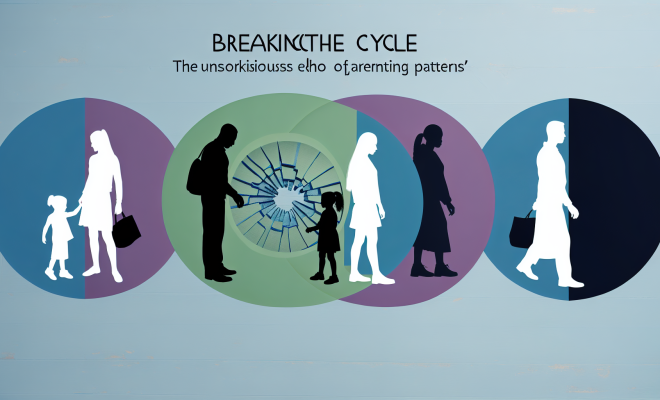
Parenting is a journey filled with joy, challenges, and a continual evolution of self. As parents, we often find ourselves reflecting on how our upbringing shapes our parenting styles. A recent article highlights a fascinating moment that resonates with many parents: the realization that we sometimes echo the very words, tone, and mannerisms of our own parents, often without even realizing it. This phenomenon is a reminder of the intergenerational transmission of parenting behaviors and the importance of conscious parenting.
The Unconscious Echo
A 37-year-old parent recently experienced a striking moment when they spoke to their daughter in their mother’s voice—same words, same pitch, and same tone. This revelation serves as a poignant example of how children can unconsciously inherit parenting patterns from previous generations. In fact, research suggests that between 35% to 45% of parenting styles and behaviors are passed down through social learning theory, which posits that we learn behaviors through observing and mimicking those around us.
Understanding the Science Behind It
The concept of intergenerational transmission in parenting is supported by psychological studies that indicate our brains are wired to react in specific ways when under stress. Stress activates older brain systems that can override the more rational prefrontal cortex, making it increasingly difficult to respond to our children with intention and mindfulness. In moments of stress, our immediate reactions can revert to learned behaviors from childhood.
The Role of Stress in Parenting
When overwhelmed, many parents revert to reflexive responses that are often modeled after their own parents. This regression can lead to repeated cycles of behavior that parents may have vowed to break. In essence, when stress triggers these old patterns, it can create a gap between our triggers and our responses, making intentional parenting a challenge.
The Importance of Conscious Parenting
Given the potential for inherited patterns to influence our parenting, the concept of conscious parenting becomes crucial. Conscious parenting involves being aware of our actions, thoughts, and emotional responses, and recognizing when we are falling back into old patterns. It encourages a more mindful approach to parenting, where we take responsibility for our words and actions.
Mindfulness as a Tool
- Awareness: The first step in conscious parenting is developing an awareness of our own behavior. This means noticing when we use phrases or tones that are reminiscent of our parents.
- Reflection: After noticing these patterns, it is important to reflect on why we are repeating them and how they affect our children.
- Responsibility: Taking responsibility involves recognizing that we have the power to change these inherited patterns and create a new narrative for our family.
- Persistent Effort: Breaking the cycle requires continuous effort and commitment to personal growth. It is not an overnight change, but rather a gradual process.
Children Need Accountability, Not Perfection
One of the most significant takeaways from this dialogue on parenting is the understanding that children do not need perfect parents. Instead, they require parents who are accountable and willing to try. It is essential to demonstrate to children that it is okay to make mistakes, as long as we acknowledge them and strive to improve.
Embracing Imperfection
Parents should embrace their imperfections and recognize that they are on a journey too. The goal is not to be flawless but to be present and engaged in our children’s lives. By modeling accountability and the willingness to change, parents can create a safe space for their children to express themselves and learn.
Creating New Traditions
As parents become more aware of their behaviors and the influences of their upbringing, they can consciously choose to implement new traditions and ways of communicating with their children. This can include establishing family rituals that are rooted in positive reinforcement, open communication, and emotional support.
Practical Steps for Change
- Communication: Foster open dialogues within the family where feelings and experiences can be shared without judgment.
- Modeling Behavior: Show children how to handle conflicts and emotions in a constructive manner.
- Encouraging Growth: Instill a growth mindset in children, emphasizing that improvement comes from effort and learning from mistakes.
Conclusion
Ultimately, the journey of parenting is complex and multifaceted, filled with moments of both reflection and revelation. Understanding the unconscious echoes of our own upbringing can be enlightening and can guide us toward more mindful parenting practices. By embracing the concept of conscious parenting, we can break the cycles of behavior that do not serve us or our children and create a nurturing environment that fosters growth, accountability, and love.