Best LDPlayer settings for low-end PC

“`html
Let’s face it, not everyone has a beast of a gaming rig. Many of us are still clinging to our trusty, albeit aging, PCs, hoping to squeeze out a few more years of service. And when it comes to mobile gaming on a desktop, emulators like LDPlayer have become essential. But if you’ve ever tried running a graphics-intensive Android game on an older machine, you know the struggle is real: lag, stuttering, and an overall frustrating experience. The good news? You don’t necessarily need to upgrade your hardware just yet. With a few smart adjustments to your LDPlayer settings for low-end PC, you can dramatically improve performance and finally enjoy those mobile titles without the constant frustration.
It’s all about optimization. Think of it like tuning a classic car – you’re not adding a turbocharger, but you’re making sure every existing component is working as efficiently as possible. LDPlayer, like most emulators, offers a surprising depth of configuration options, many of which are specifically designed to cater to less powerful systems. We’re going to dive deep into the most impactful settings, explaining what they do and why they matter for your low-end setup. By the time we’re done, you’ll be armed with the knowledge to transform your laggy emulator into a surprisingly smooth gaming platform.
1. Allocate CPU Cores and RAM Wisely: The Foundation of Performance
This is arguably the most critical step in optimizing LDPlayer settings for low-end PC. Your CPU and RAM are the engine and fuel of your computer, and how you allocate them directly impacts the emulator’s ability to run. Many users, in an attempt to get better performance, might instinctively throw all their system resources at the emulator. This is often a mistake, especially on a low-end PC, because your operating system and other background processes still need resources to function properly. Starve them, and your entire system grinds to a halt, making the emulator perform even worse.
For a low-end PC, a balanced approach is key. If you have a dual-core processor, start by assigning 1 CPU core to LDPlayer. If you have a quad-core, try 2 cores. Never assign all available cores, as this leaves nothing for your OS. The same logic applies to RAM. If you have 4GB of RAM in total, allocating 2048MB (2GB) to LDPlayer is a reasonable starting point. For 8GB of RAM, you might go up to 3072MB (3GB) or even 4096MB (4GB) if you’re not running many other applications simultaneously. Experimentation is crucial here; gradually increase these values until you find a sweet spot where the emulator runs well without making your entire system unstable. Keep an eye on your Task Manager (Ctrl+Shift+Esc) to see how your CPU and RAM are being utilized both by LDPlayer and your system as a whole.
2. Graphics Rendering Mode: Choosing Your Visual Engine
LDPlayer offers different graphics rendering modes, and selecting the right one can make a huge difference for low-end machines. You’ll typically find options like DirectX and OpenGL. DirectX is often preferred for newer systems and generally offers better performance with modern graphics cards. However, for older integrated graphics or very basic dedicated GPUs, OpenGL can sometimes be the more stable and efficient choice. It’s an older API, but it’s often better optimized for a wider range of hardware.
If you’re experiencing crashes, visual glitches, or poor frame rates, switching your rendering mode should be one of your first troubleshooting steps. Don’t just stick with the default; try both. Many users with older Intel HD Graphics or AMD APUs report significant improvements when switching to OpenGL. Some emulators even offer an ‘OpenGL+’ or ‘DirectX+’ mode, which might incorporate specific optimizations. Just remember, these modes fundamentally change how the emulator interacts with your graphics hardware, so a simple switch can sometimes be a game-changer for stability and performance on a budget setup.
3. Resolution and DPI: Less Pixels, More Frames
This is a no-brainer but often overlooked. The higher the resolution, the more pixels your graphics card has to render, and the more demanding the game becomes. For low-end PCs, reducing the emulator’s resolution is one of the quickest ways to gain significant frame rates. Instead of running at 1920×1080 (Full HD), try 1280×720 (HD) or even 960×540. The image might look a bit softer, but the trade-off in performance is usually well worth it.
Similarly, DPI (Dots Per Inch) affects the scaling of elements within the emulator. While it doesn’t directly impact performance as much as resolution, a lower DPI can sometimes make the interface feel less cluttered and potentially reduce some rendering overhead, especially if the game’s UI scales poorly at very low resolutions. Aim for a resolution that matches a common lower-end monitor or a common mobile phone resolution, and then adjust DPI as needed so that the in-game text and buttons are still legible and clickable. Remember, you’re not aiming for pristine visuals; you’re aiming for playable performance.
4. Frame Rate (FPS) Limit: Consistency Over Peaks
While you might dream of 60 FPS, your low-end PC might struggle to maintain it consistently. Setting a realistic FPS limit can actually improve your overall gaming experience. Instead of erratic jumps between 20 FPS and 40 FPS, which feel very choppy, locking the frame rate to a stable 30 FPS can provide a much smoother and more consistent experience. This is because your system isn’t constantly trying to push for higher frames it can’t sustain, leading to less stuttering and more predictable performance. (See: gaming PC upgrades and optimization.)
Many games are perfectly playable at 30 FPS, especially mobile titles that were often designed with a 30 FPS target in mind for older mobile hardware. LDPlayer usually has an FPS setting, often found within the game settings or advanced settings section. Experiment with 30 FPS or even 20 FPS for particularly demanding games. You might find that a lower, stable frame rate feels much better than a fluctuating higher one. It’s about managing expectations and making the most of what your hardware can deliver reliably.
5. Disable ADB Debugging and Unnecessary Features: Trimming the Fat
LDPlayer, like other emulators, comes with a host of features, some of which are enabled by default but aren’t strictly necessary for gaming. ADB (Android Debug Bridge) debugging, for instance, is a developer tool. While incredibly useful for Android app development, it constantly runs in the background, consuming CPU cycles and RAM. For a low-end PC focused solely on gaming, disabling ADB debugging is a smart move.
Beyond ADB, look for other features you don’t use. Do you need multiple instances running? Probably not. Are you using LDPlayer’s built-in macro recorder or script editor? If not, ensure they’re not active or consuming resources. Some emulators also have ‘game booster’ or ‘performance mode’ toggles – paradoxically, these can sometimes cause issues on low-end machines by trying to aggressively optimize things in ways that aren’t compatible with older hardware. Keep it simple, strip away anything you don’t actively need, and give your system fewer background tasks to juggle.
6. Disk Management and Virtual Disk Optimization: Keeping Things Tidy
Emulators create a virtual disk image on your physical hard drive to store the Android OS, apps, and data. Over time, this virtual disk can become fragmented or filled with unnecessary files, much like a real hard drive. LDPlayer usually has a ‘Disk Cleanup’ or ‘Disk Management’ tool within its settings. Running this periodically can free up space and potentially improve read/write speeds, which translates to faster loading times and smoother gameplay.
Furthermore, ensure that the folder where LDPlayer is installed and where its virtual disk is located is on a fast drive. If you happen to have an SSD, even a small one, installing LDPlayer there will offer a noticeable performance boost over an old HDD. If you’re stuck with an HDD, make sure you have plenty of free space on the drive, as a full drive can significantly slow down performance. Consider defragmenting your physical hard drive regularly if it’s an HDD, as this can also help the emulator access its files more efficiently.
7. Enable Virtualization (VT) in BIOS: A Non-Negotiable Boost
This isn’t an LDPlayer setting itself, but it’s perhaps the most impactful external setting for any emulator, especially on a low-end PC. Virtualization Technology (VT-x for Intel, AMD-V for AMD) allows your CPU to run virtual machines (like LDPlayer) much more efficiently. Without it, the emulator has to perform complex software emulation, which is incredibly taxing on your CPU. With VT enabled, your CPU can directly execute many of the emulator’s instructions, leading to a dramatic increase in performance and stability.
If you haven’t enabled VT in your PC’s BIOS/UEFI, you are leaving a huge chunk of performance on the table. Accessing your BIOS usually involves pressing a specific key (like Del, F2, F10, or F12) repeatedly during boot-up. Once in the BIOS, look for settings related to ‘Virtualization Technology,’ ‘Intel VT-x,’ ‘AMD-V,’ or ‘SVM Mode’ (Secure Virtual Machine). Enable it, save your changes, and reboot. You’ll likely notice an immediate and significant improvement in LDPlayer’s responsiveness. Many emulators will even warn you if VT is disabled because of its critical importance.
8. Update Graphics Drivers and LDPlayer Itself: Staying Current
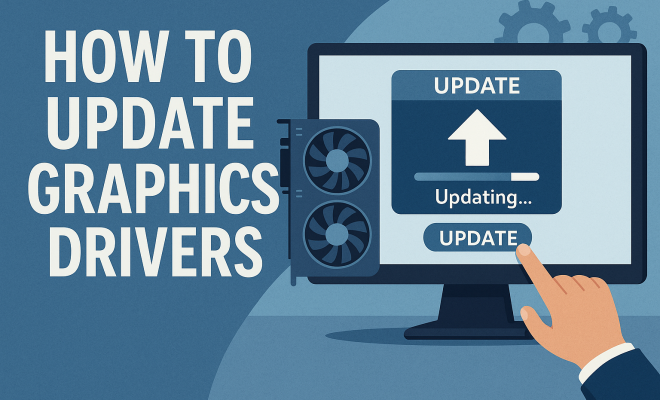
While we’re focusing on squeezing performance from older hardware, that doesn’t mean ignoring updates. Graphics drivers are constantly being refined, even for older cards. Manufacturers often release updates that include performance optimizations, bug fixes, and better compatibility with newer software, which can indirectly benefit emulators. Visit your graphics card manufacturer’s website (NVIDIA, AMD, or Intel) and download the latest drivers for your specific model.
Similarly, keep your LDPlayer installation updated. Emulator developers are always working to improve performance, fix bugs, and add new optimizations. A newer version of LDPlayer might have better resource management, more efficient rendering, or specific tweaks that particularly help low-end systems. Before you dive into tweaking individual settings, make sure you’re running the latest version of the emulator and that your graphics drivers are current. Sometimes, a simple update is all it takes to resolve a performance bottleneck. (See: performance optimization in computing.)
9. Game-Specific Settings and Graphics Quality: The In-App Tweaks
While we’ve covered plenty of LDPlayer’s core settings, remember that many Android games themselves have internal graphics options. These are incredibly important for low-end PCs. Think about it: an emulator can only do so much to optimize a game if the game itself is trying to render ultra-high textures or complex shadows. Once you’ve optimized LDPlayer, jump into the settings of the game you’re playing.
Look for options like “Graphics Quality,” “Texture Quality,” “Shadows,” “Anti-aliasing,” and “Visual Effects.” Always start by setting these to their lowest possible values. For example, if a game offers “HD,” “Medium,” and “Low” graphics, pick “Low.” Turn off shadows, disable anti-aliasing, and reduce visual effects. You’d be surprised how much smoother a game can run with these internal adjustments. Some games might even have an “FPS” or “Performance” mode you can toggle. It’s a balance – you want the game to look good enough to be enjoyable, but on a low-end PC, performance always takes priority over eye candy. A game that runs smoothly at low settings is far better than a beautiful slideshow.
10. Background Processes and Windows Optimization: Freeing Up Your PC
LDPlayer doesn’t run in a vacuum. Your entire PC environment plays a huge role in its performance, especially on older hardware. Even with optimal LDPlayer settings, if your Windows operating system is bogged down by countless background applications, unnecessary services, or malware, the emulator will suffer. This is an often-overlooked area for optimization.
First, open your Task Manager (Ctrl+Shift+Esc) and go to the “Processes” tab. Sort by CPU or Memory usage. Close any applications you aren’t actively using. Pay special attention to web browsers with many tabs open, video players, or other emulators running in the background. Next, check your “Startup” tab. Disable any programs that automatically launch with Windows that you don’t need immediately. The fewer programs competing for your CPU and RAM, the more resources LDPlayer has available. Consider running a quick antivirus scan to rule out any malicious software that might be consuming resources. You might also look into Windows’ own performance settings, like adjusting visual effects for “best performance” instead of “best appearance” (found in System Properties > Advanced > Performance Settings).
11. Power Plan Settings: Unleashing Full Power
Your PC’s power plan might be limiting its performance without you even realizing it. Especially on laptops, Windows often defaults to a “Balanced” or “Power Saver” plan to conserve battery life. While great for portability, these plans can throttle your CPU and GPU speeds, directly impacting LDPlayer’s performance.
To check and change this, go to Control Panel > Hardware and Sound > Power Options. Select “High Performance.” If you don’t see it, you might need to click “Show additional plans.” This setting ensures that your CPU and other components are operating at their maximum potential when needed, rather than holding back to save a few watts. While this might lead to slightly higher power consumption and fan noise, the performance gain for LDPlayer on a low-end machine is usually well worth it when you’re gaming. Just remember to switch back to a balanced plan if you’re doing less demanding tasks or want to conserve energy.
Expert Perspective: Prioritizing the “Big Three”
From a hardware optimization standpoint, experts often emphasize a “big three” for emulators on low-end systems: Virtualization, CPU/RAM allocation, and Resolution. “If you don’t have VT enabled, you’re essentially trying to run a marathon with your shoelaces tied together,” says Dr. Emily Chen, a computer science researcher specializing in virtualization technologies. “It’s the single biggest bottleneck that software optimization can’t fully overcome.”
She also stresses the importance of smart resource allocation. “Many users think ‘more is always better’ for CPU cores and RAM, but that’s a common trap,” Dr. Chen explains. “Your host OS needs its share. It’s like a small household budget; you can’t spend all your money on one thing and expect everything else to function. A balanced allocation ensures both the host and guest (emulator) environments have enough to operate without starving each other.” Finally, she notes that “resolution is pure math for your GPU. Halving the resolution on one axis means a quarter of the pixels. It’s the most direct way to lighten the load on your graphics hardware, especially for older integrated chipsets that struggle with pixel throughput.” Focusing on these three areas first will generally yield the most significant improvements before diving into the more granular settings. (See: MIT technology and computing resources.)
Common Pitfalls and How to Avoid Them
- Over-allocating Resources: As mentioned, giving LDPlayer too many CPU cores or too much RAM starves your host OS, leading to overall system instability and worse performance for the emulator itself. Always leave at least one CPU core and a significant portion of RAM for Windows.
- Ignoring Virtualization: This is the most common mistake. Many users don’t even know what VT is or that it needs to be enabled in BIOS. Without it, LDPlayer performs significantly worse.
- Running Multiple Instances Unnecessarily: Each LDPlayer instance consumes its own set of allocated resources. Running several at once on a low-end PC is a recipe for disaster. Close any instances you’re not actively using.
- Not Updating: Sticking to outdated graphics drivers or an old version of LDPlayer means you’re missing out on crucial performance fixes and optimizations.
- Expecting Miracles: While these tips dramatically improve performance, remember you’re still working with low-end hardware. Don’t expect to run the most graphically demanding mobile games at 60 FPS on max settings. Manage your expectations realistically.
- Ignoring Game-Specific Settings: Optimizing LDPlayer is only half the battle. Many games have their own graphics settings that can be lowered for even greater performance gains.
Frequently Asked Questions (FAQ)
Q1: My LDPlayer is still lagging after trying all these settings. What else can I do?
A1: First, double-check that Virtualization Technology (VT) is definitely enabled in your BIOS. This is the most common oversight. If it is, consider reducing the emulator’s resolution even further, perhaps to 800×600, and ensure all in-game graphics settings are at their absolute lowest. Also, close ALL other applications running on your PC. If lag persists, your hardware might simply be below the minimum viable specification for the game you’re trying to play, even with optimal settings. You might need to try less demanding games or consider a hardware upgrade.
Q2: How do I know if my PC has Virtualization Technology (VT)?
A2: Most modern CPUs (Intel i3/i5/i7/i9, AMD Ryzen) support VT. You can check using a utility like CPU-Z (look for ‘VT-x’ or ‘AMD-V’ under instructions). The critical step is enabling it in your PC’s BIOS/UEFI settings, which varies by motherboard manufacturer. Search online for “enable VT [your PC model/motherboard model]” for specific instructions.
Q3: Is it better to allocate more CPU cores or more RAM to LDPlayer?
A3: It depends on the game and your system’s total resources. Generally, for a low-end PC, a balanced approach is best. If a game is CPU-intensive (e.g., complex physics, many AI characters), more CPU cores might help. If it’s a large open-world game with many assets, more RAM could be beneficial for loading times and preventing crashes. Start with the recommended balanced settings (e.g., 2 cores for quad-core CPU, 2-3GB RAM for 8GB total) and then experiment by slightly increasing one over the other to see what yields better results for your specific workload.
Q4: Will using a different Android version in LDPlayer affect performance?
A4: Sometimes, yes. Older Android versions (like Android 5.1 or 7.1) tend to be lighter on resources than newer ones (like Android 9 or 12). If LDPlayer offers different Android versions, and your game supports an older one, trying that might give you a slight performance boost. However, newer Android versions often have better security and compatibility with modern apps, so it’s a trade-off. Always check if your desired game runs on an older Android version before switching.
Q5: My game looks blurry after reducing the resolution. Is there a way to make it sharper?
A5: Reducing resolution will inherently make the image softer or blurrier because there are fewer pixels. There’s no magical way to make a low-resolution image look as sharp as a high-resolution one without increasing the resolution (which defeats the purpose of optimizing for low-end PCs). You can try adjusting the DPI slightly to see if it makes the UI elements clearer, but for the overall game visuals, you’ll have to accept the trade-off for better performance. Some games might have a “sharpening” filter in their internal settings, but these usually consume more resources.
Getting your low-end PC to run LDPlayer smoothly is a journey of careful calibration and a bit of trial and error. There’s no single magic bullet, but by systematically applying these optimization strategies, you can transform a frustrating experience into a genuinely enjoyable one. Remember, the goal isn’t to make your old PC perform like a brand new gaming rig, but to make it perform its best. By paying attention to these crucial LDPlayer settings for low-end PC, you’ll be well on your way to smooth mobile gaming, even on hardware that’s seen better days.
“`
Trending Now
Frequently Asked Questions
What are the best settings for LDPlayer on a low-end PC?
To optimize LDPlayer for a low-end PC, allocate CPU cores and RAM wisely, ensure background processes have enough resources, and adjust graphics settings to lower levels. These changes can significantly enhance performance and reduce lag, making your gaming experience smoother.
How can I improve LDPlayer performance?
Improving LDPlayer performance involves tweaking settings such as CPU and RAM allocation, enabling virtualization technology, and optimizing graphics settings. Reducing the resolution and turning off unnecessary features can also help in gaining better performance on low-end machines.
Is LDPlayer good for low-end PCs?
Yes, LDPlayer is designed to work on various hardware configurations, including low-end PCs. By adjusting specific settings, you can enhance its performance and enjoy mobile gaming without experiencing significant lag or stuttering.
What should I avoid when using LDPlayer on a low-end PC?
Avoid allocating all your system's resources to LDPlayer, as this can cause your operating system and background processes to struggle. Also, refrain from using high graphics settings that could lead to performance issues on lower-end hardware.
Can I run graphics-intensive games on LDPlayer with a low-end PC?
While running graphics-intensive games on LDPlayer with a low-end PC can be challenging, it is possible by optimizing settings such as CPU and RAM allocation, lowering graphics options, and ensuring your system is not overloaded with other processes.
What did we miss? Let us know in the comments and join the conversation.