The Tech Edvocate

Top Menu

  • Advertisement
  • Apps
  • Home Page
  • Home Page Five (No Sidebar)
  • Home Page Four
  • Home Page Three
  • Home Page Two
  • Home Tech2
  • Icons [No Sidebar]
  • Left Sidbear Page
  • Lynch Educational Consulting
  • My Account
  • My Speaking Page
  • Newsletter Sign Up Confirmation
  • Newsletter Unsubscription
  • Our Brands
  • Page Example
  • Privacy Policy
  • Protected Content
  • Register
  • Request a Product Review
  • Shop
  • Shortcodes Examples
  • Signup
  • Start Here
    • Governance
    • Careers
    • Contact Us
  • Terms and Conditions
  • The Edvocate
  • The Tech Edvocate Product Guide
  • Topics
  • Write For Us
  • Advertise

Main Menu

  • Start Here
    • Our Brands
    • Governance
      • Lynch Educational Consulting, LLC.
      • Dr. Lynch’s Personal Website
      • Careers
    • Write For Us
    • The Tech Edvocate Product Guide
    • Contact Us
    • Books
    • Edupedia
    • Post a Job
    • The Edvocate Podcast
    • Terms and Conditions
    • Privacy Policy
  • Topics
    • Assistive Technology
    • Child Development Tech
    • Early Childhood & K-12 EdTech
    • EdTech Futures
    • EdTech News
    • EdTech Policy & Reform
    • EdTech Startups & Businesses
    • Higher Education EdTech
    • Online Learning & eLearning
    • Parent & Family Tech
    • Personalized Learning
    • Product Reviews
  • Advertise
  • Tech Edvocate Awards
  • The Edvocate
  • Pedagogue
  • School Ratings

logo

The Tech Edvocate

  • Start Here
    • Our Brands
    • Governance
      • Lynch Educational Consulting, LLC.
      • Dr. Lynch’s Personal Website
        • My Speaking Page
      • Careers
    • Write For Us
    • The Tech Edvocate Product Guide
    • Contact Us
    • Books
    • Edupedia
    • Post a Job
    • The Edvocate Podcast
    • Terms and Conditions
    • Privacy Policy
  • Topics
    • Assistive Technology
    • Child Development Tech
    • Early Childhood & K-12 EdTech
    • EdTech Futures
    • EdTech News
    • EdTech Policy & Reform
    • EdTech Startups & Businesses
    • Higher Education EdTech
    • Online Learning & eLearning
    • Parent & Family Tech
    • Personalized Learning
    • Product Reviews
  • Advertise
  • Tech Edvocate Awards
  • The Edvocate
  • Pedagogue
  • School Ratings
  • A Visitor’s Guide to Fresno (CA), United States

  • A Visitors Guide to New Orleans (LA), United States

  • A Visitors Guide to Sacramento (CA), United States

  • A Visitors Guide to Lyon, France

  • JisuLife Ultra2 Portable Fan: A Powerful Multi-Function Cooling Solution

  • A Visitors Guide to Viña del Mar, Chile

  • A Visitors Guide to Århus, Denmark

  • A Visitors Guide to Bakersfield (CA), United States

  • A Visitors Guide to Aurora (CO), United States

  • A Visitor’s Guide to Toledo (OH), United States

Early Childhood & K-12 EdTech
Home›Early Childhood & K-12 EdTech›What Are the Benefits of Learning to Code as a Child?

What Are the Benefits of Learning to Code as a Child?
By Matthew Lynch
June 7, 2017
0
Spread the love

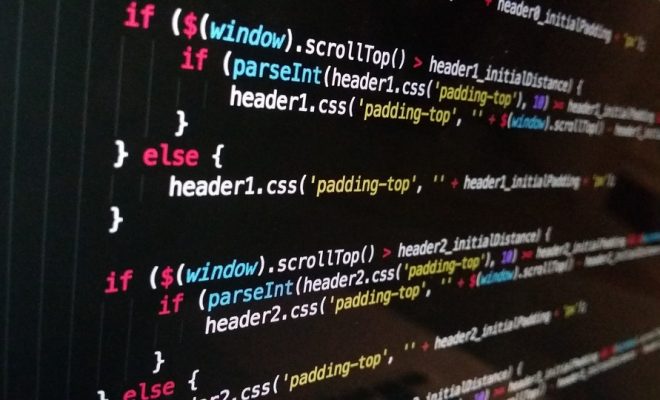
Coding is becoming one of the biggest trends to hit education since virtual reality. Because of this, parents and schools all over the globe are interested in teaching children to code. While teaching children to code may not turn them into a billionaire like Mark Zuckerberg, it certainly comes with a lot of benefits. Many of the advantages that I speak of are unknown to general public.

So instead of watching people jump on the coding bandwagon because we said so, we decided to write an article that discusses the benefits of learning how to code as a child. That way parents and schools can make an informed decision. Believe it or not, some of the advantages that we are about to share may shock you. Well, without further ado, here is our list of the benefits of learning to code as a child.

Enhances their computational thinking. The ability to express your thoughts in a rational and sequenced way is called computational thinking. It is a coveted higher order thinking skill, one that many students have difficulty acquiring. This type of thinking is rigid and is analogous to the step by step coding that allows computers to think. It can also be thought of as the process of conjuring up and then solving issues in a logical way. Computer coders, also called programmers use this way of thinking to solve problems and issues that may appear.

Computational thinking intersects the disciplines of logic, mathematics, and the development of algorithms.  When students learn computational thinking, they learn how to ponder a problem and then reduce it to individual action steps. Computational thinking also teaches efficiency, as students have to break down problems in the most efficient way possible. Also, they learn abstract thought, as they learn to take a problem and its solution and generalize it to other situations. This is a very powerful skill to have. It completely changes the way that you view the world and how it works. Suddenly, everything else in your life becomes a little easier.

Coding is the new literacy. To be successful in the future, people will need to be fluent in basic technologies. New workers will be expected to express themselves and create new possibilities using digital technologies. Coding will be necessary because its possibilities go far beyond creating websites and apps. Here is an example: In 2014, several software engineers found themselves stuck in Boston during a blizzard and quickly figured out that they could use their knowledge of coding to improve the cities safety. They figured out that one issue was that firefighters spent a lot of time finding and digging out fire hydrants. When a fire emergency occurs, firefighters simply do not have the time to find and dig out a fire hydrant. In response, these enterprising engineers created an app that cataloged all of the fire hydrants in Boston. They then used this information to create a website called Adopt-a-Hydrant. By visiting this site, Boston residents could volunteer to clear off hydrants in their neighborhood during snow emergencies. Now, the streets of Boston are a little safer during snow season.

Facilitates creativity. Children have creative minds that allow them to think outside of the box. The endless variations of coding and finding solutions can motivate children to maximize their creative potential. Kids who are learning to code quickly make the connection to coding and storytelling, which releases their imaginations and unlocks many possibilities. Think about it, with both coding and storytelling, each one follows a logical pattern (beginning, middle, ending, etc.). This newly found creative inspiration can assist children in being successful in public speaking, writing, etc.

Career opportunities. To compete in the global economy of now and the future, students need to possess a comprehensive skill set when it comes to technology. Not knowing how to code in the future may be comparable to not knowing how to read. Most jobs require that you have at least basic technology skills, even restaurants and clothing boutiques use some kind of computer device. People who specialize in coding make a lot of money and are frequently contacted by headhunters. The opportunities for individuals who know how to code will explode in the future.

Did we miss any of the benefits of teaching children to code?


TagsEdtechedtechchatelearningSTEAMSTEM
Previous Article

9 Tips for Teaching Coding in the ...

Next Article

All You Need to Know About Buying ...

Matthew Lynch

Related articles More from author

  • Uncategorized

    A Digital Future: K-12 Technology by 2018

    January 25, 2017
    By Matthew Lynch
  • Assistive Technology

    Assistive Technology for Students with Disabilities

    November 21, 2016
    By Matthew Lynch
  • Early Childhood & K-12 EdTechEdTech & InnovationHigher Education EdTech

    Where Do Teachers Turn for Technology Assistance?

    May 25, 2017
    By Matthew Lynch
  • Uncategorized

    How digital gives literacy a boost

    June 28, 2016
    By Matthew Lynch
  • EdTech & InnovationEquity

    Districts Need To Set Up Wi-Fi for Students in Public Housing

    September 27, 2017
    By Matthew Lynch
  • Best of the Best Lists

    21 Amazing STEM Resources for Teachers

    June 18, 2017
    By Matthew Lynch

Search

Login & Registration

  • Register
  • Log in
  • Entries feed
  • Comments feed
  • WordPress.org

Newsletter

Signup for The Tech Edvocate Newsletter and have the latest in EdTech news and opinion delivered to your email address!

About Us

Since technology is not going anywhere and does more good than harm, adapting is the best course of action. That is where The Tech Edvocate comes in. We plan to cover the PreK-12 and Higher Education EdTech sectors and provide our readers with the latest news and opinion on the subject. From time to time, I will invite other voices to weigh in on important issues in EdTech. We hope to provide a well-rounded, multi-faceted look at the past, present, the future of EdTech in the US and internationally.

We started this journey back in June 2016, and we plan to continue it for many more years to come. I hope that you will join us in this discussion of the past, present and future of EdTech and lend your own insight to the issues that are discussed.

Newsletter

Signup for The Tech Edvocate Newsletter and have the latest in EdTech news and opinion delivered to your email address!

Contact Us

The Tech Edvocate
910 Goddin Street
Richmond, VA 23231
(601) 630-5238
[email protected]

Copyright © 2025 Matthew Lynch. All rights reserved.