The Tech Edvocate

Top Menu

  • Advertisement
  • Apps
  • Home Page
  • Home Page Five (No Sidebar)
  • Home Page Four
  • Home Page Three
  • Home Page Two
  • Home Tech2
  • Icons [No Sidebar]
  • Left Sidbear Page
  • Lynch Educational Consulting
  • My Account
  • My Speaking Page
  • Newsletter Sign Up Confirmation
  • Newsletter Unsubscription
  • Our Brands
  • Page Example
  • Privacy Policy
  • Protected Content
  • Register
  • Request a Product Review
  • Shop
  • Shortcodes Examples
  • Signup
  • Start Here
    • Governance
    • Careers
    • Contact Us
  • Terms and Conditions
  • The Edvocate
  • The Tech Edvocate Product Guide
  • Topics
  • Write For Us
  • Advertise

Main Menu

  • Start Here
    • Our Brands
    • Governance
      • Lynch Educational Consulting, LLC.
      • Dr. Lynch’s Personal Website
      • Careers
    • Write For Us
    • The Tech Edvocate Product Guide
    • Contact Us
    • Books
    • Edupedia
    • Post a Job
    • The Edvocate Podcast
    • Terms and Conditions
    • Privacy Policy
  • Topics
    • Assistive Technology
    • Child Development Tech
    • Early Childhood & K-12 EdTech
    • EdTech Futures
    • EdTech News
    • EdTech Policy & Reform
    • EdTech Startups & Businesses
    • Higher Education EdTech
    • Online Learning & eLearning
    • Parent & Family Tech
    • Personalized Learning
    • Product Reviews
  • Advertise
  • Tech Edvocate Awards
  • The Edvocate
  • Pedagogue
  • School Ratings

logo

The Tech Edvocate

  • Start Here
    • Our Brands
    • Governance
      • Lynch Educational Consulting, LLC.
      • Dr. Lynch’s Personal Website
        • My Speaking Page
      • Careers
    • Write For Us
    • The Tech Edvocate Product Guide
    • Contact Us
    • Books
    • Edupedia
    • Post a Job
    • The Edvocate Podcast
    • Terms and Conditions
    • Privacy Policy
  • Topics
    • Assistive Technology
    • Child Development Tech
    • Early Childhood & K-12 EdTech
    • EdTech Futures
    • EdTech News
    • EdTech Policy & Reform
    • EdTech Startups & Businesses
    • Higher Education EdTech
    • Online Learning & eLearning
    • Parent & Family Tech
    • Personalized Learning
    • Product Reviews
  • Advertise
  • Tech Edvocate Awards
  • The Edvocate
  • Pedagogue
  • School Ratings
  • A Visitors Guide to Colorado Springs (CO), United States

  • 5 Pairs of Shoes That Will Instantly Step Your Shoe Game Up

  • Radiant Youthful Skin is the Perfect Christmas Gift

  • Give Your Loved One the Gift of Youthful, Radiant Skin this Christmas

  • Give Your Loved One the Gift of a Restful Night Sleep this Christmas

  • Nex Playground’s Holiday Sales Bring Active Play Indoors This Seaso

  • A Visitors Guide to Louisville (KY), United States

  • A Visitor’s Guide to Nashville-Davidson (TN), United States

  • A Visitors Guide to Portland (OR), United States

  • 7 Men’s Bruno Marc Shoes That Are the Perfect Christmas Gift

Digital & Mobile Technology
Home›Digital & Mobile Technology›ATX Power Supply Pinout Tables

ATX Power Supply Pinout Tables
By Matthew Lynch
June 23, 2023
0
Spread the love

ATX Power Supply Pinout Tables, also referred to as ATX Power Supply Pinout Diagrams, are diagrams that illustrate the pinout of a computer’s power supply. Pinouts are a series of connections or electrical pathways that allow information to be transmitted from one electronic device to another. In the context of ATX power supply pinouts, pinouts refer to the connections between the power supply and the various components of a computer, such as the motherboard, hard drive, and video card.

There are several different types of ATX power supply pinout tables, each designed to accommodate different types of equipment and devices. However, a typical ATX power supply pinout table will have several common components, including a standard 24-pin main power connector, a 4-pin CPU power connector, and several peripheral connectors.

The standard 24-pin main power connector is the most important component of an ATX power supply pinout table, as it provides power to the motherboard and other essential components. This connector typically consists of two rows of 12 pins each, one row of which is used to provide the primary power supply, while the other is used to provide the standby power supply.

The 4-pin CPU power connector is also a critical component of an ATX power supply pinout diagram. This connector is used to provide power to the processor, which is the most power-hungry component of any computer. Without sufficient power to the CPU, a computer may fail to boot or may experience other performance issues.

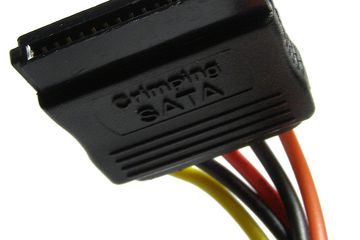
In addition to the main power and CPU power connectors, ATX power supply pinout tables also include several peripheral connectors. These connectors are used to provide power to various components of a computer, such as hard drives, optical drives, and graphics cards. The most common peripheral connectors seen in ATX power supply pinout diagrams include the 4-pin Molex connector, the SATA power connector, and the PCI Express power connector.

Overall, ATX power supply pinout tables are essential tools for computer technicians and enthusiasts alike. By understanding the pinout of a power supply, one can easily diagnose and fix issues related to power supply failure or malfunctions. Moreover, ATX power supply pinouts are critical for building custom computers and ensuring that all components receive proper power and connectivity. Whether one is an experienced computer technician or a novice enthusiast, ATX power supply pinout tables are a must-have tool for any computer troubleshooting or building project.


Previous Article

How to Check if Your Gmail Is ...

Next Article

Amazon Kindle Library: 3 Ways to Borrow ...

Matthew Lynch

Related articles More from author

  • Digital & Mobile Technology

    How to Charge Your Android Phone Faster: 9 Tips and Tricks

    June 8, 2023
    By Matthew Lynch
  • Digital & Mobile Technology

    What is Web Application Security Testing?

    May 14, 2023
    By Matthew Lynch
  • Digital & Mobile Technology

    The 9 Best LGBT Podcasts of 2023

    July 5, 2023
    By Matthew Lynch
  • Digital & Mobile Technology

    How to Import Mail and Folders From Gmail to Outlook.com

    July 31, 2023
    By Matthew Lynch
  • Digital & Mobile Technology

    How to Use Scene Cut Detection in DaVinci Resolve

    July 31, 2023
    By Matthew Lynch
  • Digital & Mobile Technology

    How to Export Chrome Bookmarks

    May 28, 2023
    By Matthew Lynch

Search

Login & Registration

  • Register
  • Log in
  • Entries feed
  • Comments feed
  • WordPress.org

Newsletter

Signup for The Tech Edvocate Newsletter and have the latest in EdTech news and opinion delivered to your email address!

About Us

Since technology is not going anywhere and does more good than harm, adapting is the best course of action. That is where The Tech Edvocate comes in. We plan to cover the PreK-12 and Higher Education EdTech sectors and provide our readers with the latest news and opinion on the subject. From time to time, I will invite other voices to weigh in on important issues in EdTech. We hope to provide a well-rounded, multi-faceted look at the past, present, the future of EdTech in the US and internationally.

We started this journey back in June 2016, and we plan to continue it for many more years to come. I hope that you will join us in this discussion of the past, present and future of EdTech and lend your own insight to the issues that are discussed.

Newsletter

Signup for The Tech Edvocate Newsletter and have the latest in EdTech news and opinion delivered to your email address!

Contact Us

The Tech Edvocate
910 Goddin Street
Richmond, VA 23231
(601) 630-5238
[email protected]

Copyright © 2025 Matthew Lynch. All rights reserved.