The Tech Edvocate

Top Menu

  • Advertisement
  • Apps
  • Home Page
  • Home Page Five (No Sidebar)
  • Home Page Four
  • Home Page Three
  • Home Page Two
  • Home Tech2
  • Icons [No Sidebar]
  • Left Sidbear Page
  • Lynch Educational Consulting
  • My Account
  • My Speaking Page
  • Newsletter Sign Up Confirmation
  • Newsletter Unsubscription
  • Our Brands
  • Page Example
  • Privacy Policy
  • Protected Content
  • Register
  • Request a Product Review
  • Shop
  • Shortcodes Examples
  • Signup
  • Start Here
    • Governance
    • Careers
    • Contact Us
  • Terms and Conditions
  • The Edvocate
  • The Tech Edvocate Product Guide
  • Topics
  • Write For Us
  • Advertise

Main Menu

  • Start Here
    • Our Brands
    • Governance
      • Lynch Educational Consulting, LLC.
      • Dr. Lynch’s Personal Website
      • Careers
    • Write For Us
    • The Tech Edvocate Product Guide
    • Contact Us
    • Books
    • Edupedia
    • Post a Job
    • The Edvocate Podcast
    • Terms and Conditions
    • Privacy Policy
  • Topics
    • Assistive Technology
    • Child Development Tech
    • Early Childhood & K-12 EdTech
    • EdTech Futures
    • EdTech News
    • EdTech Policy & Reform
    • EdTech Startups & Businesses
    • Higher Education EdTech
    • Online Learning & eLearning
    • Parent & Family Tech
    • Personalized Learning
    • Product Reviews
  • Advertise
  • Tech Edvocate Awards
  • The Edvocate
  • Pedagogue
  • School Ratings

logo

The Tech Edvocate

  • Start Here
    • Our Brands
    • Governance
      • Lynch Educational Consulting, LLC.
      • Dr. Lynch’s Personal Website
        • My Speaking Page
      • Careers
    • Write For Us
    • The Tech Edvocate Product Guide
    • Contact Us
    • Books
    • Edupedia
    • Post a Job
    • The Edvocate Podcast
    • Terms and Conditions
    • Privacy Policy
  • Topics
    • Assistive Technology
    • Child Development Tech
    • Early Childhood & K-12 EdTech
    • EdTech Futures
    • EdTech News
    • EdTech Policy & Reform
    • EdTech Startups & Businesses
    • Higher Education EdTech
    • Online Learning & eLearning
    • Parent & Family Tech
    • Personalized Learning
    • Product Reviews
  • Advertise
  • Tech Edvocate Awards
  • The Edvocate
  • Pedagogue
  • School Ratings
  • Is the AI Bubble Bursting? OpenAI’s Funding Woes Revealed

  • Why Millions Are Skipping College for These 7 Online Courses Right Now

  • The Astonishing Truth About PS5 Pro vs Xbox Ally X Financing

  • The Urgent Truth About 2026 Privacy Laws: Why Your Business Could Face Catastrophic Fines

  • Shocking: Esports Pros Reveal the Critical Steps to Protect Your Earnings

  • The Staggering Truth About These New Weight Loss Drugs — And Why You Need to Know

  • The Quiet Crisis: Why Your Auto Loan Interest Rates Are Still Skyrocketing

  • Elvis’s Ghost Haunts AI: The $41 Million Anthropic Copyright Lawsuit Explained

  • 7 Micro-SaaS Tools Quietly Transforming Freelance Productivity — Don’t Miss Out!

  • Who Really Owns the Moon? The Shocking Truth About Lunar Real Estate

Digital & Mobile Technology
Home›Digital & Mobile Technology›Apple’s Force Touch, 3D Touch, and Haptic Touch Explained

Apple’s Force Touch, 3D Touch, and Haptic Touch Explained
By Matthew Lynch
June 14, 2023
0
Spread the love

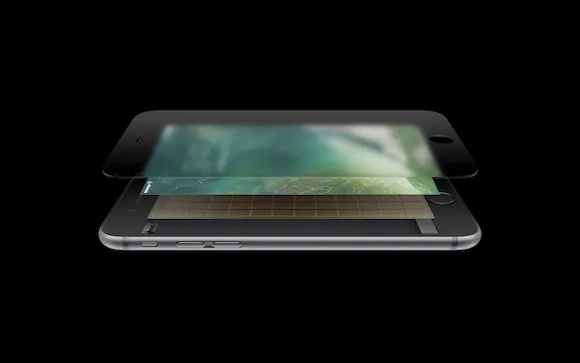
Apple has always been at the forefront of innovation in the tech industry, and one of the ways the company has shown its innovative edge is through its introduction of new touch technologies in its devices. Apple’s Force Touch, 3D Touch, and Haptic Touch are the latest touch technologies that have been incorporated into Apple devices.

Force Touch

Force Touch is a technology that allows a device to differentiate between a light tap and a hard press. This technology was first introduced in the 2015 MacBook, then it was later included in the Apple Watch, the MacBook Pro, and the Magic Trackpad 2.

With Force Touch, users can access different functions and menus in their Apple devices depending on how hard they press the screen or trackpad. This allows for a more intuitive and efficient user experience, with users able to complete tasks with fewer clicks and swipes.

For example, on the MacBook, Force Touch allows users to preview a file or website by pressing down on it with a harder touch, and access additional options by pressing down with even more force. This adds another dimension to the user interface, making it easier to interact with devices in a more natural, physical way.

3D Touch

3D Touch takes Force Touch one step further by allowing for a more comprehensive range of pressure sensitivity. It was introduced with the iPhone 6s and 6s Plus in 2015.

With 3D Touch, users can access different menus and functions depending on how much pressure they apply to the screen. This allows for a more precise and nuanced way to interact with their device, with users able to complete tasks faster and more efficiently.

For example, on the iPhone, 3D Touch allows users to preview messages, emails, and links by applying a light touch, while a harder press will open the message or link in full. This can save users time, as they don’t need to open each message or link fully to determine whether it’s worth reading.

Haptic Touch

Haptic Touch is a technology that combines the best aspects of Force Touch and 3D Touch. Introduced with the iPhone XR in 2018, Haptic Touch takes advantage of the device’s pressure-sensitive display, but without the underlying sensors and hardware required for 3D Touch.

With Haptic Touch, users can access different menus and functions by pressing down on the screen for longer, causing the device to vibrate and provide haptic feedback. This allows for a hybrid touch experience, providing both the physical sensation and responsiveness of Force Touch with the nuanced pressure sensitivity of 3D Touch.

For example, on the iPhone XR, Haptic Touch allows users to access the camera, flashlight, and other functions by pressing and holding down on the relevant icon on the home screen. This provides a quick and easy way to access commonly used features without the need for multiple taps and swipes.

Conclusion

Apple’s touch technologies have come a long way since the days of the original iPhone, with Force Touch, 3D Touch, and Haptic Touch offering increasingly sophisticated ways to interact with devices. While 3D Touch hasn’t been implemented in the latest iPhones, Force Touch and Haptic Touch continue to provide users with a seamless, intuitive, and efficient way to use their devices. As Apple continues to innovate, it will be interesting to see what new touch technologies they come up with in the future.


Previous Article

How to Insert a Table of Contents ...

Next Article

A Step-by-step Guide on How to Use ...

Matthew Lynch

Related articles More from author

  • Digital & Mobile Technology

    Finding a Cheap Fix for a Broken Defroster

    September 7, 2023
    By Matthew Lynch
  • Digital & Mobile Technology

    How to Setup a Wi-Fi Repeater

    May 8, 2023
    By Matthew Lynch
  • Digital & Mobile Technology

    How to Disable Word Wise on Your Kindle Reader

    February 20, 2024
    By Matthew Lynch
  • Digital & Mobile Technology

    GParted v1.5.0-1

    June 9, 2023
    By Matthew Lynch
  • Digital & Mobile Technology

    Google’s Super Bowl Ad Shows Off the Pixel 7’s Camera Tricks: Watch Here

    June 13, 2023
    By Matthew Lynch
  • Digital & Mobile Technology

    How to Remote Wipe Your Windows PC

    May 3, 2023
    By Matthew Lynch

Search

Login & Registration

  • Log in
  • Entries feed
  • Comments feed
  • WordPress.org

Newsletter

Signup for The Tech Edvocate Newsletter and have the latest in EdTech news and opinion delivered to your email address!

About Us

Since technology is not going anywhere and does more good than harm, adapting is the best course of action. That is where The Tech Edvocate comes in. We plan to cover the PreK-12 and Higher Education EdTech sectors and provide our readers with the latest news and opinion on the subject. From time to time, I will invite other voices to weigh in on important issues in EdTech. We hope to provide a well-rounded, multi-faceted look at the past, present, the future of EdTech in the US and internationally.

We started this journey back in June 2016, and we plan to continue it for many more years to come. I hope that you will join us in this discussion of the past, present and future of EdTech and lend your own insight to the issues that are discussed.

Newsletter

Signup for The Tech Edvocate Newsletter and have the latest in EdTech news and opinion delivered to your email address!

Contact Us

The Tech Edvocate
910 Goddin Street
Richmond, VA 23231
(601) 630-5238
[email protected]

Copyright © 2026 Matthew Lynch. All rights reserved.