The Tech Edvocate

Top Menu

  • Advertisement
  • Apps
  • Home Page
  • Home Page Five (No Sidebar)
  • Home Page Four
  • Home Page Three
  • Home Page Two
  • Home Tech2
  • Icons [No Sidebar]
  • Left Sidbear Page
  • Lynch Educational Consulting
  • My Account
  • My Speaking Page
  • Newsletter Sign Up Confirmation
  • Newsletter Unsubscription
  • Our Brands
  • Page Example
  • Privacy Policy
  • Protected Content
  • Register
  • Request a Product Review
  • Shop
  • Shortcodes Examples
  • Signup
  • Start Here
    • Governance
    • Careers
    • Contact Us
  • Terms and Conditions
  • The Edvocate
  • The Tech Edvocate Product Guide
  • Topics
  • Write For Us
  • Advertise

Main Menu

  • Start Here
    • Our Brands
    • Governance
      • Lynch Educational Consulting, LLC.
      • Dr. Lynch’s Personal Website
      • Careers
    • Write For Us
    • The Tech Edvocate Product Guide
    • Contact Us
    • Books
    • Edupedia
    • Post a Job
    • The Edvocate Podcast
    • Terms and Conditions
    • Privacy Policy
  • Topics
    • Assistive Technology
    • Child Development Tech
    • Early Childhood & K-12 EdTech
    • EdTech Futures
    • EdTech News
    • EdTech Policy & Reform
    • EdTech Startups & Businesses
    • Higher Education EdTech
    • Online Learning & eLearning
    • Parent & Family Tech
    • Personalized Learning
    • Product Reviews
  • Advertise
  • Tech Edvocate Awards
  • The Edvocate
  • Pedagogue
  • School Ratings

logo

The Tech Edvocate

  • Start Here
    • Our Brands
    • Governance
      • Lynch Educational Consulting, LLC.
      • Dr. Lynch’s Personal Website
        • My Speaking Page
      • Careers
    • Write For Us
    • The Tech Edvocate Product Guide
    • Contact Us
    • Books
    • Edupedia
    • Post a Job
    • The Edvocate Podcast
    • Terms and Conditions
    • Privacy Policy
  • Topics
    • Assistive Technology
    • Child Development Tech
    • Early Childhood & K-12 EdTech
    • EdTech Futures
    • EdTech News
    • EdTech Policy & Reform
    • EdTech Startups & Businesses
    • Higher Education EdTech
    • Online Learning & eLearning
    • Parent & Family Tech
    • Personalized Learning
    • Product Reviews
  • Advertise
  • Tech Edvocate Awards
  • The Edvocate
  • Pedagogue
  • School Ratings
  • The Hidden Cost of EVs: Why Your Battery Could Cost More Than Your Car in 2026

  • Jensen Huang’s Shock Exit: This Unbelievable Scandal Just Rocked Nvidia and the AI World

  • Big Walk developer House House Confirms ‘Sparing’ Use of Gen AI – Press Start

  • Baffling: How a Cyber Breach at South Korea’s Top Security Watchdog Exposed Millions

  • Wenn Ordnung den Bildschirm beruhigt: Warum klare Abläufe Casino-Unterhaltung einladender machen

  • Reddit AI Reviews: The Quiet Reshaping of Online Opinion

  • The Chilling Truth: Iran Cyberattacks Europe’s Food and Blood Supplies

  • Anthropic’s $3.4 Billion Bet on Gas: The Unseen Cost of AI’s Future

  • Tribit FlyBuds C3 Earbuds: Premium Features at a Budget-Friendly Price

  • Is AuraCam Pro’s Emotional AI a Privacy Nightmare or Security Breakthrough?

Digital & Mobile Technology
Home›Digital & Mobile Technology›How to Connect Two Monitors to a Dell Laptop With a Docking Station

How to Connect Two Monitors to a Dell Laptop With a Docking Station
By Matthew Lynch
June 12, 2023
0
Spread the love

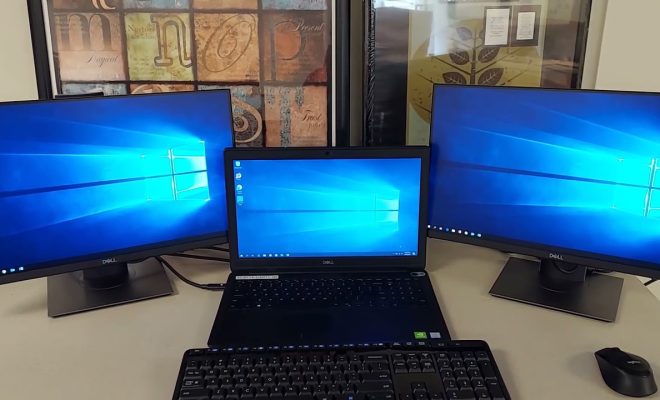
If you’re looking to extend the display of your laptop or increase your productivity by using two monitors, a docking station is the perfect solution. Dell’s laptop docking stations provide various ports that allow you to connect multiple peripherals, including monitors.

Here’s a guide on how to connect two monitors to a Dell laptop with a docking station:

1. Choose the right docking station

Dell offers a range of docking stations with different combinations of ports. Identify which one you have and ensure that it has the necessary video ports to drive two monitors. Not all Dell docking stations can support dual monitors, so make sure to check its documentation.

2. Prepare your laptop

Before connecting your docking station, you need to ensure that your laptop is ready to accept the external displays. Go to your computer’s display settings and ensure that it’s set to “Extend” to allow the second monitor to act as an extension of your laptop’s display.

3. Connect the docking station

Connect your docking station to your laptop using the USB Type-C or Thunderbolt 3 port. Then connect both monitors to the docking station’s video ports. Most Dell docking stations support DisplayPort or HDMI, so check which ports are available, and choose cables accordingly. For example, if you have two monitors with HDMI inputs, you’ll need two HDMI cables.

4. Configure the monitors

Once you’ve plugged in the monitors, you may find that they’re not displaying as expected. Go to your computer’s display settings and make sure both monitors are detected. If they aren’t, try unplugging the monitors from the docking station and then plugging them back in.

Select “Extend these displays” from the Multiple Displays drop-down menu to enable your laptop monitor and both external monitors to display different content. You can then drag and drop files or apps across screens and adjust the resolution and orientation of each display.

5. Troubleshoot any issues

If you’re having trouble getting the second monitor to display, check that the cables are securely connected to the docking station and monitor. If necessary, use a different cable or port. Make sure your laptop’s drivers are up-to-date as this can cause issues with the docking station.

In conclusion, setting up a dual monitor setup with a docking station may seem daunting, but following these simple steps will guide you through the process. With the added real estate of two monitors, you’ll be able to multitask with ease and enjoy a more immersive computing experience


Previous Article

How to Turn Off (Or On) Airplane ...

Next Article

What Is an EDS File?

Matthew Lynch

Related articles More from author

  • Digital & Mobile Technology

    How to Set Up Custom Text Shortcuts on Your Android Phone

    August 5, 2023
    By Matthew Lynch
  • Digital & Mobile Technology

    Electric Instruments You Can Use to Practice Quietly

    July 15, 2023
    By Matthew Lynch
  • Digital & Mobile Technology

    How to Flip the Display on a Dell Computer

    May 28, 2023
    By Matthew Lynch
  • Digital & Mobile Technology

    What Is a Sub-field Drive on a Plasma TV?

    June 4, 2023
    By Matthew Lynch
  • Digital & Mobile Technology

    Choose a Different Default Language in Outlook Mail

    June 10, 2023
    By Matthew Lynch
  • Digital & Mobile Technology

    What Is the Ethereum 2.0 Merge? Is the Ethereum Merge Complete?

    June 15, 2023
    By Matthew Lynch

Search

Login & Registration

  • Log in
  • Entries feed
  • Comments feed
  • WordPress.org

Newsletter

Signup for The Tech Edvocate Newsletter and have the latest in EdTech news and opinion delivered to your email address!

About Us

Since technology is not going anywhere and does more good than harm, adapting is the best course of action. That is where The Tech Edvocate comes in. We plan to cover the PreK-12 and Higher Education EdTech sectors and provide our readers with the latest news and opinion on the subject. From time to time, I will invite other voices to weigh in on important issues in EdTech. We hope to provide a well-rounded, multi-faceted look at the past, present, the future of EdTech in the US and internationally.

We started this journey back in June 2016, and we plan to continue it for many more years to come. I hope that you will join us in this discussion of the past, present and future of EdTech and lend your own insight to the issues that are discussed.

Newsletter

Signup for The Tech Edvocate Newsletter and have the latest in EdTech news and opinion delivered to your email address!

Contact Us

The Tech Edvocate
910 Goddin Street
Richmond, VA 23231
(601) 630-5238
[email protected]

Copyright © 2026 Matthew Lynch. All rights reserved.