The Tech Edvocate

Top Menu

  • Advertisement
  • Apps
  • Home Page
  • Home Page Five (No Sidebar)
  • Home Page Four
  • Home Page Three
  • Home Page Two
  • Home Tech2
  • Icons [No Sidebar]
  • Left Sidbear Page
  • Lynch Educational Consulting
  • My Account
  • My Speaking Page
  • Newsletter Sign Up Confirmation
  • Newsletter Unsubscription
  • Our Brands
  • Page Example
  • Privacy Policy
  • Protected Content
  • Register
  • Request a Product Review
  • Shop
  • Shortcodes Examples
  • Signup
  • Start Here
    • Governance
    • Careers
    • Contact Us
  • Terms and Conditions
  • The Edvocate
  • The Tech Edvocate Product Guide
  • Topics
  • Write For Us
  • Advertise

Main Menu

  • Start Here
    • Our Brands
    • Governance
      • Lynch Educational Consulting, LLC.
      • Dr. Lynch’s Personal Website
      • Careers
    • Write For Us
    • The Tech Edvocate Product Guide
    • Contact Us
    • Books
    • Edupedia
    • Post a Job
    • The Edvocate Podcast
    • Terms and Conditions
    • Privacy Policy
  • Topics
    • Assistive Technology
    • Child Development Tech
    • Early Childhood & K-12 EdTech
    • EdTech Futures
    • EdTech News
    • EdTech Policy & Reform
    • EdTech Startups & Businesses
    • Higher Education EdTech
    • Online Learning & eLearning
    • Parent & Family Tech
    • Personalized Learning
    • Product Reviews
  • Advertise
  • Tech Edvocate Awards
  • The Edvocate
  • Pedagogue
  • School Ratings

logo

The Tech Edvocate

  • Start Here
    • Our Brands
    • Governance
      • Lynch Educational Consulting, LLC.
      • Dr. Lynch’s Personal Website
        • My Speaking Page
      • Careers
    • Write For Us
    • The Tech Edvocate Product Guide
    • Contact Us
    • Books
    • Edupedia
    • Post a Job
    • The Edvocate Podcast
    • Terms and Conditions
    • Privacy Policy
  • Topics
    • Assistive Technology
    • Child Development Tech
    • Early Childhood & K-12 EdTech
    • EdTech Futures
    • EdTech News
    • EdTech Policy & Reform
    • EdTech Startups & Businesses
    • Higher Education EdTech
    • Online Learning & eLearning
    • Parent & Family Tech
    • Personalized Learning
    • Product Reviews
  • Advertise
  • Tech Edvocate Awards
  • The Edvocate
  • Pedagogue
  • School Ratings
  • Explosive: The Dr. Althea Skincare Scandal Is Worse Than You Think

  • Disturbing: Your Every Move Could Be Training AI – The Urgent Truth About Smart Glasses

  • The Staggering Risk Behind Paxini’s IPO: Is This AI Bubble About to Burst?

  • Devastating Steam Malware Attack Strikes Popular Game Twice in a Year

  • This PUBG Asia Stars Cheating Scandal Just Blew Up Esports — Here’s How It Happened

  • Why the US Rejected Calls for Urgent AI Global Standards — And What It Means For You

  • This Critical AI Development Caution Could Save Us All, Say Tech Giants

  • This Controversial New UK Law Will Force Boys to Learn Respect for Women

  • California Just Ignited a Firestorm Over Student Data Privacy — Here’s Why You Should Care

  • Devastating: New Flaws Expose Check Point Management Servers to Root-Level Takeover

Assistive Technology
Home›Assistive Technology›Has Microsoft Defender Antivirus Found a Threat? How to Remove It

Has Microsoft Defender Antivirus Found a Threat? How to Remove It
By Matthew Lynch
June 9, 2023
0
Spread the love

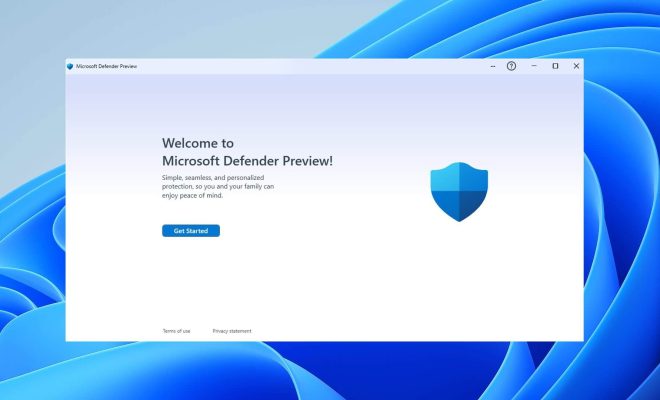
Microsoft Defender Antivirus, formerly known as Windows Defender, is an antivirus program developed by Microsoft that is built-in to Windows 10. It provides real-time protection and scanning features to protect your device from various online threats. However, sometimes it may detect a threat and prompt you to remove it. In this article, we will discuss how to remove a threat detected by Microsoft Defender Antivirus.

Step 1: Identify the Threat

When Microsoft Defender Antivirus detects a threat, it will display a notification and provide you information about the detected malware. Make sure to take note of the threat name and other important details provided by the notification.

Step 2: Perform a Full Scan

After identifying the threat, you should perform a full scan of your system to ensure that there are no other threats present on your device. To do this, open Microsoft Defender Antivirus by clicking on the shield icon in the taskbar or by searching for it in the Start menu. In the dashboard, click on the “Virus & threat protection” option, and then click on the “Quick scan” option. This will start a full scan of your system, which may take some time depending on the size of your device.

Step 3: Quarantine or Remove the Threat

Once the full scan is complete, Microsoft Defender Antivirus will display a list of threats detected on your device. Select the threat that was identified earlier and choose either “Quarantine” or “Remove” depending on the severity of the threat. Quarantining the threat will isolate it from your system, while removing it will delete the malware from your device entirely.

Step 4: Restart Your Device

After successfully removing or quarantining the threat, it is important to restart your device to ensure that all changes are fully applied. You can do this by clicking on the “Start” button and selecting “Power” and then “Restart.”

Step 5: Ensure Your System Is Up to Date

To prevent future threats, make sure that your device is up to date with the latest versions of Windows 10 and Microsoft Defender Antivirus. You can check for updates by opening Windows Update in the settings menu and checking for any available updates.

In conclusion, Microsoft Defender Antivirus provides a free and reliable way to protect your device from online threats. If it detects a threat, it is crucial to remove it as soon as possible to ensure the safety of your device and personal data. By following these steps, you can easily remove any threat detected by Microsoft Defender Antivirus and keep your device secure.


Previous Article

Adobe Premiere Transitions That’ll Liven Up Your ...

Next Article

The Best Ethereum (ETH) DApps

Matthew Lynch

Related articles More from author

  • Assistive Technology

    How to Add a Web Caption That Stays With Its Image

    June 12, 2023
    By Matthew Lynch
  • Assistive Technology

    What Is Sibilance and How Does It Affect Sound?

    June 6, 2023
    By Matthew Lynch
  • Assistive Technology

    How to Disable Link Sharing on Samsung

    June 8, 2023
    By Matthew Lynch
  • Assistive Technology

    How to Email a Folder

    June 23, 2023
    By Matthew Lynch
  • Assistive Technology

    How to Fix a Missing AirPlay Icon on iPhone and Mac

    June 7, 2023
    By Matthew Lynch
  • Assistive Technology

    How to Uninstall a Game on Xbox One

    June 10, 2023
    By Matthew Lynch

Search

Login & Registration

  • Log in
  • Entries feed
  • Comments feed
  • WordPress.org

Newsletter

Signup for The Tech Edvocate Newsletter and have the latest in EdTech news and opinion delivered to your email address!

About Us

Since technology is not going anywhere and does more good than harm, adapting is the best course of action. That is where The Tech Edvocate comes in. We plan to cover the PreK-12 and Higher Education EdTech sectors and provide our readers with the latest news and opinion on the subject. From time to time, I will invite other voices to weigh in on important issues in EdTech. We hope to provide a well-rounded, multi-faceted look at the past, present, the future of EdTech in the US and internationally.

We started this journey back in June 2016, and we plan to continue it for many more years to come. I hope that you will join us in this discussion of the past, present and future of EdTech and lend your own insight to the issues that are discussed.

Newsletter

Signup for The Tech Edvocate Newsletter and have the latest in EdTech news and opinion delivered to your email address!

Contact Us

The Tech Edvocate
910 Goddin Street
Richmond, VA 23231
(601) 630-5238
[email protected]

Copyright © 2026 Matthew Lynch. All rights reserved.