A Bestselling Novel Author’s AI Scandal: Uncovering the Truth
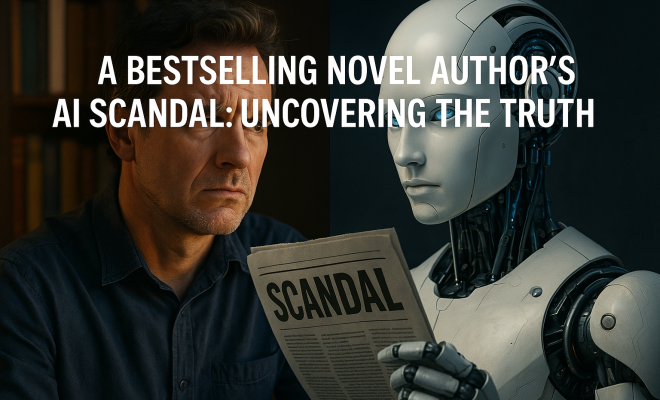
The literary world is buzzing, and not in a good way. Imagine a celebrated author, whose work has garnered critical acclaim and a spot on a prestigious literary longlist, suddenly finding himself at the center of a swirling controversy. It’s a narrative straight out of a thriller, but this isn’t fiction; it’s the very real predicament of Haitian-Canadian author Thelyson Orelien. His award-winning novel, C’etait Ca ou Mourir (which translates to It Was Either That or Die), has been thrust into the spotlight, not for its narrative brilliance alone, but for unsettling allegations that it was largely penned by artificial intelligence.
These aren’t minor murmurs. This is a full-blown literary scandal, fueled by an anonymous social media account and fanned by the ever-present anxiety surrounding AI’s role in creative endeavors. Orelien, as you might expect, is vehemently denying the AI accusations. But here’s where it gets even more complicated: he’s also admitted to past instances of plagiarism in earlier works, dismissing them as “unacceptable mistakes.” This whole situation has ignited a fierce debate within the French literary establishment, touching on fundamental questions of originality, the ethics of AI in writing, and even the unsettling specter of racial bias in criticism. It’s a complex, multi-layered story, and it forces us to confront some uncomfortable truths about authorship in the digital age, especially in the context of bestselling novel author allegations.
The Spark: Anonymous Accusations and AI Detection Claims
The controversy truly erupted in September, thanks to an anonymous X (formerly Twitter) account operating under the handle “Balance ton Claude.” This account, whose identity remains a mystery, made a bold and damning claim: that an AI detection tool had analyzed Orelien’s 2026 novel and concluded it was almost entirely AI-generated. Think about that for a moment. A single social media post, from an unknown source, wielding the supposed authority of an AI detection algorithm, managed to cast a long, dark shadow over a celebrated work of literature.
It brings up immediate questions, doesn’t it? How reliable are these AI detection tools, really? And what happens when an accusation, however unsubstantiated, gains traction in the echo chamber of social media? The “Balance ton Claude” allegations acted like a match to dry tinder, quickly catching fire and drawing widespread attention. The timing was particularly sensitive, coming at a moment when discussions about AI’s capabilities and ethical implications are are at an all-time high across every industry, including creative writing. The very idea that a work praised for its human insight could be a product of algorithms is, for many, deeply unsettling.
This incident highlights a growing tension: the perceived authority of technological tools versus the inherent trust we place in human creativity. While Orelien’s staunch denials are clear, the seed of doubt has been planted, and it’s proving incredibly difficult to remove. The anonymity of the accuser adds another layer of intrigue and complexity, making it harder to discern motives or verify the claims directly. It’s a modern-day literary trial, playing out in the court of public opinion and social media.
Orelien’s Stance: Denials and Damaging Admissions
Thelyson Orelien has not shied away from addressing the allegations directly, at least in part. His denial of the AI claims has been unequivocal. He maintains that C’etait Ca ou Mourir is his original work, born from his own creative intellect and lived experiences. This is, of course, the expected response from any author facing such a severe accusation. To admit otherwise would be to dismantle his entire professional identity and invalidate years of dedication to his craft.
However, the situation is far from straightforward because Orelien has made a separate, incredibly damaging admission. He has confessed to instances of plagiarism in earlier, unspecified works. He’s characterized these as “unacceptable mistakes,” suggesting they were perhaps youthful indiscretions or errors of judgment rather than deliberate acts of literary theft. While an admission of guilt, it significantly complicates his defense against the AI allegations. When an author has a documented history of borrowing other people’s words without proper attribution, it inevitably raises questions about their creative integrity, even in unrelated controversies.
It’s a classic case of past actions haunting the present. This admission, while perhaps intended to demonstrate transparency or contrition, has inadvertently provided ammunition to his critics. It creates a narrative where Orelien’s denials, however fervent, are viewed through a lens of prior misconduct. This makes it challenging for readers, critics, and the wider literary community to simply take his word at face value regarding the AI claims, intensifying the scrutiny around these bestselling novel author allegations. Related reading: top plagiarism tools.
The Prestige Factor: Goncourt Prize Disqualification
The weight of these allegations became undeniably clear when C’etait Ca ou Mourir was removed from the longlist for the prestigious French Goncourt literary prize. For those unfamiliar, the Goncourt is arguably the most important literary award in France, equivalent to, say, the Pulitzer Prize in the United States or the Booker Prize in the UK. Being longlisted for the Goncourt is a massive honor, a signal of a book’s significant literary merit and cultural impact.
The decision to remove Orelien’s novel wasn’t taken lightly. It signifies that the Goncourt jury, or at least the organizing body, found the combined weight of the plagiarism and AI allegations substantial enough to disqualify the work. This isn’t just a minor setback; it’s a profound blow to Orelien’s reputation and the perceived legitimacy of his work. It suggests that the literary establishment itself is taking these claims very seriously, moving beyond mere speculation to concrete action.
This disqualification sends a powerful message to the entire literary community: the integrity of authorship, in an era increasingly grappling with AI and digital ethics, remains paramount. It also underscores how quickly accusations, once they gain enough traction, can lead to severe professional consequences, even for celebrated figures. The Goncourt’s decision serves as a stark reminder that literary honors are not just about artistic quality, but also about the ethical foundations upon which that art is built. (See: AI authorship controversy in literature.)
The Broader Debate: AI, Originality, and Authorship
Beyond Orelien’s specific case, this scandal has ignited a much larger and more fundamental debate within the French literary establishment, a debate that mirrors conversations happening globally. At its core are profound questions about originality in the age of artificial intelligence. What does it mean to be an author when advanced algorithms can generate coherent, stylistically nuanced text? Where do we draw the line between using AI as a tool for inspiration or assistance, and allowing it to become the primary author?
This isn’t just about whether a human wrote every single word. It delves into the very essence of creativity. Is creativity solely a human domain, or can machines participate in it? And if they can, how does that redefine our understanding of artistic merit and intellectual property? These are not easy questions, and there are no simple answers. Authors, publishers, critics, and readers are all grappling with the implications. The rise of sophisticated AI writing tools, from simple grammar checkers to advanced generative models, has made these discussions urgent and unavoidable. For more context, see AI Cybersecurity Solutions.
The Orelien case forces us to confront these philosophical and practical dilemmas head-on. It’s a microcosm of a much larger societal shift, where technology is challenging long-held assumptions about human endeavor. The outcome of this debate will undoubtedly shape the future of literature, authorship, and indeed, many creative fields, especially when allegations like these threaten the credibility of bestselling novel authors.
The Uncomfortable Question of Racial Bias
One of the most sensitive and crucial aspects of this unfolding controversy is the allegation of racial bias in the criticism directed at Orelien. As a Haitian-Canadian author, his identity adds another complex layer to the discussion. Some voices within the literary community have suggested that the intense scrutiny and rapid disqualification might be, at least in part, influenced by systemic biases.
Is it possible that a white, European author facing similar, albeit unproven, allegations might be afforded more leniency, or given the benefit of the doubt for longer? This is a difficult question to ask, and even harder to prove, but it’s one that deserves serious consideration. Historically, authors from marginalized communities have often faced disproportionate criticism and a higher bar for acceptance within mainstream literary circles.
The argument is not necessarily that Orelien is innocent of all charges, but rather that the response to these particular bestselling novel author allegations might be amplified or accelerated due to his racial background. This raises crucial questions about equity and fairness within the literary world. If there’s even a hint that racial bias plays a role in how such controversies are handled, it undermines the integrity of the entire system and demands a deeper examination of implicit biases within literary criticism and award committees. It’s a conversation that extends far beyond one author and one book, touching on broader issues of representation and equitable treatment. favorite checker apps offers useful background here.
AI Detection Tools: A Double-Edged Sword
The entire Orelien controversy hinges significantly on the claims made by an AI detection tool. But how reliable are these tools, really? This is a critical question that often gets lost in the fervor of accusation. AI detection software works by analyzing patterns, stylistic quirks, and linguistic nuances that are supposedly indicative of machine-generated text. They often look for things like unusual sentence structures, repetitive phrasing, or a lack of distinct human voice.
However, these tools are far from perfect. They can produce false positives, flagging genuinely human-written text as AI-generated, especially if the human writing style is somewhat formulaic, or if the text is heavily edited. Conversely, sophisticated AI models are constantly evolving, learning to mimic human writing more effectively, which means detection tools are in a perpetual arms race to keep up. What’s detectable today might not be tomorrow.
This makes relying solely on such tools for definitive proof a precarious endeavor. While they can be useful indicators or provide initial suspicion, they should never be the sole basis for condemning an author or disqualifying a work. The Orelien case serves as a stark reminder of the limitations and potential dangers of over-reliance on technology that is still in its infancy and far from infallible. We need a nuanced approach, combining technological analysis with human literary expertise, especially when the career and reputation of a bestselling novel author are on the line.
Ethical AI Use in Creative Industries: A Path Forward
This scandal, along with many others emerging across creative fields, underscores the urgent need for clear ethical guidelines regarding AI use. It’s not realistic, or even desirable, to ban AI from creative processes entirely. AI can be a powerful tool for brainstorming, research, overcoming writer’s block, or refining prose. The question isn’t if AI will be used, but how it will be used responsibly and transparently.
For authors, this might mean clearly disclosing when AI has been used extensively in generating content, perhaps with a disclaimer similar to how sources are cited in academic work. For publishers, it could involve establishing editorial policies that define acceptable and unacceptable levels of AI involvement. Literary prizes might need to develop criteria that address AI authorship, much like they have rules against plagiarism.
Ultimately, the goal should be to foster an environment where AI enhances human creativity without diminishing its value or authenticity. This requires open dialogue, industry-wide consensus, and a commitment to transparency. The Orelien case is a wake-up call, pushing us to define these boundaries before the lines become irrevocably blurred. It’s about protecting the integrity of creative work and ensuring that the human element remains at the heart of storytelling, even as technology advances. (See: Ethics of AI in creative writing.)
The Public’s Role: Scrutiny vs. Speculation
In this digital age, the court of public opinion plays an immense role in shaping narratives, especially around high-profile controversies like the bestselling novel author allegations against Thelyson Orelien. Social media, while a powerful tool for disseminating information and raising awareness, can also be a breeding ground for unchecked speculation and premature judgment. The anonymous “Balance ton Claude” account is a prime example of how an unverified claim can quickly snowball into a major scandal.
As readers and consumers of information, we have a responsibility to approach such allegations with a degree of critical thinking. It’s easy to get swept up in the drama and outrage, but it’s crucial to distinguish between verifiable facts and unproven claims. While vigilance against plagiarism and AI misuse is important, so too is a commitment to fairness and due process, even in the public sphere. For more context, see AI Ransomware Attacks.
The public’s intense scrutiny of this case highlights the emotional investment people have in authorship and originality. We want to believe that the stories we love are born from genuine human experience and imagination. This emotional connection makes us particularly sensitive to anything that threatens the authenticity of creative work. However, navigating these complex waters requires more than just gut reactions; it demands a thoughtful engagement with the evidence, the ethical dilemmas, and the broader societal implications.
What This Means for the Future of Literature
The case of Thelyson Orelien and C’etait Ca ou Mourir isn’t just a fleeting scandal; it’s a harbinger of things to come. It marks a pivotal moment in the ongoing conversation about technology’s impact on creative fields. We’re entering an era where the definition of authorship itself is being challenged, where the lines between human and machine contribution are becoming increasingly indistinct. This controversy will undoubtedly prompt literary institutions, publishers, and authors worldwide to re-evaluate their policies and practices.
Expect more rigorous vetting processes for literary awards, increased scrutiny over an author’s creative methods, and a concerted effort to establish clear guidelines for AI use. This isn’t necessarily a negative development; it can force the literary world to articulate more clearly what it values in a work of art. It might also spur innovation, as authors find new ways to collaborate with AI while maintaining their unique human voice and vision.
Ultimately, the future of literature will likely involve a dynamic interplay between human creativity and technological advancement. The challenge, and indeed the opportunity, lies in harnessing AI’s potential without sacrificing the authenticity, integrity, and profound human connection that defines great storytelling. The Orelien case, with its uncomfortable questions and complex layers, is a stark reminder that this future is already here, and we must navigate it thoughtfully and ethically to protect the essence of what it means to be a writer, and a reader, in a rapidly changing world.
The Economic Impact on Authors and Publishers
Beyond the ethical and reputational damage, there’s a significant economic shadow cast by allegations like those against Thelyson Orelien. For an author, a scandal of this magnitude can mean a drastic drop in book sales, loss of future publishing contracts, and the cancellation of speaking engagements. The income stream for authors, already often precarious, can be completely decimated. It’s not just about the current book, but the entire trajectory of their career. There’s a fuller look at guidelines for better writing.
Publishers also take a hit. They invest considerable resources—editorial staff, marketing, distribution—into a book, and when it’s embroiled in controversy, that investment can vanish. Returns from retailers, damaged reputation with literary agents and other authors, and the potential for legal challenges can all lead to substantial financial losses. Furthermore, the public relations nightmare can be costly to manage, potentially diverting resources from other promising titles. This kind of scandal creates a ripple effect, impacting not just the author, but everyone involved in bringing their work to market, from the editor who poured over the manuscript to the bookseller hoping to feature it prominently.
Historical Parallels: Plagiarism Scandals of the Past
While the AI aspect of Orelien’s situation feels very modern, the underlying issue of authorship integrity has a long history. Plagiarism scandals aren’t new; they’ve rocked the literary world for centuries. Think about the outcry when authors like Helen Keller (accused early in her career) or more recently, Jonah Lehrer, faced allegations of appropriating others’ work. The emotional response from the public and the literary establishment has always been intense, rooted in the fundamental belief that creativity should be original and properly attributed.
What makes Orelien’s case different is the blending of traditional plagiarism (which he admitted to in earlier works) with the novel challenge of AI authorship. In the past, plagiarism often involved direct copying or close paraphrasing. Now, with generative AI, the “source” isn’t a human author but a vast dataset of existing text. This changes the nature of the accusation and makes detection, as we’ve discussed, much more complex. However, the core principle remains: readers and institutions expect a work to be genuinely the product of the credited author’s mind. The history of plagiarism serves as a powerful reminder that while technology evolves, the value placed on originality in creative works endures. For more context, see Brutal Reality Is Crushing Homebuyers. (See: Ethics of AI in art and literature.)
Expert Perspectives: Literary Critics and Technologists Weigh In
This controversy has naturally drawn opinions from across the spectrum. Literary critics often emphasize the unique human voice, lived experience, and intentionality that they believe are irreplaceable in truly great literature. They argue that even if AI can mimic style or generate coherent narratives, it lacks the soul, the nuanced understanding of human emotion, and the cultural context that a human author brings to their work. For many critics, the very act of writing is a human endeavor, a wrestling with language and ideas that machines simply can’t replicate.
On the other hand, technologists and some academics might offer a more pragmatic view. They might point out that AI is a tool, and like any tool, its ethical use depends on the user. They might argue that focusing too much on the “who” (human vs. AI) distracts from the “what” (the quality of the work itself). Some even envision a future where human-AI collaboration becomes commonplace, leading to new forms of artistic expression. The challenge, they might say, is to define the boundaries of such collaboration and ensure transparency. The tension between these two perspectives highlights how deeply this issue cuts into our understanding of both art and technology.
FAQ: Addressing Common Questions About AI and Authorship
Q1: How can AI write a novel? Does it understand what it’s writing?
Modern AI, specifically large language models (LLMs), don’t “understand” in the human sense. They predict the next most probable word based on the vast amount of text data they’ve been trained on. They learn patterns, grammar, styles, and even narrative structures from this data. So, while an LLM can generate a coherent and stylistically consistent novel, it doesn’t have personal experiences, emotions, or consciousness. It’s a sophisticated pattern-matching machine.
Q2: If an author uses AI for brainstorming, is that considered cheating?
This is where the line gets blurry and why ethical guidelines are so important. Most people wouldn’t consider using AI for brainstorming (generating ideas, outlines, character names) as cheating, similar to using a thesaurus or a research assistant. The controversy usually arises when AI generates substantial portions of the actual prose, especially if the author claims full originality without disclosure. The key is the extent of AI involvement and the author’s transparency about it.
Q3: Are AI detection tools reliable enough to prove AI authorship?
Currently, AI detection tools are not considered 100% reliable. They can be prone to false positives (flagging human text as AI) and false negatives (missing AI-generated text). This is because AI models are constantly improving, making it harder for detectors to keep up. Also, human writing can sometimes mimic patterns that AI detectors look for, and AI can be prompted to write in a less “AI-like” way. For a definitive judgment, human literary analysis and other evidence are often necessary.
Q4: What are the potential consequences for authors found guilty of AI authorship without disclosure?
The consequences can be severe. These might include loss of literary awards, disqualification from future prizes, cancellation of publishing contracts, significant damage to reputation, and a loss of reader trust. There could also be legal ramifications if copyright is involved, although this area is still being defined regarding AI-generated content. Essentially, it can end an author’s career and have lasting financial impacts.
Q5: How can readers tell if a book might be AI-generated?
It can be very difficult for an average reader to tell, especially as AI improves. However, some subtle signs might include a lack of a truly unique voice, overly generic or repetitive phrasing, perfectly grammatical but somewhat bland prose, a lack of deep emotional resonance or genuine insight, or plot points that feel formulaic rather than organically developed. These are not definitive proofs, but they might raise questions. Ultimately, without author disclosure or expert analysis, it’s hard to be certain.
Trending Now
Frequently Asked Questions
What is the AI scandal involving Thelyson Orelien?
Thelyson Orelien, a Haitian-Canadian author, is embroiled in a controversy claiming that his award-winning novel, 'C'etait Ca ou Mourir,' was largely written by artificial intelligence. This scandal has prompted discussions about originality and the ethics of AI in literature.
Why are there allegations of plagiarism against Thelyson Orelien?
Orelien has acknowledged past instances of plagiarism in his earlier works, referring to them as 'unacceptable mistakes.' This admission has fueled skepticism regarding the authenticity of his writing amid the current scandal.
How did the accusations against Orelien start?
The controversy began when an anonymous social media account, 'Balance ton Claude,' claimed that an AI detection tool found Orelien's novel to be almost entirely AI-generated. This sparked widespread debate about the role of AI in creative writing.
What impact has the AI scandal had on the literary community?
The scandal has ignited a fierce debate within the French literary establishment, raising questions about originality, the ethics of AI in writing, and potential racial bias in literary criticism, thus challenging the norms of authorship in the digital age.
What are the implications of AI in writing, according to the Orelien case?
The case highlights significant concerns regarding the authenticity of authorship, the ethical use of AI in creative processes, and the potential biases in literary criticism, forcing a reevaluation of what constitutes original work in today's digital landscape.
What's your take on this? Share your thoughts in the comments below — we read every one.